Unisciti a noi in un viaggio nel mondo dei libri!
Aggiungi questo libro allo scaffale
Grey
Scrivi un nuovo commento Default profile 50px
Grey
Iscriviti per leggere l'intero libro o leggi le prime pagine gratuitamente!
All characters reduced
Mega City Challenges - cover

Mega City Challenges

Orin Brightfield

Traduttore A AI

Casa editrice: Publifye

  • 0
  • 0
  • 0

Sinossi

Mega City Challenges examines the pressing issues arising from the rapid growth of urban centers, focusing on how humanity can navigate the unprecedented challenges of concentrated populations. It addresses the strain on resources, the rise of socioeconomic disparities, and the urgent need for sustainable solutions. One key insight is how the density of mega-cities exacerbates existing problems, straining infrastructure and deepening inequality.

 
The book uniquely chronicles the historical arc of urbanization to provide context, contrasting traditional urban planning with proposed adaptive, inclusive, and ecological governance models.

 
The analysis progresses from defining mega-city characteristics to exploring specific issues like transportation, housing, clean water access, public health, and climate change, using global case studies and GIS maps to visually illustrate resource distribution. By investigating ongoing debates, the book emphasizes the need for integrated solutions that balance economic growth with environmental protection and tackle social inequalities.
Disponibile da: 21/02/2025.
Lunghezza di stampa: 83 pagine.
Altri libri che potrebbero interessarti

  • Philosophy in Ancient Greece: The History and Legacy of the Greeks’ Philosophical Schools of Thought - cover

    Philosophy in Ancient Greece:...

    Editors Charles River

    • 0
    • 0
    • 0
    In virtually all fields of human endeavor, ancient Greece was so much at the forefront of dynamism and innovation that the products of its most brilliant minds remain not only influential but entirely relevant to this day. In the field of medicine, the great physician Hippocrates not only advanced the practical knowledge of human anatomy and caregiving but changed the entire face of the medical profession. The great philosophers of Athens, men like Aristotle, Socrates, and Plato, interrogated themselves with startling complexity about the nature of good and evil, questioned the existence of divinity, advocated intelligent design, and went so far as to argue that all life was composed of infinitesimal particles.  
    	Although the school of philosophy started by Socrates and championed by Plato and Aristotle continues to be the most famous, other schools of thought began to branch, including the Epicureans and Cynics. In the 3rd century B.C., Stoicism arose in response to and under the influence of these older schools, combining many of the best theories from each into a more cohesive whole. With a greater flexibility and more practical application to everyday life, Stoicism quickly became a very popular school of thought, a growth made exponential by its introduction to the Romans.  
    Today, very few have heard of him, but he became a major philosophical and religious figure through the publication of his thoughts, travels, and miracles by Philostratus the Elder (c. 170-247 A.D.), written about a century after Apollonius of Tyana’s death. Philostratus the Elder’s works were based on the works of other writers (Maximus of Aegae, Damis, and Moeragenes), and miracles attributed to Apollonius were often compared to those of Jesus, who lived around the same time. 
    Mostra libro
  • The Story of Religion - The rich history of the world's major faiths - cover

    The Story of Religion - The rich...

    John Hawkins

    • 0
    • 0
    • 0
    This book traces the history of the world's great religions from their foundation to the present day. Their development is shown in interesting visuals - such as maps and photographs - as well as informative yet concise text. Also included are short biographies of major figures, statistics, calendars of festivals and timelines. 
     
    The religions included are: Buddhism, Christianity, Hinduism, Islam, Judaism and Sikhism.
    Mostra libro
  • Incentive Theory and Motivation - cover

    Incentive Theory and Motivation

    Introbooks Team

    • 0
    • 0
    • 0
    Motivation is one of the foremost driving forces of human nature. Its what puts us at the edge of every action and activity; it is the sole driving force that keeps us to moving forward in our journey to live and write our own story of life. It might seem philosophical in the beginning, and yet its motivation alone that wakes us up every day, keeps us alive every minute we exist, prompts us to complete our daily tasks and ultimately aim for a higher and a better of living. We have it inside of us and everybody is possessed with it. Indeed, several socio-political and economic issues and disasters that we observe often, can actually be very much related to a lack of motivation among people’s lives. Motivation can thus be equated as a synonym for ‘morale’. 
    Ever since the beginning of time, motivation has always been with us. Its what led our earliest ancestors to stay alive in spite of numerous hardships that existed back then, prompted them to ‘get the hunt in time’ and made sure that groups never faded away. Motivation has been the prime factor behind every individual we remember today! Einstein invented the theory of relativity and everything scientists have been able to know of the universe because he was motivated to discover things nobody had done so before, with passion and energy. Human civilisation is in itself a by-product of motivated spirits; the inherent thirst to keep moving forward that has allowed humans as a species to test the forces of time. 
    Motivation in our daily lives, and in our modern perspective is asimportant as it has been for the last 10 millennia. People seek motivation when it comes to their careers, lifestyles, spirituality or even personal and professional problems. Motivation ‘gurus’ exist all around us and modern lifestyles have given way to all new aspects regarding one’s motivation in all aspects of life. 
    In today’s world, as technology and scientific understanding behind several phenomena advances to deeper depths, a new understanding behind motivation has ringed interest among psychologists and economists, since the overall health of the economy depends on how motivated the population really is. This theory can be called as the Incentive Theory of Motivation that tries to explain motivation of people as being of a result of outside or extrinsic factors that lead people to achieve newer aspects in their personal and professional lives. The incentive theory of motivation is very related and to some extent, even borrows elements from other motivation theories that have preceded it. 
    This book will explain what the incentive theory really is, how it originated, how it relates to its cousin theories, and what implications it has in our modern understanding of people’s achievements and the drive that leads us to do things that provide us satisfaction and wellbeing. Although this is a topic is for the psychologists, its implications are vast and many, with economists referring to it often to design and formulate economic policies (since motivation is perhaps the prime factor in one’s profession). Lastly, ending notes and conclusions of how motivation is both a biological and psychological phenomenon will follow taking into account that every individual is affected by the ‘fight or flight’ system, an essential part that has decided every action and decision of ours since prehistoric times.
    Mostra libro
  • How to be Healthy - An Ancient Guide to Wellness - cover

    How to be Healthy - An Ancient...

    Galen

    • 0
    • 0
    • 0
    The second-century Greek physician Galen—the most famous doctor in antiquity after Hippocrates—is a central figure in Western medicine. A talented doctor, surgeon, writer, philosopher, teacher, pharmacologist, and inventor, Galen attended the court of Marcus Aurelius, living through outbreaks of plague that devastated the Roman Empire. He also served as a physician for professional gladiators. In writings that provided the foundation of Western medicine up to the nineteenth century, Galen created a unified account of health and disease. In How to Be Healthy, practicing physician and classical historian Katherine Van Schaik presents a collection of Galen's enduring insights about how we can take care of our bodies and minds, prevent disease, and reach a healthy old age. 


    Although we now know that many of Galen's ideas about physiology are wrong, How to Be Healthy shows that much of his advice remains sound. In these selections from his writings, presented in fresh translations, Galen discusses the art of medicine, exercise and diet, the mind-body connection, the difficulty of applying general medical principles to individuals, and much more. Featuring an introduction and brief commentaries that connect ancient medical practices to modern ones, How to Be Healthy offers an entertaining and enlightening new perspective on the age-old pursuit of wellness.
    Mostra libro
  • Descartes' Meditations - cover

    Descartes' Meditations

    René Descartes

    • 0
    • 0
    • 0
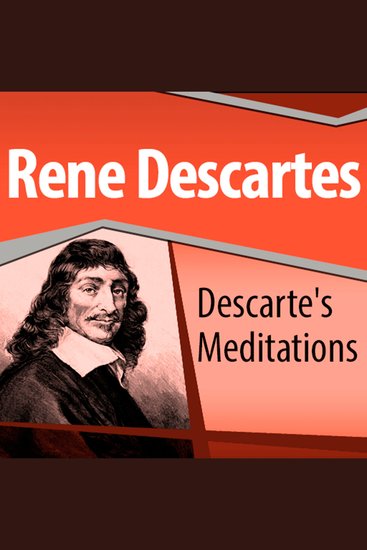
    Rene Descartes is often described as the first modern philosopher, but much of the content of his Meditations on First Philosophy can be found in the medieval period that had already existed for more than a thousand years.Does God exist? If so, what is his nature? Is the human soul immortal? How does it differ from the body? What role do sense experience and pure reason play in knowing?Descartes stands out from his predecessors because of the method he developed to treat these and other fundamental questions. Drawing on his study of mathematics, he searches for a way to establish absolutely certain conclusions based on indubitable premises. His importance in modern philosophy lies in the challenge he offers to every subsequent thinker in philosophy and science.© Agora Publications
    Mostra libro
  • The Political Thought of Xi Jinping - cover

    The Political Thought of Xi Jinping

    Steve Tsang, Olivia Cheung

    • 0
    • 0
    • 0
    Over the course of the last half dozen years, China's supreme leader Xi Jinping has made extraordinary changes which have profound implications not only for the Chinese people but nations throughout the world. Given how swiftly and fundamentally China's relations with the rest of the world are changing under Xi's rule, it is imperative that we know what Xi Jinping Thought is, how it evolved, and why it is so important. 


    In The Political Thought of Xi Jinping, Steve Tsang and Olivia Cheung provide an authoritative overview of what "Xi Jinping Thought" is and is not and what it means for both China and the world. Xi, now effectively leader for life, has worked to ensure that "Xi Jinping Thought" becomes cemented as the new state ideology. Clearly inspired by the doctrine of "Mao Zedong Thought," which shaped the parameters of acceptable thinking for a quarter century, Xi wants his doctrine to define what he calls the "China Dream of national rejuvenation" and serve the pathway to its fulfillment by 2050. Drawing from original research of Xi's speeches, writings, and policies, Tsang and Cheung conceptualize Xi's vision independently from interpretations provided by the Chinese Communist Party or other sources. They further examine and explain how Xi seeks to transform this vision into reality.
    Mostra libro