¡Acompáñanos a viajar por el mundo de los libros!
Añadir este libro a la estantería
Grey
Escribe un nuevo comentario Default profile 50px
Grey
Suscríbete para leer el libro completo o lee las primeras páginas gratis.
All characters reduced
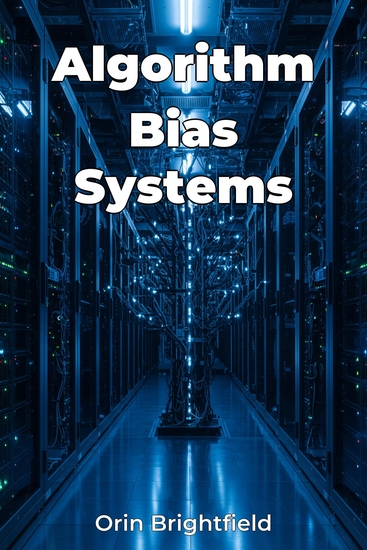
Algorithm Bias Systems - cover

Algorithm Bias Systems

Orin Brightfield

Traductor A Ai

Editorial: Publifye

  • 0
  • 0
  • 0

Sinopsis

Algorithm Bias Systems explores the pervasive issue of algorithmic bias, revealing how these systems can perpetuate and amplify societal inequalities. Far from being neutral, algorithms used in areas like hiring and criminal justice often reflect existing biases in data, leading to unfair outcomes. For instance, search algorithms can reinforce stereotypes, while AI-driven hiring processes may discriminate against certain groups due to biased training data. The book argues that algorithmic bias isn't a mere technical glitch but a systemic problem rooted in flawed design and a lack of diverse perspectives.

 
The book takes a comprehensive approach, starting with the fundamental concepts of algorithmic bias and its manifestations. It then delves into specific examples, such as biased search results and discriminatory hiring practices. The analysis extends to the use of algorithms in criminal justice, highlighting how they can perpetuate racial disparities in sentencing. Throughout its chapters, the book uses case studies, empirical research, and statistical analysis to support its arguments, drawing from real-world datasets to illustrate the impact of bias.

 
Ultimately, Algorithm Bias Systems aims to provide practical strategies for mitigating bias, including algorithm auditing, data diversification, and ethical guidelines for AI development. This makes the book uniquely valuable, offering insights for policymakers, data scientists, and anyone concerned about the societal implications of AI and the quest for algorithmic fairness.
Disponible desde: 05/05/2025.
Longitud de impresión: 91 páginas.

Otros libros que te pueden interesar

  • The Man Behind The Fascist Doctrine - cover

    The Man Behind The Fascist Doctrine

    Benito Mussolini

    • 0
    • 0
    • 0
    “It’s better to live one day as a lion than 100 years as a sheep.” 
     
    "I am the most terrible animal that's ever existed." 
     
    "Democracy is beautiful in theory; in practice, it is a fallacy. You in America will see that someday." 
     
    "It's good to trust others but, not to do so is much better." 
     
    “I feel, when we have no friends upon whom to lean, or to look for moral guidance." (Mussolini) 
     
    The Doctrine of Fascism" is an essay attributed to Benito Mussolini. In truth, the first part of the essay, entitled "Idee Fondamentali", was written by the Italian philosopher Giovanni Gentile, while only the second part is the work of Mussolini himself. 
     
    Benito Amilcare Andrea Mussolini, born on July 29, 1883, who went by the nickname “Il Duce” (“the Leader”), was a deeply unbalanced tyrannical Italian dictator who created the dreaded Fascist Party in 1919. Eventually, he held all power in Italy as the country’s prime minister from 1922 to 1943. An ardent socialist as a youth, Mussolini followed in his father's political footsteps but was expelled by the party for his overt support of World War I. As an evil dictator during World War II (even murdering his own son by lethal injection) he greatly overextended his forces and was eventually killed by his own people in Mezzegra, Italy. Here, for the first time, are the words of the great dictator himself in his twisted manifesto on the political movement he started and is still so feared to this very day. A rare audiobook adventure in politics, history, and outrage!
    Ver libro
  • Codebreakers - How Allied Intelligence Cracked Enemy Codes and the Tide - cover

    Codebreakers - How Allied...

    Sage Winters

    • 0
    • 0
    • 0
    The art of codebreaking has long been an essential aspect of warfare, serving as a hidden weapon that can change the course of history. During World War II, intelligence efforts were not only about gathering information; they were about deciphering the secrets encoded by the enemy to gain a strategic advantage. As technology evolved, so did the complexity of military ciphers, making the task of breaking enemy codes more challenging and more critical than ever. "Codebreakers: How Allied Intelligence Cracked Enemy Codes and the Tide" delves into the extraordinary efforts of Allied cryptographers, whose tireless work behind the scenes helped secure victories that shifted the balance of the war. 
      
    The importance of cryptography in World War II cannot be overstated. The ability to read an enemy’s messages before they had time to act was a decisive factor in numerous key battles and campaigns. The German Enigma machine, a sophisticated encryption device, represented the pinnacle of Nazi Germany’s efforts to protect its communications. Breaking this code was essential to the Allied success, and it was a challenge that seemed insurmountable at the time. However, a group of brilliant minds, including Alan Turing, led the charge in deciphering the Enigma cipher, providing the Allies with invaluable intelligence that allowed them to anticipate German movements, thwart attacks, and save countless lives. 
      
    At the heart of this monumental achievement was Bletchley Park, a secret British facility that became the epicenter of codebreaking during the war. Here, the brightest mathematicians, linguists, and engineers worked tirelessly, often under immense pressure, to crack the German and later the Japanese codes.
    Ver libro
  • Unlocking Your Inner Zelensky - Lessons We Can All Learn from an Unexpected Leader - cover

    Unlocking Your Inner Zelensky -...

    Jessie Asya Kanzer

    • 0
    • 0
    • 0
    This program includes a bonus conversation between the author and editor.Volodymyr Zelensky captivated the world when his country was invaded by Russia in February 2022. His appearances were accompanied by countless inspiring statements. But there's a single one that informs Unlocking Your Inner Zelensky: "We are all simple people."Jessie Kanzer sees Zelensky as a Spiritual Leader for Our Times. As a native Russian speaker (like Zelensky himself), she picks up on the deep philosophical ramifications behind his words. Rich and yet easily understood, the life lessons in Unlocking Your Inner Zelensky are accessible and wise, and are more about starting where you are than about war.Kanzer herself has a bit part in Zelensky's life story, acting in one of his movies filmed in the States. She's a self-described "spiritual nerd" who followed Zelensky long before he stood before a blue and yellow backdrop on the national stage. She writes, "What is so incredible about our man Volodymyr is that his belief in himself stems not from seeing himself as special, but from seeing himself as ordinary and from knowing there is great power in this ordinariness."A Macmillan Audio production from St. Martin's Press Essentials.
    Ver libro
  • I Hope We Choose Love - A Trans Girl's Notes from the End of the World - cover

    I Hope We Choose Love - A Trans...

    Kai Cheng Thom

    • 0
    • 0
    • 0
    What can we hope for at the end of the world? What can we trust in when community has broken our hearts? What would it mean to pursue justice without violence? How can we love in the absence of faith? 


    In a heartbreaking yet hopeful collection of personal essays and prose poems, blending the confessional, political, and literary, Kai Cheng Thom dives deep into the questions that haunt social movements today. With the author's characteristic eloquence and honesty, I Hope We Choose Love proposes heartfelt solutions on the topics of violence, complicity, family, vengeance, and forgiveness. Taking its cues from contemporary thought leaders in the transformative justice movement such as adrienne maree brown and Leah Lakshmi Piepzna-Samarasinha, this provocative book is a call for nuance in a time of political polarization, for healing in a time of justice, and for love in an apocalypse.
    Ver libro
  • Propaganda Decoded - cover

    Propaganda Decoded

    Birand Bingul

    • 0
    • 0
    • 0
    Nothing less than our democracy is at stake.
    Hate, anger, fake news, and alleged conspiracies: Our debate culture is in a state of emergency, and polarization has become a central phenomenon in our society. In this insightful wake-up call, reporter Birand Bingül argues that this is part of a propaganda strategy that seeks to collapse our social dialogue.
    With historic context as well as examples from present-day politicians, Bingul provides thorough, structured insight into the various elements that make propaganda so effective, even in a time when information and facts are at everyone's fingertips.
    A deep analysis into how propaganda and populism works, with helpful and hopeful ways to counter these strategies.
    Ver libro
  • Common Sense - cover

    Common Sense

    Thomas Paine

    • 0
    • 0
    • 0
    In Common Sense, Thomas Paine cites the evils of hereditary monarchy, exposing its flaws and the injustices it inflicted upon the American colonies. Paine argued that an island nation like Britain could never truly understand the needs of a vast continent, showing the absurdity of such a colonial relationship. 
    Credited by George Washington with swaying public opinion, Common Sense became an instant sensation, selling over half a million copies within months. Its clear and passionate prose, crafted to resonate with the common man, served as a powerful tool against tyranny.
    Ver libro