Unisciti a noi in un viaggio nel mondo dei libri!
Aggiungi questo libro allo scaffale
Grey
Scrivi un nuovo commento Default profile 50px
Grey
Iscriviti per leggere l'intero libro o leggi le prime pagine gratuitamente!
All characters reduced
Cognitive Fitness - cover

Cognitive Fitness

Olivia Parker

Traduttore A AI

Casa editrice: Publifye

  • 0
  • 0
  • 0

Sinossi

"Cognitive Fitness" explores how the brain's remarkable plasticity can be harnessed to enhance cognitive function, memory retention, and overall brain health. The book emphasizes that engaging in mental exercises, like strategic problem-solving, and making positive lifestyle adjustments, such as managing stress, are vital for maintaining mental sharpness as we age. Early theories suggested the adult brain was static, but modern research reveals its dynamic nature. 

 
The book provides a comprehensive guide, starting with the principles of brain plasticity and neurogenesis. It then transitions into exploring various mental exercises, explaining how activities like memory games stimulate specific brain regions. Finally, it focuses on lifestyle factors, offering recommendations for diet, sleep, and physical activity. This integrated approach empowers readers to create personalized plans for cognitive enhancement and cognitive resilience.
Disponibile da: 12/03/2025.
Lunghezza di stampa: 100 pagine.
Altri libri che potrebbero interessarti

  • Modernization and Reform - Den Xiaoping's Legacy - cover

    Modernization and Reform - Den...

    Jun Liu

    • 0
    • 0
    • 0
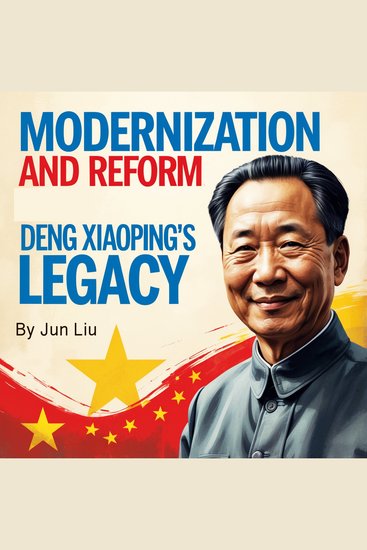
    Deng Xiaoping’s rise to power is a tale marked by perseverance, political acumen, and the ability to navigate the turbulent political landscape of 20th-century China. Born in 1904 in the Sichuan province, Deng’s early life was shaped by his education in France, where he studied at the University of Paris. His exposure to Marxist ideas during this time laid the foundation for his later role in the Chinese Communist Party. Upon his return to China, Deng became an important figure in the party’s early years, rising through the ranks as a trusted leader. 
    Deng’s political career began during the Second Sino-Japanese War, where he served in key military roles, building his reputation as a capable leader. However, it was during the Chinese Civil War that Deng truly began to cement his place in the party hierarchy. His involvement in the revolution and his leadership of various military campaigns helped to solidify his standing as a rising star in the Communist Party. Despite the chaos and upheaval surrounding the war, Deng’s strategic thinking and leadership made him an indispensable figure in the fight against both the Japanese and later the Nationalists. 
    After the establishment of the People’s Republic of China in 1949, Deng continued to rise through the ranks of the Communist Party, serving in various influential positions. However, his career was not without its setbacks. During the Cultural Revolution, a political movement led by Mao Zedong, Deng fell out of favor and was purged from his positions of power. He was sent to work on a farm, and his political influence was effectively diminished. Yet, despite these challenges, Deng’s political resilience would eventually lead to his return to power.
    Mostra libro
  • A Rare Recording of General George S Patton - cover

    A Rare Recording of General...

    General George S. Patton

    • 0
    • 0
    • 0
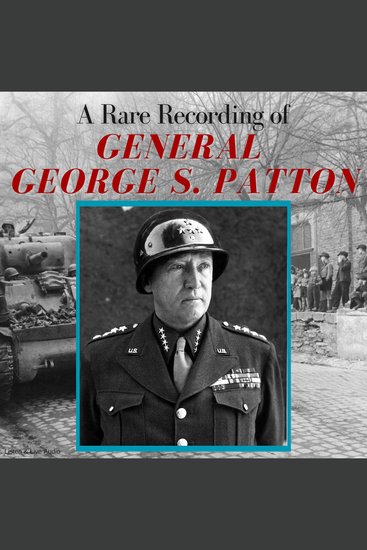
    George Smith Patton Jr. (November 11, 1885 - December 21, 1945) was a charismatic, hard-driving and highly-regarded general in the United States Army who commanded the Seventh United States Army in the Mediterranean Theater of World War II, and the Third United States Army in France and Germany after the Allied invasion of Normandy in June 1944. The following is from a speech Patton gave in Los Angeles during World War II.
    Mostra libro
  • Roman Civil Wars of the 3rd and 4th Centuries The: The History of the Conflicts that Led to a Split of the Roman Empire - cover

    Roman Civil Wars of the 3rd and...

    Editors Charles River

    • 0
    • 0
    • 0
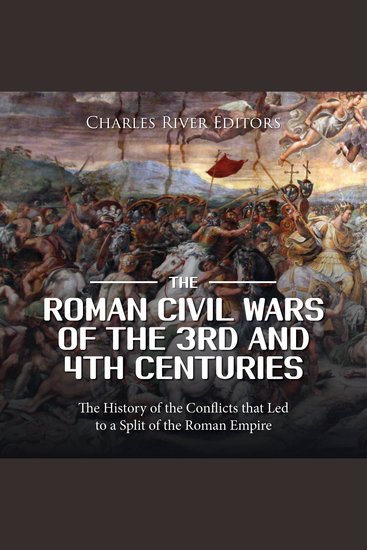
    The 50 years following the assassination of Severus Alexander on March 19, 235 CE has been generally regarded by academics as one of the lowest points in the history of the Roman Empire. This stands in stark contrast to the previous 150 years, which included the reigns of the Five Good Emperors and has been universally praised as one of the high points of the empire. Severus Alexander was the last of the Severan emperors, and the subsequent years of crisis (235-285 CE) were characterized by a series of short reigns, usually ending in the violent death of the reigning emperor. 
    At the same time, this period of time also saw the empire beset by threatening forces on all sides. The Romans faced a newly resurgent Persia in the east, as well as significant forces from German tribes on the Rhine and Goths along the Danube. The various conflicts would result in the unprecedented death of a sitting emperor in battle, which took place in 251 with Emperor Decius, and Emperor Valerian was captured in 260 CE.  
    Diocletian's reign would see reforms put into place to achieve the desired end of the Imperial Crisis, and several of the emperors before him may well have had the ability to manage the reform process, but the army’s power and willingness to use and abuse power ensured that few of them truly had a chance to really make their marks. It was the worst period in the history of the Roman Empire to that point, even as it forced the Romans to deal with belligerent foreign powers and problems created by the emergence of increasingly powerful and populous provinces. 
    The pressures created by population growth, both within the empire and outside of it, have been thoroughly researched, but more recently, issues created by climate change have also commanded attention.
    Mostra libro
  • Helmut Schmidt: A short biography - 5 Minutes: Short on time - long on info! - cover

    Helmut Schmidt: A short...

    5 Minutes, 5 Minute Biographies,...

    • 0
    • 0
    • 0
    Helmut Schmidt, legendary German chancellor: Life and works in a short biography! Everything you need to know, brief and concise. Infotainment, education and entertainment at its best!
    Mostra libro
  • No One to Meet - Imitation and Originality in the Songs of Bob Dylan - cover

    No One to Meet - Imitation and...

    Raphael Falco

    • 0
    • 0
    • 0
    The literary establishment tends to regard Bob Dylan as an intriguing, if baffling, outsider. That changed overnight when Dylan was awarded the 2016 Nobel Prize in Literature, challenging us to think of him as an integral part of our national and international literary heritage. No One to Meet places Dylan the artist within a long tradition of literary production and offers an innovative way of understanding his unique, and often controversial, methods of composition. 


    In lucid prose, Raphael Falco demonstrates the similarity between what Renaissance writers called imitatio and the way Dylan borrows, digests, and transforms traditional songs. Although Dylan's lyrical postures might suggest a post-Romantic, "avant-garde" consciousness, No One to Meet shows that Dylan's creative process borrows from and expands the methods used by classical and Renaissance authors. 


    Drawing on numerous examples, including Dylan's previously unseen manuscript excerpts and archival materials, Falco illuminates how the ancient process of poetic imitation, handed down from Greco-Roman antiquity, allows us to make sense of Dylan's musical and lyrical technique. By placing Dylan firmly in the context of an age-old poetic practice, No One to Meet deepens our appreciation of Dylan's songs and allows us to celebrate him as what he truly is: a great writer.
    Mostra libro
  • Daily Life in Ancient Egypt - Society Culture and Customs - cover

    Daily Life in Ancient Egypt -...

    Omar Khalil

    • 0
    • 0
    • 0
    Ancient Egyptian society was highly structured, with a rigid hierarchy that defined people’s roles and responsibilities. At the top of this social order was the pharaoh, considered both a political ruler and a divine figure. Below the pharaoh were the nobility and officials who managed the kingdom’s affairs. The middle class consisted of scribes, artisans, and merchants, while the majority of the population comprised farmers, laborers, and slaves. Each social group played a crucial role in maintaining Egypt’s stability and prosperity. 
    The pharaoh was the central authority in Egypt, believed to be the living embodiment of a god. His rule was absolute, and his primary duty was to maintain ma’at, the divine balance of order and justice. He oversaw military campaigns, religious ceremonies, and massive building projects, including temples and pyramids. The royal court and government officials assisted the pharaoh in administration. These officials, often chosen from the nobility, held positions such as viziers, tax collectors, and governors, ensuring the kingdom functioned efficiently. 
    Scribes, artisans, and merchants formed the middle class, contributing to Egypt’s economy and culture. Scribes were essential for maintaining records, writing official documents, and preserving religious texts. Their education was rigorous, requiring years of training in hieroglyphic writing. Artisans, including sculptors, painters, and metalworkers, created the intricate decorations found in tombs and temples. Merchants facilitated trade both within Egypt and with foreign lands, bringing valuable goods such as gold, spices, and precious stones. Although they did not hold political power, the middle class enjoyed a stable livelihood and social respect.
    Mostra libro