Rejoignez-nous pour un voyage dans le monde des livres!
Ajouter ce livre à l'électronique
Grey
Ecrivez un nouveau commentaire Default profile 50px
Grey
Abonnez-vous pour lire le livre complet ou lisez les premières pages gratuitement!
All characters reduced
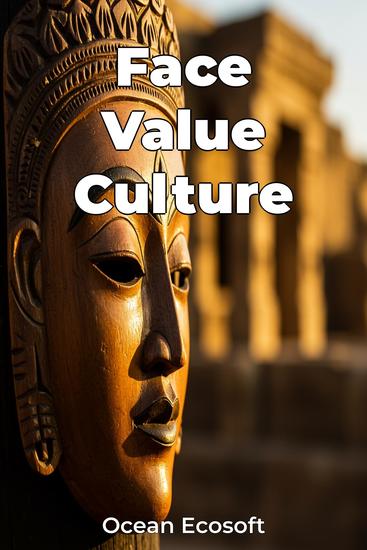
Face Value Culture - cover

Face Value Culture

Ocean Ecosoft

Traducteur A AI

Maison d'édition: Publifye

  • 0
  • 0
  • 0

Synopsis

"Face Value Culture" explores the pervasive influence of "face"—a culturally shaped sense of social esteem—on human behavior across diverse societies. The book argues that understanding face dynamics is crucial in today's globalized world, as it governs daily social exchanges and impacts everything from interpersonal relationships to international negotiations. It examines how different cultures, from East Asia to Latin America, manage face through unique strategies like "face-saving" and "face-giving," revealing the underlying values that drive these behaviors. The book highlights that face isn't just about reputation; it's a fundamental human need for social validation and belonging.

 
The book is structured in three parts, starting with the theoretical foundations of face, then moving into cultural variations in face management, and finally, exploring the consequences of face dynamics in various settings, such as workplaces and international negotiations. By synthesizing cross-cultural research, the book reveals both universal patterns and culture-specific adaptations in face dynamics. It provides practical strategies for navigating face-threatening situations, ultimately aiming to improve intercultural communication and foster stronger, more respectful relationships. This approach makes it a valuable resource for anyone seeking to enhance their social competence in diverse global settings.
Disponible depuis: 21/02/2025.
Longueur d'impression: 86 pages.

D'autres livres qui pourraient vous intéresser

  • The Origin of the Universe - cover

    The Origin of the Universe

    Jan Aleksander Piasecki

    • 0
    • 0
    • 0
    A philosophical approach to the enigma of nature and the universe approached through observation, meditation, and logical analysis of material phenomena.   Written in accessible language for the general reader, The Origin of the Universe expounds on a theory that Jan Aleksander Piasecki developed from a synthesis of data he accumulated over the years. He discusses world forces and how they combine and operate to create the universe and matter, and all living things in it. A special section discusses the soul, its design and destiny.   Attributing everything in the universe to the impact and expansion of the heat entity and the resistance and pressure of the cold entity, Piasecki moves through time and space to explain the creation of the sun, the solar system, atmosphere, water, and living forms. He draws a connection from outside forces to that which animates every “self-moving form” from within: the soul, imbued with the knowledge of its own being.   From molecules to the moon, The Origin of the Universe takes readers on a journey through the mysteries of life, those with a finite existence and those that may endure forever . . .
    Voir livre
  • The Path of Prosperity - cover

    The Path of Prosperity

    James Allen

    • 0
    • 0
    • 0
    From the celebrated author of ‘As A Man Thinketh’ this is another of Allen’s life shaping books in audio format. ‘The Path To Prosperity’ will teach you the secret of ‘Health and Success’, How to discover and direct your ‘Personal Force’. Why the outside World is a ‘mirror’ of you. How to direct and shape your life to ‘Realize Your Prosperity’. How to escape any undesirable conditions that affect your life and change for the better.
    Voir livre
  • Mamerto Gueritz - A Country Catholic 1823–1912 - cover

    Mamerto Gueritz - A Country...

    David Gunn-Johnson

    • 0
    • 0
    • 0
    This is the story of Mamerto Gueritz, a country priest in the second half of the nineteenth century. His is a fascinating tale, with the adventures of his father and grandfather in Spain and the subsequent deeds of his children, framing the story of the man himself.
    
     
    However, Mamerto Gueritz also offers an illustration of the ways in which the Catholic Revival in the Church of England, the Oxford Movement, spread and took root in the remotest corners of the kingdom. His story tells a much wider tale of the renewal of the Church, the revival of a glorious liturgical heritage and the search for holiness which, for Gueritz and many of his peers, was the driving force behind it all.
    
     
    Mamerto’s father had been an officer in the Royal Guard of Spain but his opposition to the absolutism of Ferdinand VII meant that he and his family had to flee. The period between the time of Gueritz’ arrival as an infant refugee from Spain in 1823 and his death in 1912 may indeed be seen as the time of the emergence and flowering of what became known as the Oxford Movement. However, it was also a time of great conflict and change both in the Church and in society. Such change was not without cost and Mamerto Gueritz shared in it all, both in the battles in London and in his country parish, which proved anything but a safe haven.
    
     
    The reader with a straightforward love of history will find Mamerto’s story a significant addition to their store of knowledge. Those who read widely in Church history, particularly that of the nineteenth century, may find that what seems like familiar ground can be anything but!  The student of the Oxford Movement and the catholic heritage of the Church of England may yet find some further insight from hitherto unreported events and in Mamerto Gueritz find also an encouragement for the work of today.
    Voir livre
  • How to Steal a City - The Battle for Nelson Mandela Bay: An Inside Account - cover

    How to Steal a City - The Battle...

    Crispian Olver

    • 0
    • 0
    • 0
    How to Steal a City is the gripping insider account of this intervention, which lays bare how Nelson Mandela Bay metro was bled dry by criminal syndicates, and how factional politics within the ruling party abetted that corruption.  
    As a former senior state official and local government ‘fixer’, Crispian Olver was no stranger to dodgy politicians and broken organisations. Yet what he found in Nelson Mandela Bay went far beyond rigged contracts, blatant conflicts of interest and garden-variety kickbacks. The city’s administration had evolved into a sophisticated web of front companies, criminal syndicates and compromised local politicians and officials. The metro was effectively controlled by a criminal network closely allied to a dominant local ANC faction. What Olver found was complete state capture – a microcosm of what has taken place in national government. 
    Olver and his team initiated a clean-up of the administration, clearing out corrupt officials and rebuilding public trust. Then came the ANC’s doomed campaign for the August 2016 local government elections. Having lost its way in factional battles and corruption, the divided party went down to a humiliating defeat in its traditional heartland.  
    Olver paid a high price for his work in Nelson Mandela Bay. Intense political pressure and even threats to his personal safety took a toll on his mental and physical health. When his political support was withdrawn, he had to flee the city as the forces stacked against him took their revenge. This is his story.
    Voir livre
  • The Zong - A Massacre the Law & the End of Slavery - cover

    The Zong - A Massacre the Law &...

    James Walvin

    • 0
    • 0
    • 0
    The first full review of the mass murder by crew members on the slave ship Zong and the lasting repercussions of this horrifying event 


    On November 29, 1781, Captain Collingwood of the British ship Zong commanded his crew to throw overboard one-third of his cargo: a shipment of Africans bound for slavery in America. The captain believed his ship was off course, and he feared there was not enough drinking water to last until landfall. This book is the first to examine in detail the deplorable killings on the Zong, the lawsuit that ensued, how the murder of 132 slaves affected debates about slavery, and the way we remember the infamous Zong today. 


    Historian James Walvin explores all aspects of the Zong's voyage and the subsequent trial—a case brought to court not for the murder of the slaves but as a suit against the insurers who denied the owners' claim that their "cargo" had been necessarily jettisoned. The scandalous case prompted wide debate and fueled Britain's awakening abolition movement. Without the episode of the Zong, Walvin contends, the process of ending the slave trade would have taken an entirely different moral and political trajectory. He concludes with a fascinating discussion of how the case of the Zong, though unique in the history of slave ships, has come to be understood as typical of life on all such ships.
    Voir livre
  • If the Allies Had Fallen - The Consequences of Losing D-Day - cover

    If the Allies Had Fallen - The...

    Marcus Draysun

    • 0
    • 0
    • 0
    The success of D-Day was never inevitable. The invasion of Normandy was the most ambitious military operation of the war, requiring precise coordination, secrecy, and an extraordinary amount of luck. The Allies knew that failure would not just be a setback—it could mean the prolonged survival of Nazi Germany and a vastly different world order. Every decision leading up to June 6, 1944, carried immense weight, as the fate of millions hung in the balance. 
    For months, Allied planners debated the best approach for opening a Western Front. The Soviets, engaged in brutal combat with German forces on the Eastern Front, pressured Britain and the United States to act quickly. Churchill, haunted by the disastrous Gallipoli campaign of World War I, feared the consequences of a premature landing. General Dwight D. Eisenhower, the Supreme Allied Commander, had to make the ultimate call: when and where to launch the largest amphibious invasion in history. 
    The chosen location—Normandy—was a calculated risk. Pas de Calais, the closest point between Britain and France, seemed like the most obvious target, and the Germans heavily fortified it. By contrast, Normandy’s beaches offered a less expected but still formidable challenge. Hitler’s Atlantic Wall, a vast network of bunkers, mines, and obstacles, was designed to repel any invasion. The Germans had tens of thousands of troops stationed along the coast, and if they had guessed the true landing site, they could have crushed the invasion before it gained a foothold.
    Voir livre