Join us on a literary world trip!
Add this book to bookshelf
Grey
Write a new comment Default profile 50px
Grey
Subscribe to read the full book or read the first pages for free!
All characters reduced
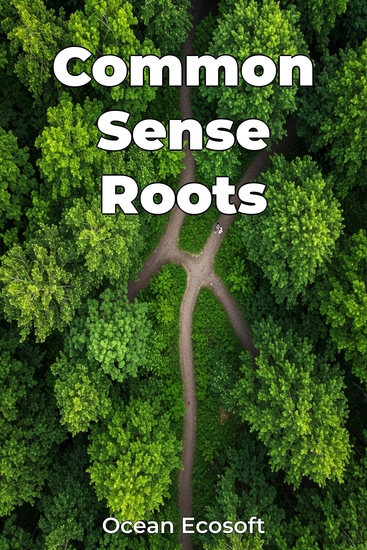
Common Sense Roots - cover

Common Sense Roots

Ocean Ecosoft

Translator A AI

Publisher: Publifye

  • 0
  • 0
  • 0

Summary

Common Sense Roots explores how shared understanding emerges within communities, drawing on cognitive psychology and social learning. It examines how cognitive alignment, social influence, and environmental context shape collective thought. The book argues that shared understanding is a dynamic process, not just shared information, influenced by biases and social dynamics.

 
One intriguing insight is how mental models converge to enable effective communication. Another is the profound impact of social norms and network structures on idea adoption.

 
The book progresses through three parts, first introducing the cognitive foundations, then delving into social influences, and finally investigating the environmental context. This approach bridges diverse academic disciplines, from psychology to sociology, offering a holistic perspective.

 
By understanding these mechanisms, readers can foster shared understanding in various settings and become more effective communicators and leaders.
Available since: 02/21/2025.
Print length: 82 pages.

Other books that might interest you

  • The Half-life of Snails - cover

    The Half-life of Snails

    Philippa Holloway

    • 0
    • 0
    • 0
    'a novel that shimmers with compassion... the author has crafted a tale that will linger longer than the half-life of many other books you will read this year.' – Alex Lockwood, author of The Chernobyl Privileges
    'A careful, tender and arresting story that explores how we're formed by the places we think we own – I was moved by this suspenseful and delicate novel.' – Jenn Ashworth, author of Ghosted
    Two sisters, two nuclear power stations, one child caught in the middle...
    When Helen, a self-taught prepper and single mother, leaves her young son Jack with her sister for a few days so she can visit Chernobyl's Exclusion Zone, they both know the situation will be tense. Helen opposes plans for a new power station on the coast of Anglesey that will take over the family's farmland, and Jennifer works for the nuclear industry and welcomes the plans for the good of the economy.
    But blood is thicker than heavy water, and both want to reconnect somehow, with Jack perhaps the key to a new understanding of one another.
    Yet while Helen is forced to face up to childhood traumas, and her worst fears regarding nuclear disaster, during a trip that sees her caught up in political violence and trapped in Chernobyl's Exclusion Zone during the 2014 Euromaidan revolution, Jennifer too must discover that even the smallest decision can have catastrophic and long-lasting effects, both within the nuclear industry, and within the home.
    And Jack isn't like other five-year olds... as they will both discover with devastating consequences.
    Show book
  • Props - A History Of Power In 7 Lessons - cover

    Props - A History Of Power In 7...

    Norm Coady

    • 0
    • 0
    • 0
    Are you nostalgic for simpler times? Do you miss your favorite history teacher, the one that gave you perspective and kept you laughing? Come back to class. Buy Props and let Norm Coady take you on a trip from Caesar to Kennedy, from Wittenberg to St. Petersburg. Learn how seashells led to the first global conflict. Discover how a piece of chalk laid the groundwork for totalitarianism. Follow an umbrella’s strange journey from sunny Munich to rainy Dallas. Norm Coady takes well known historical events, turns them upside down, and shakes out new revelations. Equal parts illuminating and hilarious, Props is for, “people who take history so seriously, they read it for fun.”
    Show book
  • Narcissism - The Complete Guide To Understanding the Narcissist and Toxic People in Your Life How to live happily with Skills for Healing from Emotional Abuse - cover

    Narcissism - The Complete Guide...

    Isabella Males

    • 0
    • 0
    • 0
    Do you need to know how to disarm that narcissist in your life? 
    This audiobook is an expertly informed guide to help you understand, handle and heal from dealing with narcissistic people in your life 
    Falling victim to narcissistic abuse can leave you feeling confused, isolated, and in need of help finding a way forward. 
    You'll learn to identify and dissect all kinds of narcissistic reactions, coping mechanisms and narcissistic supply- both healthy and extreme- so that you can determine exactly what kind of narcissistic traits you're dealing with. and create a simple plan of action for moving forward into the future, for the betterment of yourself and those around you. 
    Through helping you grow the inherent forces of the Self, this Audiobook opens you to an unimaginable state of power. This profound shift transforms the narcissist’s influence from a deadly storm into a harmless breeze, allowing you to finally come home and become who you were born to be.There are ways to make it work with a narcissist, and if you’ve got one in your life, start listening this audiobook today to figure out how best to handle your relationship!!Get your copy today!
    Show book
  • The Inevitable Revolution - cover

    The Inevitable Revolution

    Leo Tolstoy

    • 0
    • 0
    • 0
    "Men should believe in the law of love in the same way that they now believe in the inevitability of violence."
    
    The Inevitable Revolution (1909) is one of Tolstoy's last major works of non-fiction, focusing on themes of civil disobedience, pacifism, and anarchism. The author criticises prisons, parliaments, wars, conscription, capitalism, theft, revolutionary violence, and taxes, while praising the message of love found in Christianity and acknowledging similar teachings in other religions. He believes that adherence to the law of love offers practical solutions to the societal issues he critiques and essentially calls for a moral awakening among individuals to live non-violently and to not condone violence in any form.
    
    This essay serves as a profound reflection of Tolstoy's later philosophical views and its discussions on non-violence and ethical living continue to resonate today.
    Leo Tolstoy (1828–1910) was a Russian novelist, philosopher, and social reformer, widely regarded as one of the greatest writers of all time. He is best known for his epic novels War and Peace and Anna Karenina, both celebrated for their intricate character development and profound exploration of moral dilemmas and human nature. In his later years, Tolstoy experienced a spiritual awakening which led him to reject materialism and embrace a life of simplicity, seeking to align his life with his beliefs about non-violence and compassion. Tolstoy's legacy endures not only through his literary masterpieces but also through his profound impact on literature and philosophy.
    Show book
  • The Shocking Truth about Public Transportation - cover

    The Shocking Truth about Public...

    Zoey Fraisers

    • 0
    • 0
    • 0
    Public transportation is often presented as the backbone of modern cities, a vital system that connects people to jobs, schools, and essential services. Advocates promote it as an affordable, eco-friendly, and efficient alternative to private vehicles, reducing congestion and improving urban mobility. Governments and transit agencies highlight its benefits, claiming it serves the public good while advancing sustainability goals. However, beyond the polished image of well-maintained buses, sleek trains, and promises of convenience, there lies a far more complicated and often troubling reality.  
      
    The public is frequently told that mass transit is the key to reducing traffic and lowering pollution, yet many systems fail to deliver on these promises. Trains break down, buses run late, and commuters find themselves packed into overcrowded vehicles, often feeling unsafe. Meanwhile, taxpayers pour billions into these systems, only to see fare increases, service cuts, and poorly maintained infrastructure. The question arises: If public transportation is supposed to be a solution, why does it so often feel like a problem?  
      
    Another significant issue is safety. Crime rates on buses, subways, and train platforms have become a growing concern, with riders facing theft, assault, and harassment. Many transit systems lack sufficient security measures, leaving passengers vulnerable. The psychological stress of commuting through unsafe environments can be overwhelming, particularly for women, the elderly, and other vulnerable populations. Despite these risks, officials frequently downplay crime statistics, insisting that public transit remains a safe option. 
    Show book
  • Feudalism and Its Transition - The Evolution of Feudal Systems and Their Collapse (3 in 1) - cover

    Feudalism and Its Transition -...

    Arlo Holders

    • 0
    • 0
    • 0
    This book contains the following titles: 
      - The Feudal System: Feudalism was a dominant social, economic, and political system in medieval Europe that shaped the lives of millions from the 9th to the 15th centuries. Rooted in the decline of the Roman Empire, it emerged as a response to the need for local defense, stability, and order. With the fall of centralized authority, particularly in the wake of the collapse of Roman imperial power, local leaders, and warriors filled the vacuum, giving rise to a new hierarchical structure that became the backbone of medieval society. 
      - The End of Feudalism: Feudalism was a social, political, and economic system that dominated medieval Europe, particularly from the 9th to the 15th century. Its structure was based on the exchange of land for loyalty, military service, and labor. At its core, feudalism established a hierarchical order in which the king, or monarch, granted land, known as fiefs, to vassals (nobles) in exchange for their service. In turn, these vassals would grant portions of their land to serfs or peasants, who worked the land in return for protection and sustenance. This land-based economy was highly localized, with power concentrated in the hands of a few, and much of daily life revolved around agricultural production.
    Show book