Unisciti a noi in un viaggio nel mondo dei libri!
Aggiungi questo libro allo scaffale
Grey
Scrivi un nuovo commento Default profile 50px
Grey
Iscriviti per leggere l'intero libro o leggi le prime pagine gratuitamente!
All characters reduced
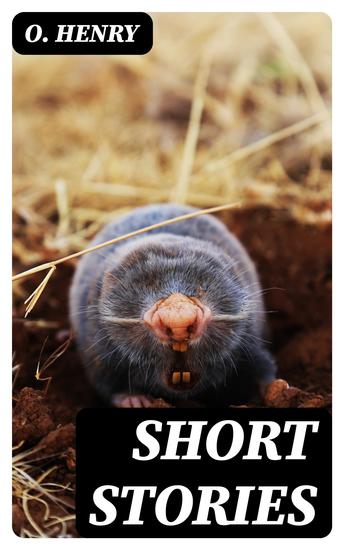
Short Stories - cover

Short Stories

O. Henry

Casa editrice: DigiCat

  • 0
  • 0
  • 0

Sinossi

O. Henry's "Short Stories" presents a captivating collection that exemplifies the author's signature wit, irony, and keen observations of urban life in early 20th-century America. Each narrative encapsulates the everyday struggles and triumphs of a diverse array of characters, weaving intricate plots that often culminate in unexpected twists. O. Henry's literary style is characterized by its economical prose and masterful dialogue, showcasing his ability to evoke deep emotional responses while simultaneously entertaining the reader with humor and social commentary within the context of an evolving American society. O. Henry, the pen name of William Sydney Porter, was shaped by his experiences as a pharmacist, writer, and prisoner, which profoundly influenced his storytelling. His time spent in New York City exposed him to the vibrant tapestry of urban life, fostering a keen awareness of its complexities and nuances. This background, combined with a fascination for the human condition and a flair for narrative innovation, laid the groundwork for his enduring literary legacy. "Short Stories" is recommended for readers seeking a treasure trove of clever tales that illuminate the human spirit amidst the challenges of life. Whether new to O. Henry or revisiting his work, readers will find themselves enchanted by the charm, depth, and enduring relevance of his stories.
Disponibile da: 11/10/2022.
Lunghezza di stampa: 3500 pagine.

Altri libri che potrebbero interessarti

  • 50 Stories from Russia's Greatest Authors - The Dream of a Ridiculous Man Notes From the Underground First Love The Queen of Spades The Death of Ivan Ilych The Nose The Cloak A Dead Body A Russian Christmas Party and others - cover

    50 Stories from Russia's...

    Fyodor Dostoevsky, Ivan...

    • 0
    • 0
    • 0
    This book collects a magnificent set of works by Russian classical authors: Alexander Pushkin, Nikolai Gogol, Fyodor Dostoevsky, Anton Chekhov, Leo Tolstoy, Mikhail Bulgakov. Each original story, springing from a common creative heritage, delivers a glimpse of the immortal Russian Soul and has influenced modern literary trends. These stories are interesting to their core and will bring pleasure to readers. Get ready to immerse yourself within these immortal works that have long been counted among the best of classic world literature: Fyodor Dostoevsky. The Dream of a Ridiculous Man, Fyodor Dostoevsky. Notes from the Underground, Ivan Turgenev. First Love, Alexander Pushkin. The Queen of Spades, Leo Tolstoy. The Death of Ivan Ilyich, Leo Tolstoy. A Russian Christmas Party, Anton Chekhov. The Wife, Anton Chekhov. A Dead Body, Anton Chekhov. The Beggar, Leonid Andreyev. The Little Angel, Nikolai Gogol. The Nose, Nikolai Gogol. The Cloak, Nikolai Gogol. The Mantle, Mikhail Bulgakov. The Embroidered Towel – from A Young Doctor's Notebook and others.
    Contents: 
    Fyodor Dostoevsky 
    
    - The Dream of a Ridiculous Man 
    - Notes From the Underground 
    - The Christmas Tree and the Wedding 
    Ivan Turgenev 
    
    - Mumu 
    - First Love 
    - The District Doctor 
    Aleksandr Kuprin 
    
    - The Outrage 
    Alexander Pushkin 
    
    - The Queen of Spades
    Leo Tolstoy 
    
    - A Letter to a Hindu 
    - The Death of Ivan Ilych 
    - God Sees the Truth 
    - But Waits 
    - A Russian Christmas Party 
    Anton Chekhov 
    
    - The Wife 
    - The Slander 
    - The Horse-Stealers 
    - The Petchenyeg 
    - A Dead Body 
    - A Happy Ending T
    - he Looking-Glass 
    - Old Age
    -  Darkness
    - The Beggar 
    - In Trouble
    -  Frost
    - Minds in Ferment 
    - Gone Astray
    -  An Avenger
    - The Jeune Premier 
    - A Defenceless Creature 
    - An Enigmatic Nature
    -  A Happy Man
    - A Troublesome Visitor 
    - An Actor's End 
    - Vanka 
    - A Country Cottage 
    - Fat and Thin 
    - Nerves 
    - The Doctor 
    - About Love 
    - The Lottery Ticket 
    Leonid Andreyev 
    
    - The Little Angel 
    - Lazarus 
    Maxim Gorky 
    
    - One Autumn Night 
    - Her Lover 
    Mikhail Bulgakov 
    
    - The Embroidered Towel 
    Nikolai Gogol 
    
    - Christmas Eve 
    - The Nose 
    - A May Night 
    - The Cloak 
    - The Viy
    Mostra libro
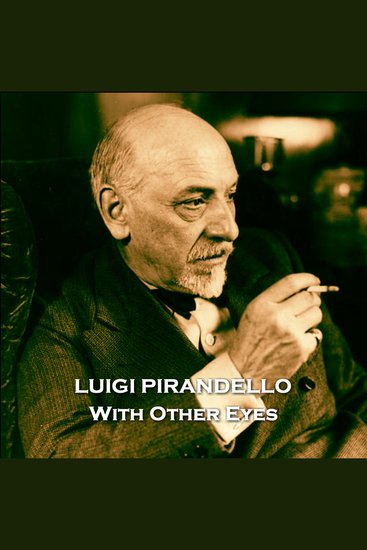
  • With Other Eyes - From their pens to your ears genius in every story - cover

    With Other Eyes - From their...

    Luigi Pirandello

    • 0
    • 0
    • 0
    Luigi Pirandello was born on 28th June 1867 into an upper-class family in Agrigento, in Sicily. 
    In 1880, the family moved to Palermo and there he completed high school and thence to the University of Palermo, at that time the centre of what became the Fasci Siciliani movement.  Although not an active member he had close friendships with many of its leading ideologists.  Pirandello then completed his university studies in Rome and Bonn, receiving his Doctorate in March, 1891. 
    His time in Rome had provided him with the opportunity to visit its many theatres. "Oh the dramatic theatre! I will conquer it. I cannot enter into one without experiencing a strange sensation, an excitement of the blood through all my veins..." 
    1894 brought marriage, at his father's suggestion, to a shy, withdrawn girl: Mara Antonietta Portulano.  The marriage encouraged his studies and writings and, the following year, the first part of the ‘Dialoghi tra Il Gran Me e Il Piccolo Me’ was published. 
    In 1903 the flooding of the sulphur mines in which his father had invested the family capital and Antonietta's dowry, brought financial catastrophe.  She, on hearing the news, was mentally broken.  Pirandello would now work a full day and then watch over his troubled wife at night. Somehow he found time to write ‘The Late Mattia Pascal’.  It was an immediate and resounding success.  
    In 1909, Pirandello began his collaboration with the prestigious Corriere della Sera.  Whilst his fame as a writer was increasing his private life was poisoned by the suspicion and jealousy of Antonietta who now turned physically violent.  His plays were now being regularly performed but, within a decade, Antonietta had to be placed into an asylum from which she never left. 
    In 1921, in Rome his play, ‘Six Characters in Search of an Author’ debuted.  It was a failure.  However, when presented in Milan it was a great success, as it also was in London and New York. 
    In 1925, Pirandello, with Mussolini’s help, assumed the artistic direction and ownership of the Teatro d'Arte di Roma.  He now described himself both as ‘a Fascist because I am Italian’ and ‘I'm apolitical, I'm only a man in the world...’  However his later conflicts with fascist leaders meant he fell under close surveillance by the OVRA, the secret police. 
    In 1934 he won the Nobel Prize but asked that the medal be melted down for Italy’s occupation of Abyssinia Campaign to which he had given his support.  
    Pirandello's canon stretches across novels, short stories, poetry, essays and some 40 plays.  His tragic farces are often cited as forerunners of the Theatre of the Absurd. 
    Luigi Pirandello died on the 10th December 1936 at his home at Via Bosio, Rome, Italy.  He was 69.
    Mostra libro
  • Leda - The Classic Tale - cover

    Leda - The Classic Tale

    Aldous Huxley

    • 0
    • 0
    • 0
    “Their Ethiop wives—sleek wineskins of black silk, Jellied and huge from drinking asses’ milk Through years of tropical idleness, to pray For offspring (whom he ever sent away With prayers unanswered, lest their ebon race Might breed and blacken the earth’s comely face.” 
    ― Aldous Huxley, Leda 
     
    Though he gained recognition for his later essays and novels, Aldous Huxley started his writing career as a poet. Published in 1920, Leda is his fourth compilation of poetry. It begins with the passionate and slightly erotic poem "Leda", which recalls the love affair between Queen Leda, the mother of Helen of Troy, and her swan, Zeus in disguise. Some short poems follow. The book ends with two long sections. The first, "Beauty," is a short collection of vignettes where the author reflects on the concept of beauty through an ideal model of physical desire, Helen of Troy. The second, "Soles Occidere et Redire Possunt," or "Suns Can Set, and Suns Can Rise Again," is another long poem that reflects a day in the life of John Ridley, a deceased friend of Huxley's, who was mentally challenged throughout his entire life.  
     
    Author Aldous Huxley was an English writer and philosopher. He wrote nearly fifty books, both novels and non-fiction works—as well as wide-ranging essays, narratives, and poems. 
    Born into the prominent Huxley family, he graduated from Oxford, with an undergraduate degree in English literature. Early in his career, he published short stories and poetry and edited the literary magazine Oxford Poetry, before going on to publish travel writing, satire, and screenplays. Huxley spent the latter part of his life in the United States, living in Los Angeles from 1937 until his death. By the end of his life, Huxley was widely acknowledged as one of the foremost intellectuals of his time.
    Mostra libro
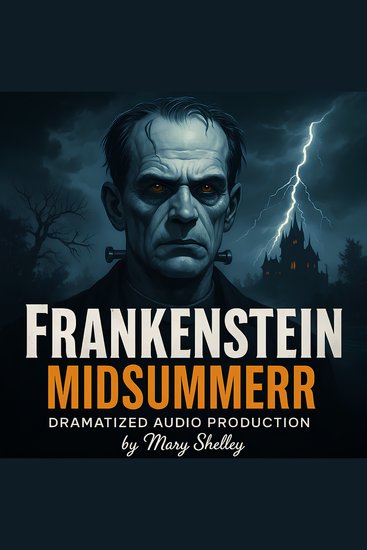
  • Frankenstein: Cinematic Audio Adaptation - A Dramatized Production of Mary Shelley's Original 1818 Text - cover

    Frankenstein: Cinematic Audio...

    Mary Shelley

    • 0
    • 0
    • 0
    Experience Mary Shelley's Frankenstein original text like never before. 
    Follow the ambitious scientist Victor Frankenstein, whose quest to conquer death unleashes a powerful and tragic creature. From the icy Arctic seas to the lonely mountains of Switzerland, this classic tale explores creation, responsibility, and the cost of playing god. 
    This production is a fully cinematic audio adaptation, featuring expressive performances, dynamic sound design, and cinematic music that brings each scene to life.
    Mostra libro
  • The Written World and the Unwritten World - Essays - cover

    The Written World and the...

    Italo Calvino

    • 0
    • 0
    • 0
    A rich collection of essays offering an extraordinary global view of Calvino’s approach to writing, reading, and interpreting literature. 
     
    An extraordinary collection of essays, forewords, articles, and interviews, The Written World and the Unwritten World displays the remarkable intelligence and razor-sharp wit of prolific Italian writer Italo Calvino as he explores the meaning of literature in a rapidly changing world. From classics to  
    contemporary literature, from tradition to the avant-garde, Calvino masterfully explores reading, writing, and translating through careful and illuminating discussion of the works of Bakhtin, Brecht, Cortázar, Thomas Mann, Octavio Paz, Georges Perec, Salman Rushdie, Gore Vidal, and more. Drawn  
    from Mondo scritto e mondo non scritto (2002), Sulla fiaba (1988), and other uncollected essays, this volume of previously untranslated work—now rendered in English by acclaimed translator Ann Goldstein—is a major statement in literary criticism.
    Mostra libro
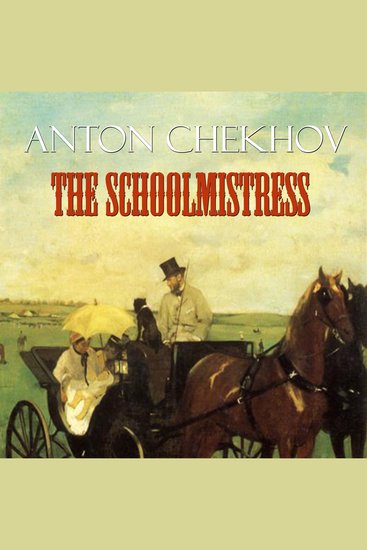
  • The Schoolmistress - cover

    The Schoolmistress

    Anton Chekhov

    • 0
    • 0
    • 0
    The short story focuses on a schoolmistress who is returning home after collecting her salary from the town. The weather is terrible, and makes the journey far longer than it should be. She meets a man named Hanov, an aging man who is joyful and seemingly ignorant of the misery of life. On this journey, Marya Vassilyevna ponders her life, her happiness and the repetition of it all. When a train goes past, she sees a woman who looks much like her late mother, which fills her with joy she hasn't felt in a very long time.
    In 'The Schoolmistress' by Anton Chekhov, life is represented as meaningless, repetitive and dull. This is done by characterization and descriptive language.
    Mostra libro