Unisciti a noi in un viaggio nel mondo dei libri!
Aggiungi questo libro allo scaffale
Grey
Scrivi un nuovo commento Default profile 50px
Grey
Iscriviti per leggere l'intero libro o leggi le prime pagine gratuitamente!
All characters reduced
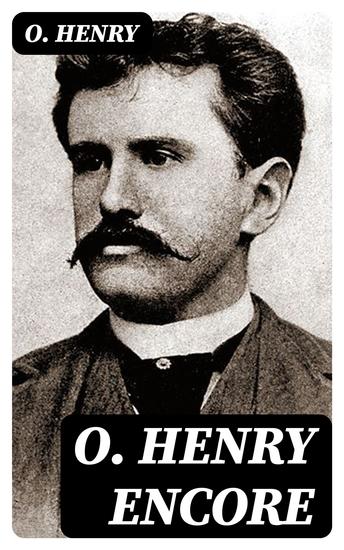
O Henry Encore - cover

O Henry Encore

O. Henry

Casa editrice: DigiCat

  • 0
  • 0
  • 0

Sinossi

In "O. Henry Encore," readers are treated to a delightful compendium of the master storyteller's signature short stories, showcasing his ingenious ability to weave wit and poignancy into brief narratives. Known for his twist endings and astute observations of early 20th-century American life, O. Henry employs a distinct literary style marked by playful language and vivid characterization. Each story encapsulates a slice of humanity, often set against the bustling backdrop of urban America, highlighting themes of love, irony, and serendipity, which resonate deeply within the historical context of his time. O. Henry, the pseudonym of William Sydney Porter, was a prolific American writer whose life experiences—from working in a Texas bank to his time spent in prison—infinitely enriched his storytelling. His own encounters with the complexities of life, coupled with an unquenchable thirst for the intricacies of human relationships, led him to craft narratives that reflect both humor and pathos. His unique voice has secured his place as an iconic figure in American literature, influencing countless writers and readers alike. "O. Henry Encore" is a must-read for aficionados of short fiction and those intrigued by clever narrative structures. This collection not only showcases O. Henry's unparalleled literary craft but also invites readers to explore the timeless human experiences that continue to resonate. Perfect for new readers and O. Henry enthusiasts alike, this anthology is a celebration of life's unexpected moments.
Disponibile da: 13/06/2022.
Lunghezza di stampa: 149 pagine.

Altri libri che potrebbero interessarti

  • Germinal - cover

    Germinal

    Zola Émile

    • 0
    • 0
    • 0
    Émile Zola's Germinal is a powerful and unflinching portrayal of working-class struggle, social injustice, and the relentless fight for dignity. Widely regarded as one of the greatest novels of the nineteenth century, this masterpiece of literary naturalism immerses readers in the harsh realities of coal miners in northern France and delivers a searing critique of industrial capitalism.
    
    The story follows Étienne Lantier, a young, unemployed mechanic who arrives in a mining town seeking work and survival. He soon finds employment in the coal pits, where he witnesses firsthand the brutal conditions endured by the miners—grueling labor, meager wages, hunger, and constant danger beneath the earth. Entire families toil in darkness, their lives dictated by the demands of powerful mine owners who profit from their suffering.
    
    As Étienne becomes increasingly aware of the systemic exploitation around him, he begins to embrace revolutionary ideas and dreams of collective resistance. His growing involvement in the workers' movement sparks tension within the community and sets the stage for a dramatic and devastating strike. Zola masterfully depicts the rising anger, desperation, and hope of the miners as they confront starvation, repression, and betrayal.
    
    With meticulous realism and emotional intensity, Germinal explores themes of class conflict, solidarity, poverty, and human resilience. Zola does not shy away from the physical and psychological toll of industrial labor; his vivid descriptions of the mines create an atmosphere that is both suffocating and unforgettable. Yet amid the darkness, he also reveals moments of tenderness, courage, and shared humanity.
    
    The novel's title—referring to a spring month in the French Revolutionary calendar—symbolizes rebirth and renewal. Even in the wake of tragedy, Zola suggests that the seeds of change have been planted. The struggle for justice may be painful and incomplete, but it carries the promise of future transformation.
    
    Both a gripping narrative and a profound social document, Germinal remains strikingly relevant today. It is a timeless exploration of inequality and the enduring human desire for fairness and hope in the face of oppression.
    Mostra libro
  • A Little Cloud - From their pens to your ears genius in every story - cover

    A Little Cloud - From their pens...

    James Joyce

    • 0
    • 0
    • 0
    James Augustine Aloysius Joyce was born on the 2nd February 1882 in Dublin into a middle-class family, and the eldest of ten surviving siblings 
    Admired as a brilliant student he briefly attended the Christian Brothers-run O'Connell School before excelling at the Jesuit schools of Clongowes and Belvedere.  From there he went on to attend University College Dublin from 1898, studying English, French and Italian 
    In 1902, Joyce was now in his early twenties, and went to Paris to study Medicine but soon abandoned his teachings.  Back in Dublin to attend to his dying Mother he met Nora Barnacle. They bonded immediately into a life-long match. Together they decided to emigrate to Europe.  The couple lived in Trieste, Rome, Paris, and finally Zürich where Joyce pursued a variety of jobs and ventures to supplement his literary pursuits but none of these paid off.  
    After publishing a poetry volume, ‘Chamber Music’, in 1907, his short story collection ‘The Dubliners’, in 1914, helped establish his talent in the rapidly changing world.  
    Although far from home Joyce’s literary heart and works were set in his recollections of Dublin.  Characters are close resemblances of family and friends and indeed enemies.  His landmark work ‘Ulysses’, published in 1922, is set in the streets and alleyways of the city as it parallels Homer’s Odyssey in a variety of styles including its famed stream of consciousness. 
    His pen continued to produce classics of the order of ‘A Portrait of the Artist as A Young Man’ and ‘Finnegan’s Wake’ together with several volumes of poetry and a play ‘The Exiles, in 1918.   
    On the 11th January 1941, Joyce underwent surgery in Zürich for a perforated duodenal ulcer. The next day he fell into a coma. On the 13th after a brief period of lucidity in which he called for his wife and son he passed.  He was 58.
    Mostra libro
  • Normal Social Life The (Unabridged) - cover

    Normal Social Life The (Unabridged)

    H. G. Wells

    • 0
    • 0
    • 0
    Herbert George Wells (21 September 1866 - 13 August 1946) was an English writer. Prolific in many genres, he wrote dozens of novels, short stories, and works of social commentary, history, satire, biography and autobiography. His work also included two books on recreational war games. Wells is now best remembered for his science fiction novels and is often called the "father of science fiction", along with Jules Verne and the publisher Hugo Gernsback.
    THE NORMAL SOCIAL LIFE: Produces an increasing surplus of energy and opportunity, more particularly under modern conditions of scientific organisation and power production; and this through the operation of rent and of usury tends to.
    Mostra libro
  • August Heat - From their pens to your ears genius in every story - cover

    August Heat - From their pens to...

    W F Harvey

    • 0
    • 0
    • 0
    William Fryer Harvey AM was born on 14th April 1885 into a wealthy Quaker family in Leeds, West Yorkshire. 
    He was educated at the Quaker Bootham School in Yorkshire and Leighton Park School in Reading before university at Balliol College, Oxford.  
    His health was fragile and he poured his energies into writing short stories and in 1910 published his first collection ‘Midnight House’. 
    In the Great War he was with the Friends' Ambulance Unit and then served as a surgeon-lieutenant in the Royal Navy.  There he received the Albert Medal for Lifesaving but lung damage received at that time troubled him for the rest of his life. 
    He continued to write short stories, and even a memoir, but by 1925 ill health had forced his retirement to any outside work.  Three years later he published his second collection which contained his macabre classic ‘The Beast with Five fingers’, only one more collection would come from his pen in his lifetime. 
    For many years of his life he now lived in Switzerland with his wife but a yearning to be home saw them come back to England in 1935. 
    W F Harvey died in Letchworth on the 4th June 1937. He was 52.
    Mostra libro
  • To-- (1829) - cover

    To-- (1829)

    Edgar Allan Poe

    • 0
    • 0
    • 0
    To–– (1829): Edgar Allan Poe was an American writer, poet, editor, and literary critic who is best known for his poetry and short stories.
    
    I heed not that my earthly lot
    Hath-little of Earth in it—
    That years of love have been forgot
    In the hatred of a minute:—
    Mostra libro
  • Stolen Body The (Unabridged) - cover

    Stolen Body The (Unabridged)

    H. G. Wells

    • 0
    • 0
    • 0
    A pair of casual paranormal researchers are experimenting with the idea of astral projection. One night, one of them inadvertently succeeds in projecting his spirit from his body, which is then taken possession of by a malevolent entity in his absence.
    Mostra libro