Rejoignez-nous pour un voyage dans le monde des livres!
Ajouter ce livre à l'électronique
Grey
Ecrivez un nouveau commentaire Default profile 50px
Grey
Abonnez-vous pour lire le livre complet ou lisez les premières pages gratuitement!
All characters reduced
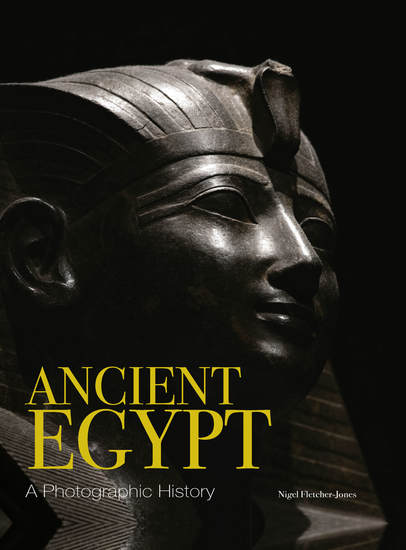
Ancient Egypt - A Photographic History - cover

Ancient Egypt - A Photographic History

Nigel Fletcher-Jones

Maison d'édition: Amber Books Ltd

  • 0
  • 0
  • 0

Synopsis

First appearing around the mighty River Nile in the fourth millennium BC, Ancient Egypt is one of the great wellsprings of human civilization. Egyptian culture developed around a complex system of religious rituals tied to the agricultural seasons, with the pharaoh a living deity at the centre. Mighty pyramids, tombs and monuments were built to celebrate the pharaohs, many of which can still be seen in all their splendour today.
 
Arranged chronologically, Ancient Egypt offers a compact photographic guide, from the 4000 BC Naqada culture to the end of the Ptolemy dynasty with the suicide of Cleopatra in 30 BC. In between, discover the Narmer Palette, a 31st century BC stone tablet that records the unification of Upper and Lower Egypt by King Narmer; learn about Amenhotep the Magnificent, during whose reign Egypt reached the peak of its artistic and international power; marvel at the massive, rock-cut temples of Abu Simbel, dedicated to Pharaoh Ramesses II (“the Great”), marking the southern extent of the Egyptian empire and celebrating his victory over the Hittites at the Battle of Kadesh; and discover how Egypt was ruled by Archaemenid Persia for almost 200 years, until the arrival of Alexander the Great and his all-conquering Macedonian army.
 
Colourful, engaging and illustrated throughout with more than 180 photographs, Ancient Egypt is a vivid pictorial introduction to 4,000 years of Ancient Egyptian civilization.
Disponible depuis: 01/05/2024.
Longueur d'impression: 224 pages.

D'autres livres qui pourraient vous intéresser

  • Paracelsus: A short biography - 5 Minutes: Short on time – long on info! - cover

    Paracelsus: A short biography -...

    5 Minutes, 5 Minute Biographies,...

    • 0
    • 0
    • 0
    Paracelsus, natural philosopher and healer: Life and work in a short biography! Everything you need to know, brief and concise. Infotainment, education and entertainment at its best!
    Voir livre
  • The Long Surrender - cover

    The Long Surrender

    Burke Davis

    • 0
    • 0
    • 0
    In April 1865, Richmond fell to the Union army and Gen. Robert E. Lee surrendered to his Northern counterpart, Ulysses S. Grant, at the Appomattox Court House. But the Civil War was far from over. 


    Determined to keep Confederate dreams of secession alive, President Jefferson Davis and his cabinet fled the burning capital city. With Union troops in pursuit, the fugitives rallied loyalists across the South and made plans to escape to Cuba. In the aftermath of President Abraham Lincoln's assassination, a $100,000 bounty was placed on Davis's head. Finally captured in Irwinville, Georgia, the former US senator and secretary of war became a prisoner of the American government. The harsh treatment he received would inflame tensions between North and South for years to come. 


    Meticulously researched and brilliantly told, The Long Surrender brings these dramatic events to vivid, unforgettable life and paints a fascinating portrait of Davis, one of history's most enigmatic figures. By shining a light on this forgotten chapter of the Civil War, bestselling author Burke Davis examines the lasting impact of America's bloodiest conflict on the national character.
    Voir livre
  • How the Mafia Saved My Life - cover

    How the Mafia Saved My Life

    LaQue Duren

    • 0
    • 0
    • 0
    How The Mafia Saved My Life by LaQue Duren is a powerful narrative of redemption and resilience. LaQue recounts her journey from a path of peril to one of purpose, guided by a group of individuals who saw her value when she couldn't see it herself. Enduring abuse and the harsh realities of poverty, she was lifted from her circumstances and shown a new way of life. 
    The book delves into LaQue's journey of forgiveness, where she finds the strength to forgive her abusers and emerge stronger from the ashes of her past. It's a compelling story of transformation and hope, resonating with anyone who is searching for a way out of their challenges. 
    LaQue Duren's background as a charismatic and influential motivational speaker and coach adds depth to her narrative. Her professional training with the Girls Coalition of Boston in preventing teen prostitution and the exploitation of girls reflects her commitment to making a positive impact on society. Through various outreach programs and her coaching work, LaQue continues to inspire and uplift others, emphasizing that our past does not define our future and that we all have the potential to rise above adversity.
    Voir livre
  • The Republic - cover

    The Republic

    Plato

    • 0
    • 0
    • 0
    The Republic (Greek: Politeia) is a Socratic dialogue, written by Plato around 380 BC, concerning the definition of (justice), the order and character of the just city-state and the just man, reason by which ancient readers used the name On Justice as an alternative title (not to be confused with the spurious dialogue also titled On Justice). The dramatic date of the dialogue has been much debated and though it must take place some time during the Peloponnesian War, "there would be jarring anachronisms if any of the candidate specific dates between 432 and 404 were assigned".    It is Plato's best-known work and has proven to be one of the most intellectually and historically influential works of philosophy and political theory. In it, Socrates along with various Athenians and foreigners discuss the meaning of justice and examine whether or not the just man is happier than the unjust man by considering a series of different cities coming into existence "in speech", culminating in a city (Kallipolis) ruled by philosopher-kings; and by examining the nature of existing regimes.    The participants also discuss the theory of forms, the immortality of the soul, and the roles of the philosopher and of poetry in society. Short Summary (Epilogue): X.1—X.8. 595a—608b. Rejection of Mimetic Art X.9—X.11. 608c—612a. Immortality of the Soul X.12. 612a—613e. Rewards of Justice in Life X.13—X.16. 613e—621d. Judgment of the Dead The paradigm of the city — the idea of the Good, the Agathon — has manifold historical embodiments, undertaken by those who have seen the Agathon, and are ordered via the vision. The centre piece of the Republic, Part II, nos. 2–3, discusses the rule of the philosopher, and the vision of the Agathon with the allegory of the cave, which is clarified in the theory of forms.    The centre piece is preceded and followed by the discussion of the means that will secure a well-ordered polis (City). Part II, no. 1, concerns marriage, the community of people and goods for the Guardians, and the restraints on warfare among the Hellenes. It describes a partially communistic polis. Part II, no. 4, deals with the philosophical education of the rulers who will preserve the order and character of the city-state. In Part II, the Embodiment of the Idea, is preceded by the establishment of the economic and social orders of a polis (Part I), followed by an analysis (Part III) of the decline the order must traverse. The three parts compose the main body of the dialogues, with their discussions of the "paradigm", its embodiment, its genesis, and its decline. The Introduction and the Conclusion are the frame for the body of the Republic.    The discussion of right order is occasioned by the questions: "Is Justice better than Injustice?" and "Will an Unjust man fare better than a Just man?" The introductory question is balanced by the concluding answer: "Justice is preferable to Injustice". In turn, the foregoing are framed with the Prologue (Book I) and the Epilogue (Book X). The prologue is a short dialogue about the common public doxai (opinions) about "Justice". Based upon faith, and not reason, the Epilogue describes the new arts and the immortality of the soul.
    Voir livre
  • Praying with the Psalms - A Year of Daily Prayers and Reflections on the Words of David - cover

    Praying with the Psalms - A Year...

    Eugene H. Peterson

    • 0
    • 0
    • 0
    A year of prayer through the Psalms, some of the most sensitive and honest words written about daily stress and blessings, with commentary from beloved theologian and pastor Eugene Peterson.  
    In Praying with the Psalms, readers are granted a fresh look at the power of the Psalms for daily devotional practice. Daily selections of the Psalms are set alongside Peterson’s invaluable reflections and meditations, simultaneously making the prayers more accessible for beginners and expanding more familiar readers’ understanding of them.   
    Straightforward and yet endlessly rich, Praying with the Psalms is a vital spiritual companion for anyone desiring to deepen their faith. 
    Voir livre
  • The Book of Good Counsel - cover

    The Book of Good Counsel

    Sir Edwin Arnold

    • 0
    • 0
    • 0
    A fine collection of moral and practical advice in the form of poetry and verse. Written by Sir Edwin Arnold, a British poet, and journalist, this work draws inspiration from ancient Indian literature, particularly the ancient Sanskrit text "Hitopadesha." With its wisdom and insights into human behavior, the book offers valuable life lessons, making it a source of inspiration for readers seeking guidance and self-improvement. 
     
    Sir Edwin Arnold was an English poet and journalist, born on June 10, 1832, in Gravesend, Kent, England. He is best remembered for his epic poem "The Light of Asia," published in 1879, which narrates the life and teachings of Gautama Buddha. The poem gained immense popularity and made Arnold a prominent figure in the literary world. He served as a journalist for several British newspapers, including The Daily Telegraph and The Daily Telegraph, and later became the editor of The Daily Telegraph. Arnold's work and contributions earned him a knighthood in 1888, recognizing his significant influence on literature and journalism in the late 19th century.
    Voir livre