Unisciti a noi in un viaggio nel mondo dei libri!
Aggiungi questo libro allo scaffale
Grey
Scrivi un nuovo commento Default profile 50px
Grey
Iscriviti per leggere l'intero libro o leggi le prime pagine gratuitamente!
All characters reduced
This Is How They Tell Me the World Ends - The Cyberweapons Arms Race - cover

Ci dispiace! L'editore o autore ha rimosso questo libro dal nostro catalogo. Ma per favore non ti preoccupare, hai ancora oltre 500.000 altri libri da scegliere!

This Is How They Tell Me the World Ends - The Cyberweapons Arms Race

Nicole Perlroth

Casa editrice: Bloomsbury Publishing

  • 0
  • 0
  • 0

Sinossi

THE NEW YORK TIMES BESTSELLER 
WINNER of the 2021 Financial Times & McKinsey Business Book of the Year Award 
 
“Part John le Carré and more parts Michael Crichton . . . spellbinding.” The New Yorker 
 
"Written in the hot, propulsive prose of a spy thriller" (The New York Times), the untold story of the cyberweapons market-the most secretive, government-backed market on earth-and a terrifying first look at a new kind of global warfare. 
 
Zero day: a software bug that allows a hacker to break into your devices and move around undetected. One of the most coveted tools in a spy's arsenal, a zero day has the power to silently spy on your iPhone, dismantle the safety controls at a chemical plant, alter an election, and shut down the electric grid (just ask Ukraine). 
  
For decades, under cover of classification levels and non-disclosure agreements, the United States government became the world's dominant hoarder of zero days. U.S. government agents paid top dollar-first thousands, and later millions of dollars- to hackers willing to sell their lock-picking code and their silence.  
 
Then the United States lost control of its hoard and the market.  
 
Now those zero days are in the hands of hostile nations and mercenaries who do not care if your vote goes missing, your clean water is contaminated, or our nuclear plants melt down. 
 
Filled with spies, hackers, arms dealers, and a few unsung heroes, written like a thriller and a reference, This Is How They Tell Me the World Ends is an astonishing feat of journalism. Based on years of reporting and hundreds of interviews, The New York Times reporter Nicole Perlroth lifts the curtain on a market in shadow, revealing the urgent threat faced by us all if we cannot bring the global cyber arms race to heel.
Disponibile da: 09/02/2022.
Lunghezza di stampa: 528 pagine.


Altri libri che potrebbero interessarti

  • Diaries of a Distant Affair - cover

    Diaries of a Distant Affair

    Brittani Malonson

    • 0
    • 0
    • 0
    In life, we all go through experiences that are simple, but become complicated with time. When I got my dream job, all I wanted was to aspire to be the best worker bee, I didn't expect a mutual infatuation with someone who was in a relationship as a life experience; but it happened. I ended up becoming the other woman to witness the relationship come apart the way it came together, but from distance. Listen to explore my diary of emotional rollercoasters with dark euphoric highs and hard to swallow realizations while journaling my self discovery and working within a love triangle.
    Mostra libro
  • Haunted India - cover

    Haunted India

    Shobha Negi

    • 0
    • 0
    • 0
    Haunted India is a spine-chilling audiobook that takes you on a thrilling journey through the most haunted places in India, uncovering real paranormal encounters, ghostly legends, and eerie mysteries that have terrified people for generations. From abandoned forts and cursed villages to haunted mansions and mysterious Forts, each story immerses you in the dark side of India’s supernatural world. Perfect for horror lovers and paranormal enthusiasts, this audiobook blends real experiences with haunting tales to create a powerful listening experience. Press play and step into a world where the line between the living and the unknown disappears.
    Mostra libro
  • Room of One’s Own A: Book Summary & Analysis - cover

    Room of One’s Own A: Book...

    Briefly Summaries

    • 0
    • 0
    • 0
    This is a concise summary and analysis of A Room of One’s Own, by Virginia Woolf. It is not the original book and is not affiliated with or endorsed by Virginia Woolf. Ideal for those seeking a quick and insightful overview.
     
    This seminal work of literary criticism and feminist thought explores the conditions necessary for women to write and create freely. Through a blend of essay and fiction, the book examines the historical exclusion of women from literature, arguing that financial independence and personal space are essential for artistic expression. With incisive wit and eloquence, it challenges traditional gender roles and remains a foundational text in discussions of gender, creativity, and societal constraints.
    Mostra libro
  • Conscious Grieving - A Transformative Approach to Healing from Loss - cover

    Conscious Grieving - A...

    Claire Bidwell Smith

    • 0
    • 0
    • 0
    From one of the leading grief therapists, this compassionate and accessible guide to grieving offers a new framework for understanding and navigating loss.An intimate guide to grieving that offers hope and healing within loss from one of the nation’s top grief therapists.    Conscious Grieving is a book for anyone seeking guidance and support after loss. Renowned grief therapist Claire Bidwell Smith combines her deeply personal experience of loss with her long career spent working with thousands of people to introduce a new approach to grief, one that promotes hope and even transformation.   What does it mean to grieve consciously? Most of the time, when we lose someone we love, it feels like grief is just happening to us. We feel out of control, and overwhelmed. Claire reminds us that while loss is something that inevitably happens to all of us, how we choose to grieve is up to us. When we can consciously engage with our grief, rather than avoiding it, we can access profound pathways to healing.  Presented in a series of thoughtful, brief vignettes that don’t overwhelm the reader, Conscious Grieving offers a new framework for each stage of grief: Entering, Engaging, Surrendering, and Transforming. Entering – staying present and taking care of ourselves as we navigate the shock and upheaval of a new loss.  Engaging – navigating that first year after a loss by staying in tune with our needs as more complicated feelings of depression, guilt or anger surface. Surrendering – facing the changes to our identity and who we are becoming in the face of loss. Transforming – through ritual, honor, hope, and grace, and learning to carry our grief with intention so that we can continue to grow, heal, and thrive.  Grief asks a lot from us. But the ability to grieve is a birthright. We grieve throughout our lifetimes. We grieve the deaths of loved ones yes, but also moves, divorce, illness, injustice, time lost, changes in the world and healing from these losses requires that we evaluate everything we ever considered meaningful. Healing means making our lives worth the pain we endure when we lose someone we love. And transforming through grief is an opportunity afforded to all.
    Mostra libro
  • Learn Swahili With Music - cover

    Learn Swahili With Music

    Innovative Language Learning, ...

    • 0
    • 0
    • 0
    Can learning Swahili be as simple as listening to music? 


    And as easy as remembering song lyrics?


    Just think. You remember song lyrics because lyrics are catchy, repeated throughout the song, and go with the music, right? Now, if you stuck in Swahili, you’d easily learn Swahili words and phrases the same way! 


    So, yes, learning Swahili is as easy as listening to music… with the Learn Swahili With Music Audiobook.


    Just press play, and you’ll hear Swahili words and phrases repeated to the beat of upbeat and cheerful music. And… follow along!


    You’ll learn 180+ most common Swahili words and phrases… while relaxing at home, or while driving to work.


    Learn Swahili With Music is the easiest way to start learning Swahili.. without getting overwhelmed by complicated explanations. Perfect for new learners with little to no language learning experience.


    What will you learn?
     
    180+ Words & Phrases Including...
     
    • Basic Greetings
     
    • Numbers
     
    • Common Questions and Answers
     
    • Parts of the Body & Talking About Your Wellbeing
     
    • Common Hobbies
     
    • And much more


    Learn Swahili With Music includes...
     
    • 15 Songs/Lessons Inside (Each is about 7 minutes long)
     
    • Fast-Paced Review Section at the End of Each Lesson
     
    • 1 Hour 50 Minutes in Total
     
    • Accompanying PDF eBook with the Words, Phrases and Translations


    Download the PDF and read along
    Mostra libro
  • What Is Property? - An Inquiry into the Principle of Right and of Government - cover

    What Is Property? - An Inquiry...

    Pierre-Joseph Proudhon

    • 0
    • 0
    • 0
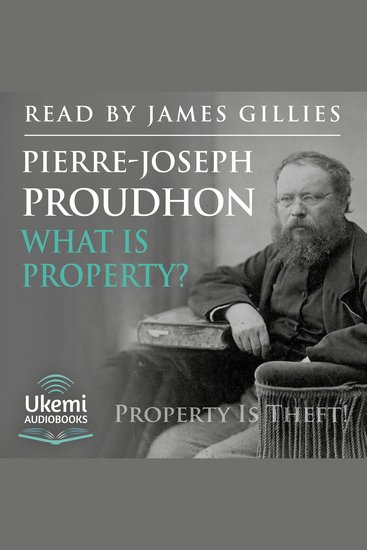
    ‘Property is Theft’, a phrase which has passed into common parlance, was the rallying call of Pierre-Joseph Proudhon’s political treatise What Is Property? Proudhon (1809-1865) was both admired and excoriated. A political theorist of the first order, he was vilified in his native France by the Communists and the Monarchists alike, though admired by Karl Marx as well as many in the nation’s academia and judiciary who valued the clarity of his thought and analytical method.  
     
    He criticised both Right and Left (the very definition of French political thinking), describing them as two sides of the same coin. Their solutions to society’s ills, he said, were like Thesis and Antithesis, based on a common error and both inadequate to the task of healing society. He offered, instead, a third way, which he called his Synthesis. Regarded as the founder of modern Anarchism, his aim was not to engender chaos, as the word anarchy often connotes, but to suggest a workable, political, and economic foundation for society which would promote order and equity for all under the most unfettered conditions of individual liberty.  
     
    Proudhon grew up in poverty, and was home schooled as a child, but received a bursary in his youth sufficient to allow him to attend the City College in his home town (though not sufficient, it seems, to buy him shoes). There, he discovered the library which introduced him to a world, classical and contemporary, previously denied him. Lacking wealth or contacts, he worked variously as a printer, a compositor and proof-reader by day and an essayist by night, learning Latin along the way to assist in his work. In 1830, a friend, a scholar, invited Proudhon to join him in Paris to pursue his philosophical writings full time. When a cholera outbreak forced his return home, Proudhon spent the next few years juggling his two careers. In 1839, he applied for a pension (bursary) at the Academy of Besançon which obliged him to write works on its behalf.  
     
    What Is Property?, published in France in 1840, was his first. It was so controversial that little else followed. However, it established his reputation, and he was eventually able to pursue his philosophical work full time. What Is Property? (First Memoir) attempts to uncover the roots of poverty and associated social ills and examines different attitudes to poverty and wealth from the Greeks to the present day. Proudhon quickly identifies a common thread, property, which he distinguishes from possession, and argues that only a fundamental, though gradual, abandonment of property (as an asset) and all that flows from it, can rescue society from its current conflicts. The memoir seeks to illuminate the underlying causes of war, poverty, slavery, and oppression and points the way to a solution. In effect, it is a practical manual for the survival of mankind. The Second Memoir (1841), included on this recording, is Proudhon’s response to the criticisms of the First Memoir, initially uncomprehending and then self-assured by turns. What Is Property? is Proudhon’s masterwork. It divides opinion, but no one who hears it can come away with their view of their own world unchanged.  
     
    Translation: Benjamin R. Tucker.
    Mostra libro