Begleiten Sie uns auf eine literarische Weltreise!
Buch zum Bücherregal hinzufügen
Grey
Einen neuen Kommentar schreiben Default profile 50px
Grey
Jetzt das ganze Buch im Abo oder die ersten Seiten gratis lesen!
All characters reduced
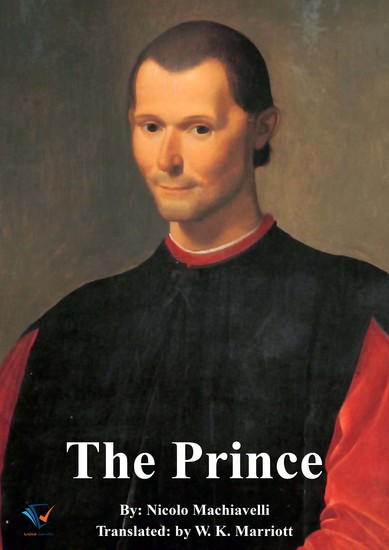
The Prince - cover

The Prince

Niccolo Machiavelli

Verlag: Al-Mashreq eBookstore

  • 0
  • 0
  • 0

Beschreibung

The Prince Trick by Niccolò Machiavelli is a thought-provoking exploration of power and strategy that delves deep into the art of political maneuvering. In this provocative work, Machiavelli offers a series of cunning tactics and strategies that rulers can employ to consolidate their power and navigate the treacherous waters of politics. Through a blend of historical anecdotes and philosophical insights, he reveals the subtle and often ruthless methods used by leaders to outwit their adversaries and maintain control. Whether you are a student of history or a keen observer of modern politics, The Prince Trick provides invaluable lessons on leadership and manipulation that remain relevant today. Uncover the timeless secrets of political strategy and gain a deeper understanding of the dynamics that shape power.
Verfügbar seit: 12.09.2024.
Drucklänge: 280 Seiten.

Weitere Bücher, die Sie mögen werden

  • Corporations Are Not People - Reclaiming Democracy from Big Money and Global Corporations (2nd Edition) - cover

    Corporations Are Not People -...

    Jeffrey D. Clements, Bill Myers

    • 0
    • 0
    • 0
    A revised and updated edition of the definitive guide to overturning Citizens United. 


    Since the Supreme Court's Citizens United ruling that the rights of things—money and corporations—matter more than the rights of people, America has faced a crisis of democracy. In this timely and thoroughly updated second edition, Jeff Clements describes the strange history of this bizarre ruling, its ongoing destructive effects, and the growing movement to reverse it. 


    He includes a new chapter, "Do Something!," showing how—state by state and community by community—Americans are using creative strategies and tools to renew democracy and curb unbalanced corporate power. Since the first edition, sixteen states, one-hundred-sixty members of Congress, and five hundred cities and towns have called for a constitutional amendment to overturn Citizens United, and the list is growing. This is a fight we can win! 


    "More relevant than ever, this updated edition of Corporations Are Not People chronicles the remarkably vibrant, nationwide grassroots movement to 'get money out and voters in.' " —Katrina vanden Heuvel, Editor and Publisher, The Nation
    Zum Buch
  • The Inevitable Revolution - cover

    The Inevitable Revolution

    Leo Tolstoy

    • 0
    • 0
    • 0
    The Inevitable Revolution is an essay about abolishing the law of violence and replacing it with the law of love. It is a text on civil disobedience, pacifism, and anarchism, and it is Tolstoy's last non-fiction work detailing his final opinions on political, economic, and religious issues.
    
    In it, he criticizes prisons, parliaments, wars, conscription, capitalism, theft, revolutionary violence, and taxes, and praises Christianity's message of love as the solution to these problems; although he also recognizes the law of love in other religions. Tolstoy asked people not to directly commit any violence, not to take part in violence, and not to approve of violence.
    Zum Buch
  • How To Raise A Citizen (And Why It's Up to You to Do It) - cover

    How To Raise A Citizen (And Why...

    Lindsey Cormack

    • 0
    • 0
    • 0
    An essential guide to nurturing the next generation of responsible, informed citizens 


    Lindsey Cormack's book, How to Raise a Citizen (And Why It's Up to You to Do It), speaks directly to an America in which civic knowledge is alarmingly sparse and many people dread politics. It's a tool for parents, educators, and anyone eager to fill this gap. In the book, Cormack offers an engaging and practical approach to discussing political issues and the inner workings of the US government with children. She explains why our schools can no longer be the sites of civic education that they used to be and provides parents with strategies and necessary know-how to be able to impart these lessons to their children. From the intricacies of the voting process to the foundational principles of democracy and the significance of key government documents like the Constitution, the author demystifies complex topics with clarity and insight. 


    How to Raise a Citizen is a roadmap to a future where political dialogue and civic engagement are not just encouraged but celebrated in our homes. With actionable advice and easy-to-understand explanations, it empowers listeners to instill a sense of civic responsibility and curiosity in the young minds they influence.
    Zum Buch
  • Reflections on Gandhi - cover

    Reflections on Gandhi

    George Orwell

    • 0
    • 0
    • 0
    This audiobook is narrated by an AI Voice.   
    "Reflections on Gandhi" is an essay by George Orwell, first published in 1949, which responds to Mahatma Gandhi's autobiography The Story of My Experiments with Truth. The essay, which appeared in the American magazine Partisan Review, discusses the autobiography and offers both praise and criticism to Gandhi, focusing in particular on the effectiveness of Gandhian nonviolence and the tension between Gandhi's spiritual worldview and his political activities.
    Zum Buch
  • Planes Trains and Toilet Doors: 50 Places That Changed British Politics - cover

    Planes Trains and Toilet Doors:...

    Matt Chorley

    • 0
    • 0
    • 0
    ‘’F *** ing brilliant. I would describe it as like a bag of political nuts – moreish and fabulously salty’ JOE LYCETT  
    A TIMES BOOK OF THE YEAR 
    Planes, Trains and Toilet Doors is an entertaining and original romp through the highs and lows of British political history and the unlikely locations that have decided our national fate. 
    Forget Westminster bust-ups and PMQs, some of the key events that have shaped modern British politics happened not in the cloisters of parliament or Downing Street’s many corridors of power, but in car parks, village halls and seaside resorts where the mundane have played host to the mighty. From Pitt the Younger’s Putney Heath duel to finding Margaret Thatcher a voice coach on a train, Harold Wilson’s ‘Scilly’ season holidays to John Major’s dental appointment clearing his path to No10 – these (and many more) are the places where chance meetings, untimely deaths and snap, sometimes daft, decisions changed the course of politics. 
    Matt Chorley has spent almost two decades covering Westminster, interviewing prime ministers, mocking ministers and chronicling the serious, and sometimes unintentionally absurd, events which act as unlikely turning points in the direction of a nation. Illustrated by award-winning political cartoonist Morten Morland, Planes, Trains and Toilet Doors combines Matt’s insider-knowledge, smart analysis and detailed research with his background in comedy to create an hilarious history of how politics actually happens. 
    Planes, Trains and Toilet Doors by Matt Chorley is a humorous and insightful commentary on the unexpected events and locations that have shaped Britain's political landscape. This non-fiction biography, which spans from the 21st century to the times of Pitt the Younger, is a top pick for anyone interested in the often absurd process of politics. 
    For fans of Rory Stewart (The Places In Between), David Kynaston (A Northern Wind), Chris Bryant (Code of Conduct), Tom Holland (Athelstan), and Wes Streeting (One Boy, Two Bills and a Fry Up). 
    HarperCollins 2023
    Zum Buch
  • How We Got Our Antiracist Constitution - Canonizing Brown v Board of Education in Courts and Minds - cover

    How We Got Our Antiracist...

    Jesse Merriam

    • 0
    • 0
    • 0
    Over the past decade, several American cities have been rocked by race riots. With each passing year, a new racial agenda emerges—from police defunding to education reform to reparations—inciting more and more division and radicalization along racial lines. What started all of this? The roots of this pathology run much deeper than the recent symptoms suggest. The civil rights revolution unleashed an assault on the US Constitution, and the sacralization of that revolution, marked by the canonization of Brown v. Board of Education (1954), has transformed our constitutional order. A system once rooted in local self-governance and natural rights now operates along new moral axes, entirely foreign to the American way of life. The choice is increasingly obvious: Either the traditional American order or the new civil rights regime will prevail.
    Zum Buch