Unisciti a noi in un viaggio nel mondo dei libri!
Aggiungi questo libro allo scaffale
Grey
Scrivi un nuovo commento Default profile 50px
Grey
Iscriviti per leggere l'intero libro o leggi le prime pagine gratuitamente!
All characters reduced
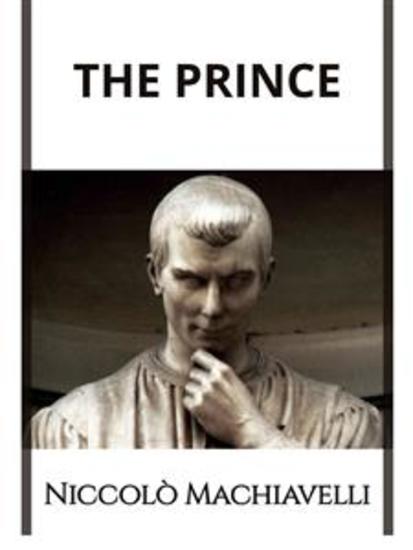
The Prince (Translated) - cover

The Prince (Translated)

Niccolò Machiavelli

Casa editrice: David De Angelis

  • 0
  • 0
  • 0

Sinossi

The Prince, by Niccolo Machiavelli, is a 16th-century political treatise. The Prince is sometimes claimed to be one of the first works of modern philosophy, especially modern political philosophy, in which the effective truth is taken to be more important than any abstract ideal. It was also in direct conflict with the dominant Catholic and scholastic doctrines of the time concerning politics and ethics. The Prince has the general theme of accepting that the aims of princes—such as glory and survival—can justify the use of immoral means to achieve those ends. Although it is relatively short, the treatise is the most remembered of Machiavelli's works and the one most responsible for bringing the word "Machiavellian" into usage as a pejorative. It even contributed to the modern negative connotations of the words "politics" and "politician" in western countries. In terms of subject matter it overlaps with the much longer Discourses on Livy, which was written a few years later. Machiavelli emphasized the need for realism, as opposed to idealism. Along with this, he stresses the difference between human-beings and animals since "there are two ways of contending, one in accordance with the laws, the other by force; the first of which is proper to men, the second to beast". In The Prince he does not explain what he thinks the best ethical or political goals are, except the control of one's own fortune, as opposed to waiting to see what chance brings. Machiavelli took it for granted that would-be leaders naturally aim at glory or honor. He associated these goals with a need for "virtue" and "prudence" in a leader, and saw such virtues as essential to good politics and indeed the common good. That great men should develop and use their virtue and prudence was a traditional theme of advice to Christian princes.  
Disponibile da: 02/11/2024.

Altri libri che potrebbero interessarti

  • A Practical Guide to Self-Hypnosis - cover

    A Practical Guide to Self-Hypnosis

    Melvin Powers

    • 0
    • 0
    • 0
    Summary from A Practical Guide to Self-Hypnosis:This book is written in terms that are comprehensible to the layman. The step-by-step instructions should afford the reader a means of acquiring self-hypnosis. The necessary material is here. The reader need only follow the instructions as they are given. It is the author's hope that you will, through the selective use of self-hypnosis, arrive at a more rewarding, well-adjusted, and fuller life.
    Mostra libro
  • Civil Disobedience - cover

    Civil Disobedience

    Henry David Thoreau

    • 0
    • 0
    • 0
    In the essay ‘Civil Disobedience’ (1849), Henry David Thoreau contends that an individual should not allow the government to overrule their conscience, and that it is incumbent upon every one to avoid acquiescence when the government attempts to make one an agent of injustice. It is thought that his motivation for writing the essay was, at least in part, due to his revulsion with slavery and with the Mexican–American War of 1846 to 1848: "This people must cease to hold slaves, and to make war on Mexico, though it cost them their existence as a people." He also argues that it is not appropriate to postpone one’s opposition to injustice until a future election, but that one ought to rather take immediate action to oppose a system as wicked as slavery.
    Mostra libro
  • The Life Worth Living - Disability Pain and Morality - cover

    The Life Worth Living -...

    Joel Michael Reynolds

    • 0
    • 0
    • 0
    More than 2,000 years ago, Aristotle said: "let there be a law that no deformed child shall live." This idea is alive and well today. During the past century, Supreme Court Justice Oliver Wendell Holmes Jr. argued that the United States can forcibly sterilize intellectually disabled women and philosopher Peter Singer argued for the right of parents to euthanize certain cognitively disabled infants. The Life Worth Living explores how and why such arguments persist by investigating the exclusion of and discrimination against disabled people across the history of Western moral philosophy. 


    Joel Michael Reynolds argues that this history demonstrates a fundamental mischaracterization of the meaning of disability, thanks to the conflation of lived experiences of disability with those of pain and suffering. Building on decades of activism and scholarship in the field, Reynolds shows how longstanding views of disability are misguided and unjust, and he lays out a vision of what an anti-ableist moral future requires. 


    The Life Worth Living is the first sustained examination of disability through the lens of the history of moral philosophy and phenomenology, and it demonstrates how lived experiences of disability demand a far richer account of human flourishing, embodiment, community, and politics in philosophical inquiry and beyond.
    Mostra libro
  • Make Your Own Rainbow - A colourful approach to all things STEAM - cover

    Make Your Own Rainbow - A...

    Leonie Briggs

    • 0
    • 0
    • 0
    Why not spend your day creating your very own rainbow? Looking to add some STEAM to your day, but unsure of the best way to do it? Dive into this creative STEAM book to spark young people's interest in a simple, safe and cost-effective way. Leonie provides a colourful approach to teaching tricky subjects, ranging from colour and chemical reactions to photosynthesis, with many more in between.
    Make Your Own Rainbowis a compilation of fun, easy, creative and effective activities for teachers of both primary and secondary school children, ideas that parents and carers can also enjoy at home. The aim of this book is to inspire young people to discover, interact with and enjoy STEAM subjects and in doing so, to help them develop a life-long love of these topics.
    Make Your Own Rainbowoffers a fresh perspective on teaching STEAM with a real emphasis on memorable learning. Leonie aims to make STEAM accessible to all through a range of tasks, resources and activities inspired by the colours of the rainbow. Examples include:
    
    - Rainbow Trail: Are you able to create a rainbow from nature/in the home or classroom?
    - Bubbles:Understand the colour and structure of bubbles in this mesmerising experiment.
    - Rainbow Indicator: Investigate if certain household objects are acid or alkali.
    - Plant Growth:Ever wanted to know what the best colour light is for plant growth?
    - Make Your Own Rainbow: Experiment with white light to make your own rainbow.
    This book is for those who want to develop their knowledge of STEAM subjects with minimum fuss but maximum results.Making Your Own Rainbowwill ignite a spark to really encourage educators, parents, carers, and young people to get involved with, enjoy and take further steps in STEAM.
    Suitable for teachers, community group leaders, parents and carers with an interest in STEAM subjects.
    Mostra libro
  • Moral Letters to Lucilius - cover

    Moral Letters to Lucilius

    Lucius Annaeus Seneca

    • 0
    • 0
    • 0
    "Philosophy is not a trick for the public, it is for the soul."
    
    Seneca was a statesman, dramatist, and one of Rome's wealthiest men—yet he spent his final days writing these letters to his friend Lucilius on how to find true freedom. Moral Letters to Lucilius is a deep dive into the practical application of Stoicism. Seneca tackles the universal anxieties we still face today: the fear of death, the burden of grief, the noise of the crowd, and the pursuit of luxury. He argues that the only true wealth is a mind that is at peace with itself and the natural order of the world.
    
    The "Doctor of the Soul": Seneca's writing style is warm, conversational, and filled with memorable aphorisms. He treats philosophy as a "remedy" for the sickness of the mind. Whether he is advising on how to choose a true friend or how to handle a difficult boss, his advice is designed to be used the moment you put the book down.
    
    The Resilience of the Mind: Through these letters, Seneca prepares Lucilius (and the reader) for the "slings and arrows of outrageous fortune." He emphasizes the practice of Premeditatio Malorum—rehearsing potential difficulties so that they never take us by surprise—and the importance of living every day as if it were our last.
    
    Why It Is a Modern Essential: From Silicon Valley CEOs to modern therapists, Seneca's letters remain a go-to resource for mental clarity. He teaches us that we "suffer more often in imagination than in reality" and provides the tools to build an unshakable inner character in an unpredictable world.
    
    Begin your journey toward a calmer life. Purchase "Moral Letters to Lucilius" today.
    Mostra libro
  • Washington's Heir - The Life of Justice Bushrod Washington - cover

    Washington's Heir - The Life of...

    Gerard N. Magliocca

    • 0
    • 0
    • 0
    The first biography of George Washington's extraordinary nephew, who inherited Mount Vernon and was Chief Justice John Marshall's right-hand man on the Supreme Court for nearly thirty years. 


    In Washington's Heir, Gerard N. Magliocca gives us the first published biography of Bushrod Washington, one of the most underrated Founding Fathers. Born in 1762, Justice Washington fought in the Revolutionary War, served in Virginia's ratifying convention for the Constitution, and was Chief Justice John Marshall's partner in establishing the authority of the Supreme Court. Though he could only see from one eye, Justice Washington wrote many landmark decisions defining the fundamental rights of citizens and the structure of the Constitution, including Corfield v. Coryell—an influential source for the Congress that proposed the Fourteenth Amendment. As George Washington's personal heir, Bushrod inherited both Mount Vernon and the family legacy of owning other people, one of whom was almost certainly his half-brother or nephew. Yet Justice Washington alone among the Founders was criticized by journalists for selling enslaved people and, in turn, issued a public defense of his actions that laid bare the hypocrisy and cruelty of slavery.
    Mostra libro