Join us on a literary world trip!
Add this book to bookshelf
Grey
Write a new comment Default profile 50px
Grey
Subscribe to read the full book or read the first pages for free!
All characters reduced
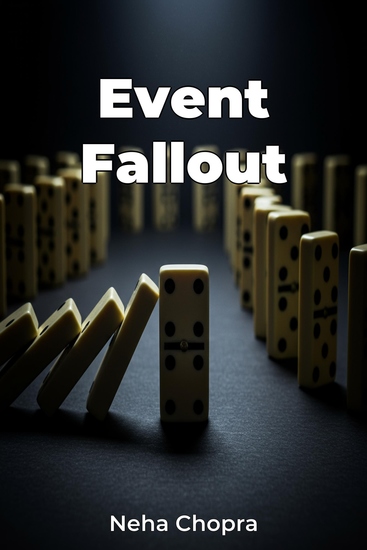
Event Fallout - cover

Event Fallout

Neha Chopra

Translator A AI

Publisher: Publifye

  • 0
  • 0
  • 0

Summary

Event Fallout examines how pivotal moments in science and politics trigger far-reaching consequences, reshaping our world in unexpected ways. The book explores the interconnectedness of events, revealing how a seemingly isolated incident can spark a cascade of effects across different fields. For example, the discovery of penicillin revolutionized medicine but also contributed to the rise of antibiotic-resistant bacteria, highlighting the unintended consequences of scientific innovation. This book uniquely analyzes "legacy events" through the lens of ripple effects, offering insights valuable for policy-making and crisis management. It's structured around three core themes: the Butterfly Effect in policy, the unintended consequences of scientific innovation, and the lasting impact of legacy events. By examining historical cases like the Cuban Missile Crisis and the development of the internet, the book avoids jargon, presenting each event with sufficient background to understand its unfolding.

 
The book progresses systematically, first introducing the core concepts of ripple effects, tipping points, and interconnectedness. It then presents detailed case studies from science and politics, analyzing short and long-term consequences. Finally, it synthesizes these cases to derive key principles for managing event fallout, offering a framework for navigating complex challenges like climate change.
Available since: 05/06/2025.
Print length: 70 pages.
Other books that might interest you

  • China's World View - Demystifying China to Prevent Global Conflict - cover

    China's World View -...

    David Daokui Li

    • 0
    • 0
    • 0
    Writing in response to the growing anti-Chinese sentiment and alarmed by the threat of war, Dr. David Daokui Li pulls from his wealth of firsthand experience to demystify contemporary Chinese society and advocate for understanding between China and the West. In this urgently needed and fascinating book, he explains the inner workings of a rising superpower to help the world understand how it works—and how to work with it. 


    In Li's hands, an economic and political system that often baffles Westerners becomes coherent, sophisticated, and logical. He begins by explaining how two thousand years of history—from Confucian philosophy and ancient imperial dynasties to Communist Party chairmen from Mao to Deng Xiaoping—profoundly influence China's leadership today. Li brings the listener into high-level meetings he attended with figures including Xi Jinping, showing China's approach to governance. 


    In demystifying contemporary Chinese society, Li helps listeners reconceptualize contemporary China and the implications of its growth. He asserts that China's rise will be beneficial for the global order, holding out the hope that with shared understanding and mutual learning the Chinese and Western systems will eventually find a way to peacefully coexist.
    Show book
  • Unequal - How extreme inequality is damaging democracy and what we can do about it - cover

    Unequal - How extreme inequality...

    David Buckham, Robyn Wilkinson,...

    • 0
    • 0
    • 0
    ‘Twenty-first-century capitalism and the democracies that enabled it are self-destructing... a sobering ― and impeccably researched ― warning of what is likely to come next’ Bruce Whitfield  
    The leading lights of the tech revolution – Gates, Bezos, Zuckerberg, Musk – have been hailed as savants and saviours of the modern age. And yet they are at the forefront of wealth inequality not seen since the heyday of the robber barons in the late 19th century, part of the slide to the First World War. Today, rampant inequality is inciting social unrest and undermining faith in the institutions of the democratic state. Citizens have been left at the mercy of unfettered capitalism – mere data subjects, endlessly surveilled, marshalled and increasingly angry and polarised. 
    The decoupling of capitalism from democracy has fostered an economic system seemingly powered by greed alone, with the marginalisation of democratic principles facilitating the rise of authoritarians and populists like Putin, Xi Jinping, Trump and Boris Johnson. 
    How has it come to this? And does the unanticipated fightback in Ukraine, with support from the West, show us the way to reclaiming the lost spirit of freedom inherent in liberal democracy?
    Show book
  • Freedom Riders The: The History of the Civil Rights Activists Who Rode Buses around the South to Protest Segregation - cover

    Freedom Riders The: The History...

    Editors Charles River

    • 0
    • 0
    • 0
    After a 1960 Supreme Court decision in Boynton v. Virginia, bus segregation was made illegal on new grounds: it violated the interstate commerce clause of the Constitution, by regulating the movement of people across state lines. With this victory in hand, the Freedom Rides of 1961 began. Organized primarily by a new group – the Congress on Racial Equality (CORE) – the Freedom Rides followed the same guidance that inspired the Montgomery Boycott and the Greensboro Sit-Ins – non-violent direct action. The purpose of the Freedom Rides was the test the Supreme Court's decision by riding from Virginia to Louisiana on integrated busses. This was notably the first major Civil Rights event that included a large segment of white participants.  
    	Mobs in places like Birmingham and Montgomery firebombed buses and brutally beat the Freedom Riders, sending dozens to the hospital. Mob violence, orchestrated by the KKK and their segregationist allies, erupted endlessly throughout the summer. White activists, who were viewed by the Ku Klux Klan as betraying their race, took the worst beatings of all.  
    	Both black and white Northerners had participated in the Freedom Rides, and civil rights activists sought other ways to harness their energy and activism in 1963. After the Freedom Rides, civil rights leaders initiated voter registration drives that could help register black voters and build community organizations that could help make their votes count. The momentum generated by the Freedom Rides and the following activism would lead to the famous March on Washington and eventually the passage of a historic civil rights bill in 1964. 
    Show book
  • Twilight's Last Gleaming - Can America Be Saved? - cover

    Twilight's Last Gleaming - Can...

    Todd Starnes

    • 0
    • 0
    • 0
    "Todd Starnes is a fierce defender of freedom and a great patriot. He has seen, and understands, what is happening to our country like few others—his book is absolutely terrific, a must read!" —President Trump 


    President Biden ushered in a dark winter of malaise across our great nation. He snuffed out Lady Liberty's bright beacon of hope and brought despair to the land. And now we stand at a time of great choosing. Do we choose the path that leads to freedom or the path that leads to tyranny? 


    We face difficult days, but not hopeless days. Together, we can restore the Republic and reclaim our standing in the world. But first, we must remember our roots and return to the values that made our nation great. A deep and abiding desire for freedom and liberty, girded by faith in God, is the essence of who we are. Those are the precepts that must be reaffirmed if America is to be saved.
    Show book
  • The Adventures of Poor Mrs Quack - cover

    The Adventures of Poor Mrs Quack

    Thornton W. Burgess

    • 0
    • 0
    • 0
    Hello, Jerry Muskrat! We'd forgotten all about you, said Mrs. Quack. "What was that you said?" Jerry good-naturedly repeated what he had said. Mrs. Quack's face brightened. "Do you really mean it?" she asked eagerly. "Do you really mean that you know of a pond where we could live and not be likely to be seen by these two-legged creatures called men?" "That's what I said," replied Jerry briefly. "Oh, Jerry, you're not joking, are you? Tell me you're not joking," begged Mrs. Quack. "Of course I'm not joking," returned Jerry just a little bit indignantly, "I am not the kind of a fellow to joke people who are in such trouble as you and Mr. Quack seem to be in." (Summary by Burgess)
    Show book
  • Rust Belt Union Blues - Why Working-Class Voters Are Turning Away from the Democratic Party - cover

    Rust Belt Union Blues - Why...

    Theda Skocpol, Lainey Newman

    • 0
    • 0
    • 0
    In the heyday of American labor, the influence of local unions extended far beyond the workplace. Unions were embedded in tight-knit communities, touching nearly every aspect of the lives of members and their families and neighbors. They conveyed fundamental worldviews, making blue-collar unionists into loyal Democrats who saw the party as on the side of the working man. Today, unions play a much less significant role in American life. 


    Lainey Newman and Theda Skocpol provide timely insight into the relationship between the decline of unions and the shift of working-class voters away from Democrats. Using western Pennsylvania as a case study, Newman and Skocpol argue that union members' loyalty to Democratic candidates was as much a product of the group identity that unions fostered as it was a response to the Democratic Party's economic policies. As the social world around organized labor dissipated, conservative institutions like gun clubs, megachurches, and other Republican-leaning groups took its place. 


    Rust Belt Union Blues sheds new light on why so many union members have dramatically changed their party politics. It makes a compelling case that Democrats are unlikely to rebuild credibility in places like western Pennsylvania unless they find new ways to weave themselves into the daily lives of workers and their families.
    Show book