Join us on a literary world trip!
Add this book to bookshelf
Grey
Write a new comment Default profile 50px
Grey
Subscribe to read the full book or read the first pages for free!
All characters reduced
Rough Hands Soften - cover

Rough Hands Soften

Nakoa Rainfall

Translator A AI

Publisher: Publifye

  • 0
  • 0
  • 0

Summary

Rough Hands Soften examines the historical evolution of work, charting the journey from arduous pre-industrial labor to today's technology-driven environments. The book highlights how technological innovation and a growing appreciation for rest have eased the physical burdens of work. Early innovations, like the printing press, while revolutionary, still demanded immense physical exertion, highlighting the gradual nature of this evolution. This exploration reveals the ongoing quest for efficiency and the shift from valuing brute force to ingenuity, offering insights into current labor practices and future trends in automation.

 
The book progresses chronologically, delving into specific historical periods like the Industrial Revolution to illustrate how technological breakthroughs fundamentally altered work. It presents a narrative non-fiction approach, drawing upon diverse sources like patent records and sociological studies to connect economics, sociology, and engineering, providing a holistic understanding.

 
A key argument is that progress should be measured not just by output but also by the well-being of the workforce, urging a reevaluation of workplace practices for sustainable labor models.
Available since: 02/27/2025.
Print length: 66 pages.
Other books that might interest you

  • Spanish and Portuguese in the New World The: The History and Legacy of the First European Rivalry in the Americas - cover

    Spanish and Portuguese in the...

    Editors Charles River

    • 0
    • 0
    • 0
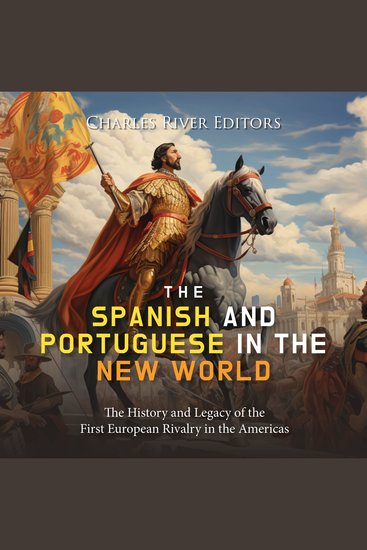
    In 1451, Prince Henry the Navigator helped fund and develop a new type of ship, the caravel, that featured triangular lateen sails and would be able to travel in the open ocean and sail against the wind. In 1488, Bartholomew Diaz rounded the southern tip of Africa, named the Cape of Good Hope by King John of Portugal, and entered the Indian Ocean from the Atlantic. 
    One explorer, Christopher Columbus, sought funding from the Portuguese to search for a passage to Asia by sailing westwards, but he was rejected. At this time in the late 15th century, Portugal’s domination of the western African sea routes prompted the neighboring Crown of Castile and the Catholic monarchs in modern Spain to search for an alternative route to south and east Asia (termed Indies), so they provided Columbus with the funding he required. By the time Christopher Columbus started setting back east from the New World after landing there in October 1492, he had explored San Salvador in the Bahamas (which he thought was Japan), Cuba (which he thought was China), and Hispaniola, the source of gold. As the common story goes, Columbus, en route back to Spain from his first journey, called in at Lisbon as a courtesy to brief the Portuguese King John II of his discovery of the New World. King John subsequently protested that according to the 1479 Treaty of Alcáçovas, which divided the Atlantic Ocean between Spanish and Portuguese spheres of influence, the newly discovered lands rightly belonged to Portugal. To make clear the point, a Portuguese fleet was authorized and dispatched west from the Tagus to lay claim to the “Indies,” which prompted a flurry of diplomatic activity in the court of Ferdinand and Isabella.
    Show book
  • City of Dignity - Christianity Liberalism and the Making of Global Los Angeles - cover

    City of Dignity - Christianity...

    Sean T. Dempsey

    • 0
    • 0
    • 0
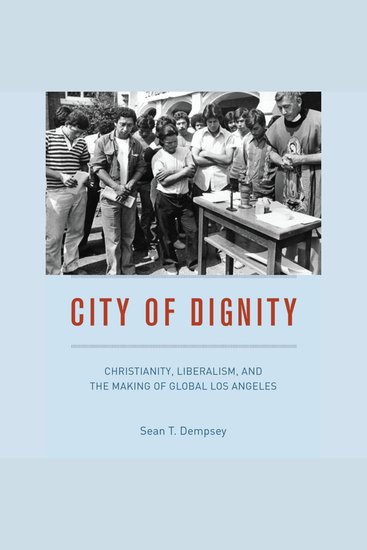
    City of Dignity illuminates how liberal Protestants quietly, yet indelibly, shaped the progressive ethics of postwar Los Angeles. 
      
    Contemporary Los Angeles is commonly seen as an American bulwark of progressive secular politics, a place that values immigration, equity, diversity, and human rights. But what accounts for the city’s embrace of such staunchly liberal values, which are more hotly contested in other parts of the country? The answer, Sean Dempsey reveals, lies not with those frequent targets of credit and blame—Democrats in Hollywood—but instead with liberal Protestants and other steadfast religious organizations of the postwar era. 
     
    As the Religious Right movement emerged in the 1970s, progressive religious activists quietly began promoting an ethical vision that made waves worldwide but saw the largest impact in its place of origin: metropolitan Los Angeles. At the center of this vision lay the concept of human dignity—entwining the integral importance of political and expressive freedom with the moral sanctity of the human condition—which suffused all of the political values that arose from it, whether tolerance, diversity, or equality of opportunity. The work of these religious organizations birthed such phenomena as the Sanctuary Movement—which provided safe haven for refugees fleeing conflict-torn Central America—and advocacy for the homeless, both of which became increasingly fraught issues amid the rising tides of neoliberalism and conservatism. City of Dignity explores how these interwoven spiritual and theological strands found common ground—and made common impacts—in the humanitarian ecosystem of one of America’s largest and most dynamic metro areas.
    Show book
  • The Napoleon Of Notting Hill - cover

    The Napoleon Of Notting Hill

    Gilbert K. Chesterton

    • 0
    • 0
    • 0
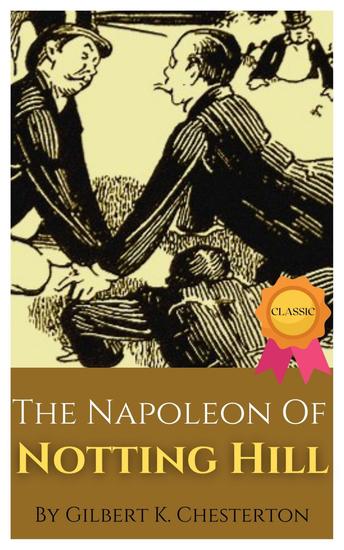
    In a London of the future, the drudgery of capitalism and bureaucracy have worn the human spirit down to the point where it can barely stand. When a pint-sized clerk named Auberon Quinn is randomly selected as head of state, he decides to turn London into a medieval carnival for his own amusement. One man, Adam Wayne, takes the new order of things seriously, organizing a Notting Hill army to fight invaders from other neighborhoods. At first his project baffles everyone, but eventually his dedication proves infectious, with delightful results. First published in 1904, The Napoleon of Notting Hill was Chestertons first novel. It has been called the best first novel by any author in the twentieth century.
    Show book
  • A Rare Recording of Albert Einstein Explaining E=MC(squared) - cover

    A Rare Recording of Albert...

    Albert Einstein

    • 0
    • 0
    • 0
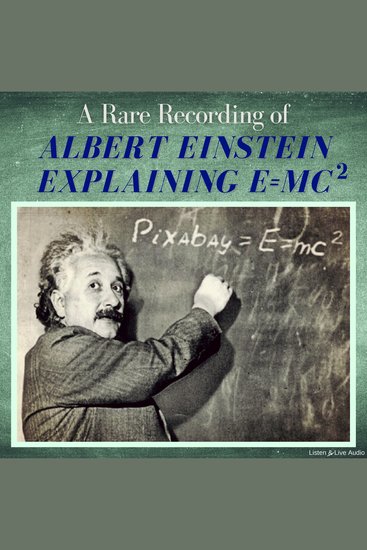
    Albert Einstein (March 14, 1879 - April 18, 1955) was a German-born theoretical physicist, widely acknowledged to be one of the greatest and most influential physicists of all time. Best known for developing the theory of relativity, he also made important contributions to the development of the theory of quantum mechanics. Relativity and quantum mechanics are the two pillars of modern physics. His mass–energy equivalence formula E = mc2, which arises from relativity theory, has been dubbed "the world's most famous equation."
    Show book
  • Ten Secrets to Healing Power - "Elevate your healing experience! Discover dynamic audio lessons crafted to enhance your inner power" - cover

    Ten Secrets to Healing Power -...

    Callan Strathmore

    • 0
    • 0
    • 0
    Ten Secrets to Healing Power 
    ⭐⭐ A Simplified Guide with Insights ⭐⭐ 
    Are you eager to advance in your career and deepen your understanding of holistic healing? 
    Looking for an all-encompassing resource that covers everything you need to harness the power of nature for your healing journey? 
    Your quest ends here! 
    This guide is your ultimate companion for expanding your knowledge, applying your skills, and engaging in practical exercises that lead to success. 
    Updated to reflect the latest structures and insights in holistic medicine. 
    Key Features of This Enhanced Guide: 
    - In-depth insights into the healing power of nature 
    - Comprehensive explanations of the evolution of medicine 
    - Effective strategies for preparing and navigating your healing journey 
    Our guide stands out by providing thorough coverage, which is crucial for your understanding and success. Concepts are explored in depth rather than superficially treated. 
    Please note, this guide is an independent resource and is not affiliated with any official medical organizations. 
    Crafted with clarity and accessible language, our Healing Power Guide ensures a seamless flow between topics. Say goodbye to complex jargon and embrace clear, precise, and technically accurate content. 
    So, why hesitate? Click the BUY NOW button, secure your guide, and embark on your journey to unlocking the healing power of nature! 
    Start your healing journey today!
    Show book
  • Managing Your Anxiety - cover

    Managing Your Anxiety

    Harvard Business Review

    • 0
    • 0
    • 0
    Make anxiety work for you. 


    Work is stressful: We race to meet deadlines. We extend ourselves to return favors for colleagues. We set ambitious goals for ourselves and our teams. We measure ourselves against metrics, our competitors, and sometimes, our colleagues. Some of us even go beyond tangible metrics to internalize stress and fear of missing the mark—ruminating over presentations that didn't go according to plan, imagining worst-case scenarios, or standing frozen, paralyzed by perfectionism. But hypervigilance, worry, and catastrophizing don't have to hold you back at work. When channeled thoughtfully, anxiety can motivate us to be more resourceful, productive, and creative. It can break down barriers and create new bonds with our colleagues. 


    Managing Your Anxiety will help you distinguish stress from anxiety, learn what anxiety looks like for you, understand it, and respond to it with self-compassion at work. With the latest psychological research and practical advice from leading experts, you'll learn how to recognize how your anxiety manifests itself; manage it in small, day-to-day moments and in more challenging times; experiment and find a mindfulness practice that works for you; and build a support infrastructure to help you manage your anxiety over the long term.
    Show book