Join us on a literary world trip!
Add this book to bookshelf
Grey
Write a new comment Default profile 50px
Grey
Subscribe to read the full book or read the first pages for free!
All characters reduced
Phantom Myths - cover

Phantom Myths

Nakoa Rainfall

Translator A AI

Publisher: Publifye

  • 0
  • 0
  • 0

Summary

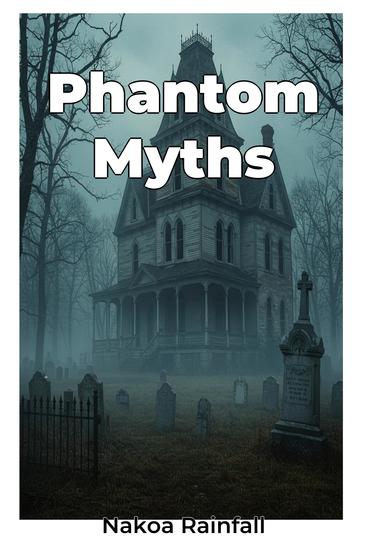
"Phantom Myths" explores the captivating realm of ghost stories, examining their profound impact on culture and psychology. This exploration reveals how tales of haunted locations and supernatural entities mirror societal anxieties and shape belief systems. For instance, the book highlights how ghost stories, far from being mere entertainment, often reflect deep-seated fears about death and the unknown, acting as symbolic expressions of unresolved trauma or societal change.

 
The book's approach blends historical analysis with psychological insights, moving through core concepts, historical hauntings, and the psychological factors influencing ghost beliefs. By investigating cognitive biases like pareidolia and confirmation bias, "Phantom Myths" offers a unique lens through which to understand why people perceive supernatural experiences. It shows that these beliefs are not simply irrational but are influenced by the way our brains process information.

 
The book progresses from an introduction of core concepts to case studies of famous haunted locations and their cultural impact, and concludes with an analysis of how ghost stories function in literature and film. This journey offers readers a deeper understanding of the cultural and psychological forces that shape our beliefs, making it valuable for anyone interested in folklore, history, or the paranormal.
Available since: 02/26/2025.
Print length: 66 pages.
Other books that might interest you

  • Radiant Rebellion - Reclaim Aging Practice Joy and Raise a Little Hell - cover

    Radiant Rebellion - Reclaim...

    Karen Walrond

    • 0
    • 0
    • 0
    Join Karen Walrond, author of The Lightmaker's Manifesto, in this intriguing investigation into how we can reclaim aging, cultivate joy, and resist ageism. 


    During her own year of transition—a milestone birthday, a wedding anniversary, the emptying of the nest—Walrond, in the buoyant and luminous style her readers have come to love, does a deep dive into dimensions of getting older, including health, beauty, spirituality, connection, adventure, and meaning and purpose. Through conversations with social workers and neurologists, activists and clergy, Walrond satisfies her curiosity about why the dominant culture treats aging as a time of dwindling capacity. She also embarks on a series of experiments that help her rebel against convention: letting her hair go naturally gray, going on a silent retreat, revamping her health practices, and plotting her next adventure. 


    Internalized ageism is not our only option; we can write a different story of aging than the one we've been handed. With wisdom from luminaries who light our way, Walrond helps us radiantly rebel against the fads and assumptions that hold us back, redefine the adventure of getting older, and create a shining future of expanded potential. We might even raise a little hell while we're at it!
    Show book
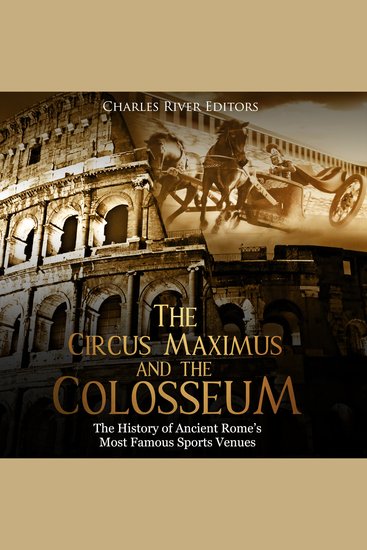
  • Circus Maximus and the Colosseum The: The History of Ancient Rome’s Most Famous Sports Venues - cover

    Circus Maximus and the Colosseum...

    Editors Charles River

    • 0
    • 0
    • 0
    The ambitious and fearless emperors that built the legendary Roman Empire from scratch, the broad-shouldered and bronzed gladiators with their iconic plume helmets and glinting swords, and elaborate parties attended by toga-wearing Romans fueled by alcohol, violence, orgies, and other godless acts all paint a picture of Roman life. 
    At the Circus Maximus, the guttural cheers of the spectators reverberated across the enormous open space, but their cries could hardly be heard over the rumble of the ground. On the ellipse-shaped track, 5 charioteers would skew their bodies and steer their magnificent vehicles around the curves. Gusts of sand and dirt flew up from the whizzing wheels and encircled the pounding hooves of the stunning stallions. Distracted personnel and guards dragging their feet were considered fair game. As one chariot careened to the side, preparing to collide with another chariot, a row of guards might have to try to duck out of the way in the nick of time. Some would be trampled by hooves. Chariot races were dangerous for participants too. A charioteer could become disoriented and fail to position himself as his horses moved instinctively, sending his body catapulting forward out of the chariot. Needless to say, chariot racing in Rome was a nail-biting spectacle. 
    When the Colosseum was built in the late 1st century A.D., the Romans, a people known for their architectural acumen, managed to amaze themselves. Martial believed the Colosseum was so grand a monument that it was even greater than the other Wonders of the Ancient World, which had been written about and visited endlessly by the Romans and Greeks in antiquity. The Colosseum was a spectacular achievement in architecture, something new and innovative, and therefore an amazing “Wonder” in its own way. The Colosseum is a large stadium even by today’s standards, and its great size conveys the power of the empire as it dominates the landscape and towers over nearby buildings.
    Show book
  • The Morals of Diet - The First Step - cover

    The Morals of Diet - The First Step

    Leo Tolstoy

    • 0
    • 0
    • 0
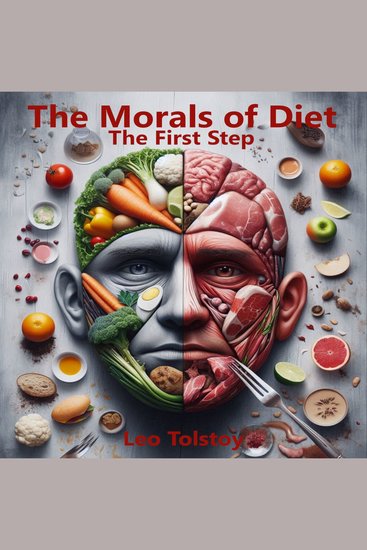
    Written in 1892, during the later years of his life, Leo Tolstoy’s The Morals of Diet reflects the profound spiritual transformation that reshaped his outlook after Anna Karenina and War and Peace. In the decades following his literary success, Tolstoy underwent a moral and religious awakening, renouncing wealth, privilege, and the comforts of aristocratic life. He sought a simpler, purer existence grounded in truth, humility, and nonviolence. This period gave rise to his moral essays — What I Believe, The Kingdom of God Is Within You, and The Morals of Diet (The First Step) — in which he strove to align daily actions with spiritual conscience. 
    The First Step emerges from this search for ethical coherence. Ostensibly an essay about vegetarianism, it is in fact a meditation on the nature of moral progress and the necessity of compassion. Tolstoy argues that abstaining from the killing of animals is the first, most tangible act of moral purification — “the first step” toward a life of genuine goodness. For him, cruelty, however subtle or socially accepted, degrades the human spirit. To refrain from violence, even in small forms, is to begin transforming one’s relationship to all living beings.
    Show book
  • We Are Still Here - An Indigenous Exploration of Identity Heritage and Belonging - cover

    We Are Still Here - An...

    Alyssa London

    • 0
    • 0
    • 0
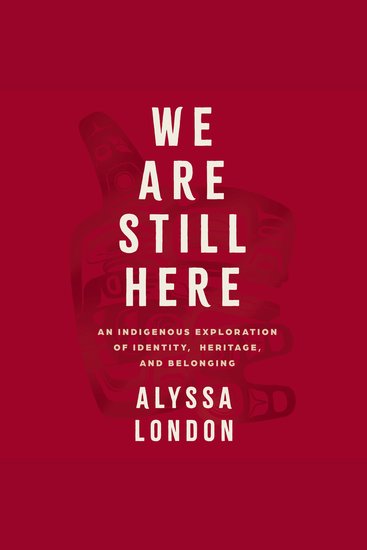
    Belonging is one of the most universal human needs, yet for many mixed-race Indigenous people, it can feel uncertain or contested. Tlingit author Alyssa London grew up with this tension, knowing who she was while sensing that others viewed her identity as something to debate. 
    In We Are Still Here, Alyssa interweaves her own story and conversations with Indigenous people across and beyond the United States to explore the deeper questions beneath identity: What defines belonging? Who gets to validate it? How do Indigenous people carry culture into the present when society often misunderstands or romanticizes them? 
    Through themes such as:Land- and place-based identity,Sovereignty and self-determination,Tribal economic development,Kinship, enrollment, and community-defined belonging,Cultural and artistic continuation,Representation and erasure, andMixed-race identity and belonging, 
    Alyssa offers a portrait of Indigenous life that is expansive, ongoing, and deeply human, seeking to lay to rest the painful misconception that "real" Native people exist only in the past. 
    We Are Still Here is both personal and collective. It reminds readers that identity is not something you earn or prove. It is something you inherit, live, and choose every day, without needing to justify it to anyone. 
    Heartfelt and hopeful, this book speaks to anyone who has ever questioned where they fit and affirms that belonging and identity are not given to you. They are yours to claim.
    Show book
  • George Stephenson - His Inventions in the Industrial Revolution - cover

    George Stephenson - His...

    Kelly Mass

    • 0
    • 0
    • 0
    George Stephenson was a British civil and mechanical engineer who lived from June the 9th 1781 to August the 12th 1848. Stephenson, called the "Dad of Railways," was regarded by Victorians as a great example of exertion and a desire to enhance. Samuel Smiles, a self-help supporter, applauded his achievements in particular. The four feet eight +12 inches (1.435 m) basic gauge used by the majority of the world's trains is based upon his chosen rail gauge, at times described as 'Stephenson gauge.' 
    Rail transport, which was created by Stephenson and was a crucial element of the Industrial Revolution, was just one of the most essential innovative developments of the nineteenth century. The Mobility No. 1 was the first steam engine to transport guests on a public railway, the Stockton and Darlington Train, in 1825. It was built by George and his child Robert's company, Robert Stephenson & Business. The Liverpool and Manchester Train, which opened in 1830, was the world's first public inter-city train path to use engines. 
    In this book, you will learn more about his inventions and his life.
    Show book
  • Law And Limit The Architecture of the Infinite by Kiet Anh Le - How Existence Emerges from Law Beyond Time and Space - cover

    Law And Limit The Architecture...

    KIET LE

    • 0
    • 0
    • 0
    What if the universe didn't begin with a bang, but with a rule? 
    In Law & Limit: The Architecture of the Infinite, independent theorist Kiet Anh Le redefines the origin of existence itself. Every event, every equation, presupposes structure — meaning that Law, not matter or time, is the true beginning of reality. 
    Through a blend of logic, mathematics, and metaphysics, Le reveals a profound architecture of being built on three principles: 
    Law (Λ) — the totality of consistent relations that make existence possible; 
    Existence (E) — the realization of those relations; 
    and the Outer Limit (Ωₗ) — the boundary that completes reality without infinite regress. 
    Drawing insights from physics, philosophy, and formal reasoning, Law & Limit presents a daring synthesis where logic becomes cosmology and coherence becomes the foundation of all things. It's a philosophical journey beyond spacetime — into the very structure of the infinite.
    Show book