Junte-se a nós em uma viagem ao mundo dos livros!
Adicionar este livro à prateleira
Grey
Deixe um novo comentário Default profile 50px
Grey
Assine para ler o livro completo ou leia as primeiras páginas de graça!
All characters reduced
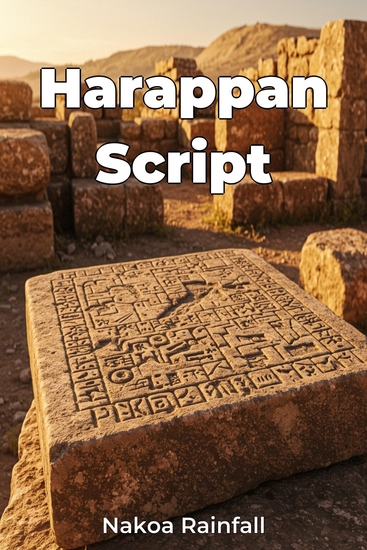
Harappan Script - cover
LER

Harappan Script

Nakoa Rainfall

Tradutor A AI

Editora: Publifye

  • 0
  • 0
  • 0

Sinopse

"Harappan Script" explores the enduring mystery of the Harappan writing system, a still-undeciphered script from the Indus Valley Civilization. Understanding this Bronze Age script is crucial, as its decipherment could unlock insights into the civilization's social structure and potential linguistic connections to later South Asian populations. The book delves into the script's characteristics, considering its visual aspects and frequency of certain symbols, while also evaluating past attempts to break the code. Intriguingly, the directionality of the script has been determined, and inscriptions have been found on various materials, offering clues to its purpose. The book presents a comprehensive overview in three parts, beginning with an introduction to the script and its physical attributes. It then moves into a critical assessment of past decipherment attempts, categorizing them to highlight their limitations. Finally, the book explores whether there are links between the Harappan script and later South Asian scripts, such as Brahmi, analyzing linguistic and archaeological evidence. Ultimately, "Harappan Script" emphasizes a rigorous, evidence-based approach to decipherment, encouraging disciplined research grounded in verifiable data, moving beyond speculative interpretations.
Disponível desde: 29/03/2025.
Comprimento de impressão: 63 páginas.

Outros livros que poderiam interessá-lo

  • Embracing Exile - The Case for Jewish Diaspora - cover

    Embracing Exile - The Case for...

    David Kraemer

    • 0
    • 0
    • 0
    Jewish people have always wandered. According to their origin story, they wandered from Ur of Chaldees to Canaan, then Egypt, and then back to Canaan. From there, they were exiled to Babylon, where they lived for centuries. They also settled in Persia, Egypt, Morocco, Spain, Italy, Turkey, Poland, Ukraine, England, and the United States, among other places. Diaspora became normal to Jews, and though they may have hoped for a return to their "Promised Land" at the "End of Days," they made sense of their many homes, defending diaspora as the realm where Jewish life could grow and they could fulfill their obligations to God. 


    Embracing Exile analyzes biblical and rabbinic texts, philosophical treatises, studies of Kabbalah, Hasidism, and a multiplicity of modern expressions. It offers revised readings of the Bible's book of Esther, a survey of Talmudic treatments of exile, an in-depth analysis of the thought of the Maharal of Prague, as well as the work of Philip Roth, among other modern authors. David Kraemer shows that Diaspora Jews through the ages insisted that God joined them in their exiles and that, as citizens of the world, Jews could only live throughout the world. The result is a convincing assertion that lament has not been the most common Jewish response to diaspora and that Zionism is not the natural outcome of either Jewish ideology or history.
    Ver livro
  • Silent Child - cover

    Silent Child

    Toni Maguire, Emily Smith

    • 0
    • 0
    • 0
    Unlike people with carefree previous lives, I packed away my past. There are some memories labeled 'Look at', and others 'Leave well alone' . . . 


    Emily Smith was held in a prison of fear for ten years. When she was four, her father left and a new man was brought into her life. He loved her, he kept telling her so, but the emotional and physical abuse she suffered at his hands were a daily nightmare. Until one day, after he crept into her bedroom, her life became unbearable. 


    Emily found she was different in another way as her autism became more noticeable and punishments for her 'abnormal' behavior more severe. Astonishingly, she managed to escape her home of hell, where she was abused right in front of her mother. Emily determinedly gained a university place and emerged triumphant with a new life and family in Ireland, desperate to treat her daughter, so similar to her, to a different life. 


    Heartbreakingly true, Silent Child is a testament to Emily's strength as she sheds light on rampant abuse still happening today. Powerful and shocking, sharing her story means she finally has a voice to say: enough. 


    Contains mature themes.
    Ver livro
  • The Making of Modern New Zealand - From Colonization to Sovereignty - cover

    The Making of Modern New Zealand...

    Lillian Brooks

    • 0
    • 0
    • 0
    Before the arrival of Europeans, New Zealand, or Aotearoa, was inhabited solely by the Māori people, who had arrived from Polynesia over a thousand years earlier. Their ancestors navigated vast distances across the Pacific Ocean, using their advanced knowledge of stars, winds, and ocean currents. They eventually settled in Aotearoa, forming distinct tribal communities known as iwi, each with its own territory, social structures, and traditions. 
    The Māori society was organized around iwi (tribes), hapū (sub-tribes), and whānau (families). Each iwi had a paramount chief, or rangatira, who was responsible for making decisions that affected the entire tribe. The rangatira was supported by a council of elders, or kaumatua, who provided guidance based on wisdom and experience. The hapū, made up of extended families, was the primary unit of Māori society, with a strong emphasis on kinship and collective responsibility. 
    Māori were deeply connected to the land, or whenua, and believed that their ancestors, the atua, or gods, imbued the earth, sea, and sky with sacred energy. This connection formed the foundation of Māori spiritual beliefs, which revolved around whakapapa (genealogy), mana (spiritual power or authority), and tapu (sacredness). Their spiritual worldview tied their identity to the land and natural resources, and they saw themselves as stewards, responsible for the care and preservation of the environment.
    Ver livro
  • You only have one life and this is it - cover

    You only have one life and this...

    George Rex Omegan

    • 0
    • 0
    • 0
    WARNING 
    Your life can be drastically affected by the content of this book. 
    It reveals the truth, the whole truth and nothing but the truth. 
    Firstly, you, whoever you are, only have one life; whether you like it or not, this is it. This life is all there is; when it is exhausted, there is no more. It is not a dress rehearsal before the act; it is the act. When you die, you will vanish into infinite nothingness for all eternity. Secondly, you only have one duty in this life, and that duty is to be yourself. That is the person you genuinely are outside the contamination of your past conditioning. It is the only way to fulfil your potential. Thirdly, you only have one purpose for this life: to live your life fully. You are the ultimate being in your universe; as such, you are entitled to and should accept nothing less than a life lived fully. Fourthly, an essential requirement for achieving such a life is to make it about you and what matters to you. Make you the centre of your life. Fifthly, to achieve this type of life you must learn what life is, who you are, how you fit into life and, above all else, how to make the most of this position to achieve your full potential. The journey towards gaining this knowledge begins in the first chapter of this book.
    Ver livro
  • Zeus Grants Stupid Wishes - A No-Bullshit Guide to World Mythology - cover

    Zeus Grants Stupid Wishes - A...

    Cory O'Brien

    • 0
    • 0
    • 0
    Get this: Cronus liked to eat babies. 


    Narcissus probably should have just learned to masturbate. 


    Odin got construction discounts with bestiality. 


    Ganesh was the very definition of an unplanned pregnancy. 


    And Abraham was totally cool about stabbing his kid in the face. 


    All our lives, we've been fed watered-down versions of the classic myths. In reality, mythology is more screwed up than a schizophrenic shaman doing hits of unidentified . . . wait, it all makes sense now. In Zeus Grants Stupid Wishes, Cory O'Brien, creator of Myths RETOLD!, sets the stories straight. These are rude, crude, totally sacred texts told the way they were meant to be told. 


    Here are a few more gems to consider: Zeus once stuffed an unborn fetus inside his thigh to save its life after he exploded its mother by being too good in bed; the Egyptian universe was saved because Sekhmet got too hammered to keep murdering everyone; the Hindu universe is run by a married couple who only stop murdering in order to throw dance parties on the corpses of their enemies; the Norse goddess Freyja once consented to a four-dwarf gangbang in exchange; and there's more dysfunctional goodness where that came from.
    Ver livro
  • Everest the Hard Way - The first ascent of the South West Face - cover

    Everest the Hard Way - The first...

    Chris Bonington

    • 0
    • 0
    • 0
    50th Anniversary Edition
    Everest – the highest peak in the world, the ultimate challenge to a mountaineer's skill and endurance. It had been climbed before, but never like this. Chris Bonington and his team had ambitions to climb it – the hard way.
    Yet before Bonington and his team set out in August 1975, even their well-wishers gave them only a fifty–fifty chance of success. The South West Face of Everest had already defeated five expeditions, including one led by Bonington himself.
    Everest the Hard Way is an exhilarating story of courage, endurance and teamwork. Bonington's narrative celebrates the big moments and recreates the excitement and danger of the climb with vivid immediacy. He shares the logistical problems involved in keeping a large expedition moving, and the very real psychological ones of balancing and pairing lead climbers and giving each a chance to make the route on the face. He describes the constant avalanche threat which made the Western Cwm more dangerous than the ever-treacherous Ice Fall, and explains how lowering the sites of camps 4 and 5 solved a supply problem and kept the upward momentum for the attack on the notorious thousand-foot-tall Rock Band at 27,000 feet which had barred the way to the summit for all previous attempts.
    Drawing upon his experiences and the first-hand accounts and diaries of his fellow climbers, Bonington gives us the first-time jitters and unexpected emergencies, the pressures of balancing egos and skills, the meticulous planning, and the undiluted joy of mastering a seemingly impossible climb which would see Britons stand on the summit of the world for the first time. It is an immensely absorbing narrative, stunningly augmented with photographs and maps, with eleven appendices on everything from communications and equipment to food and medicine.
    How Bonington's team climbed on Everest in 1975 bears no relation to how Everest is climbed fifty years on, with endless resources and helicopter support. It was much riskier in 1975. Weather forecasts were threadbare and, although equipment was improving, it was much more basic than today, so the risk of frostbite was much greater for mountaineers in the 1970s. These climbers, the best of their generation, were leading hard new ground in the only style which gave them a meaningful chance of success. Chris Bonington's Everest the Hard Way is a beautiful, fascinating and tragic story of their legendary achievement.
    Ver livro