Unisciti a noi in un viaggio nel mondo dei libri!
Aggiungi questo libro allo scaffale
Grey
Scrivi un nuovo commento Default profile 50px
Grey
Iscriviti per leggere l'intero libro o leggi le prime pagine gratuitamente!
All characters reduced
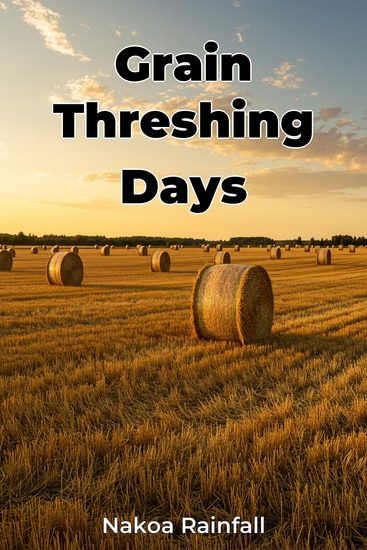
Grain Threshing Days - cover

Grain Threshing Days

Nakoa Rainfall

Traduttore A AI

Casa editrice: Publifye

  • 0
  • 0
  • 0

Sinossi

Grain Threshing Days explores how grain harvesting techniques profoundly shaped village life, revealing insights into social structures and community bonds. It examines the transition from manual methods, like using sickles, to mechanized harvesters, demonstrating how these shifts influenced labor relations and food security. The book argues that these techniques are not just agricultural practices but cultural ones that reflect and reinforce social, economic, and political dynamics within rural societies.

 
The book analyzes the social organization of harvesting, highlighting the roles of men and women and how cooperation fostered community identity. It also delves into the economic implications of different harvesting methods, detailing their impact on crop yields and wealth distribution. Drawing from agricultural manuals, census data, and oral histories, Grain Threshing Days adopts a narrative non-fiction approach to present a comprehensive account of grain harvesting's role in village life.

 
The book progresses by first introducing harvesting techniques, then exploring the social organization and economic implications, before finally investigating the influence of grain harvesting on social change. This progression provides a nuanced understanding of how agricultural practices have shaped rural communities and the broader social landscape.
Disponibile da: 27/02/2025.
Lunghezza di stampa: 64 pagine.


Altri libri che potrebbero interessarti

  • The Big Red Road To The Rose Bowl - The 1993-94 University of Wisconsin Rose Bowl Winning Football Season - cover

    The Big Red Road To The Rose...

    Brian Manthey

    • 0
    • 0
    • 0
    The Big Red Road To The Rose Bowl: The 1993-94 University of Wisconsin Rose Bowl-Winning Football Season. On New Year's Day 1963, the Wisconsin Badgers played in one of the most exciting Rose Bow games ever, overcoming a 28-point deficit only to fall short against Southern Cal 42-37. Much to the disappointment of Badger players, fans and alumni since that season the Wisconsin program has been absent from the Pasadena Classic. However, that drought came to an abrupt end. Welcome to the 1993-1994 University of Wisconsin football season. A season which once again places Badger football among the elite college programs!
    Mostra libro
  • Bradley - cover

    Bradley

    Charles Whiting

    • 0
    • 0
    • 0
    At the age of fifty Bradley was a career officer who had never seen a day of action on the battlefield. Yet, by the end of the war, he had led American soldiers through some of the bloodiest fighting of World War Two—the final defeat of the Germans' Afrika Korps, the invasion of Sicily, and the historic Normandy invasion, before leading the advance across the Rhine. 


    Despite being such an instrumental leader of World War Two he was a modest man, professing only to do the best he could for his calling and his country. 


    How did this quiet and unassuming teacher from West Point rise to become the commander of the Twelfth United States Army Group, which ultimately comprised forty-three divisions and over one million troops, the largest American force ever united under one man's command? And how did he come to be known as 'the G.I.'s General'? 


    Charles Whiting's enthralling overview of Bradley and his career uncovers what he was like as a person, providing insight into his actions and leadership during the course of World War Two, before discussing his post-war career as Chairman of the Joint Chiefs of Staff through the course of the Korean War.
    Mostra libro
  • War Crimes - Accountability and Justice for the Atrocities of War - cover

    War Crimes - Accountability and...

    Marcus Klein

    • 0
    • 0
    • 0
    War crimes represent some of the most heinous acts of violence committed during conflict, violating the basic principles of humanity and decency. These crimes, which range from genocide to the targeting of civilians, are not only devastating to the victims but also to the social fabric of entire societies. Over the centuries, the world has witnessed numerous atrocities during wartime, but the formal recognition and prosecution of these crimes have evolved significantly, especially in the last century. 
      
    The need for accountability in the face of war crimes is critical. It is not only about bringing perpetrators to justice but also about establishing a global standard that deters such crimes in the future. The introduction of international laws and institutions aimed at prosecuting war crimes marks a pivotal shift in the international community's approach to warfare. The atrocities committed during World War II, particularly the Holocaust and other acts of genocide, were a wake-up call for the global community. This led to the creation of the Nuremberg Trials, the first real attempt to hold individuals accountable for war crimes, and set the foundation for modern international law. 
      
    The purpose of this book is to explore the concept of war crimes, the historical development of international law designed to address such crimes, and the ongoing challenges of prosecuting these atrocities. We will examine the evolution of legal frameworks, such as the Geneva Conventions and the establishment of the International Criminal Court, and discuss how these institutions work to hold individuals and states accountable for their actions during wartime.
    Mostra libro
  • Survive Anything: Unseen Strategies to Master Life's Toughest Challenges - "Master every hurdle! Discover life-changing audio strategies to thrive through adversity" - cover

    Survive Anything: Unseen...

    Jasper Calloway

    • 0
    • 0
    • 0
    Survive Anything: Unseen Strategies to Master Life's Toughest Challenges  
    ⭐ ⭐ Simplified Guide & Explanations Included ⭐ ⭐   
    Are you eager to advance in your career and strengthen your skills to navigate life's toughest challenges?   
    In search of a comprehensive guide that covers everything you need to unlock resilience and thrive through any adversity?   
    Your search ends here!   
    This guide is your ultimate companion for deepening your understanding, applying your skills, and engaging in immersive exercises. With this resource, you're set for success.   
    Updated to reflect today's challenges and strategies.   
    Key Features of This Enhanced Guide:   
    - In-depth insights into overcoming life's toughest challenges   
    - Clear explanations on building resilience   
    - Effective strategies for preparation and execution   
    Our guide stands out with its thorough coverage, making it essential for your personal success. Concepts are explored in depth, ensuring full comprehension.   
    Please be aware that this guide is an independent resource, not affiliated with any official entity, created purely for your benefit.   
    Crafted with a structured approach and accessible language, our guide promises seamless transitions between topics. Say goodbye to complex jargon and embrace clear, precise, and informative content.   
    So, why hesitate? Click the BUY NOW button to secure your guide and embark on your journey to mastering life's challenges!
    Mostra libro
  • ANGER MANAGEMENT FOR KIDS 5-8 - Simple and Effective Tips to Manage Anger and Frustration - cover

    ANGER MANAGEMENT FOR KIDS 5-8 -...

    Rachel Jones

    • 0
    • 0
    • 0
    We all experience intense emotions like anger at times. Not only is anger normal, but it can serve as a great motivator and a way to improve one’s emotional intelligence. It can encourage self-improvement, instill a sense of self-control, and even trigger our “fight” response which is necessary for survival. At the most basic level, anger can help children determine whether they’re being treated fairly and allows them to tell when things aren’t right. That being said, anger can become a severe problem if it grows out of control and leads to aggressive behaviors. 
    An angry child isn’t a bad one, nor are their attitudes and actions necessarily a result of behavioral problems. These intense emotions are often triggered by psychological, social, or even hormonal problems, which is why parents should try to understand where their children’s anger comes from to handle the situation effectively. In most cases, the root problem is not apparent, which is why parents automatically assume that their children are misbehaving, so they take action accordingly. Grounding or yelling at a child who can’t control their anger isn’t going to fix anything and will likely make things worse. 
    Mostra libro
  • The End of Feudalism - How Societal Changes Transitioned to Modern Economic Systems - cover

    The End of Feudalism - How...

    Arlo Holders

    • 0
    • 0
    • 0
    Feudalism was a social, political, and economic system that dominated medieval Europe, particularly from the 9th to the 15th century. Its structure was based on the exchange of land for loyalty, military service, and labor. At its core, feudalism established a hierarchical order in which the king, or monarch, granted land, known as fiefs, to vassals (nobles) in exchange for their service. In turn, these vassals would grant portions of their land to serfs or peasants, who worked the land in return for protection and sustenance. This land-based economy was highly localized, with power concentrated in the hands of a few, and much of daily life revolved around agricultural production. 
    The decline of feudalism did not happen overnight but was a gradual process influenced by several interconnected factors. Key to its decline was the increasing centralization of power by monarchs. As monarchs gained more control, often through military conquest or strategic marriages, they began to diminish the power of feudal lords. This shift marked the beginning of the nation-state as a powerful political entity, replacing the decentralized feudal system. Additionally, the rise of a money-based economy undermined the land-based economy that feudalism relied upon. The growth of trade, the development of markets, and the emergence of a merchant class further destabilized feudal structures. 
    Another critical event in the decline of feudalism was the Black Death in the 14th century. The plague decimated large portions of Europe’s population, resulting in severe labor shortages. This, in turn, weakened the traditional feudal relationships between lords and serfs. With fewer workers available, peasants were able to demand better conditions, higher wages, or even freedom from their obligations. This shift in labor dynamics helped to weaken the power of feudal lords, who could no longer rely on a subjugated, large labor force to maintain their estates.
    Mostra libro