Unisciti a noi in un viaggio nel mondo dei libri!
Aggiungi questo libro allo scaffale
Grey
Scrivi un nuovo commento Default profile 50px
Grey
Iscriviti per leggere l'intero libro o leggi le prime pagine gratuitamente!
All characters reduced
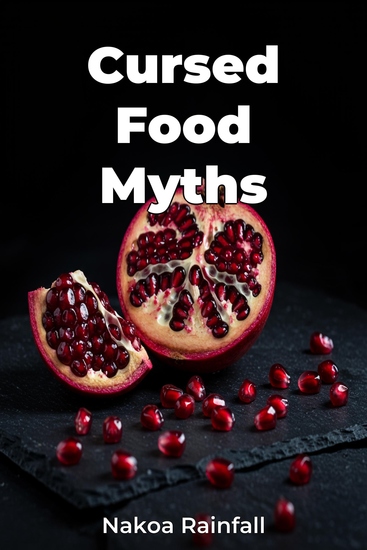
Cursed Food Myths - cover

Cursed Food Myths

Nakoa Rainfall

Traduttore A AI

Casa editrice: Publifye

  • 0
  • 0
  • 0

Sinossi

Cursed Food Myths explores the captivating realm of food folklore, revealing the historical and cultural roots of food superstitions and taboos. It examines why certain foods are believed to bring bad luck or are associated with death, offering insights into cultural anxieties and the power of superstition. Did you know that the pomegranate is linked to Persephone's curse, or that the preparation of fugu, a Japanese delicacy, can be deadly if not done correctly? The book argues that food superstitions reflect deeper societal concerns related to health and power.

 
Beginning with an introduction to food taboos and symbolism, it delves into specific case studies, such as the aforementioned pomegranate and fugu, examining their historical origins and cultural significance. The narrative progresses to explore the resurgence of these myths in the modern world, including the influence of social media. Blending rigorous research with accessible storytelling, Cursed Food Myths provides a unique lens for understanding how cultural beliefs shape our relationship with food. It appeals to food enthusiasts, history buffs, and anyone curious about the stranger side of culinary traditions, offering a thought-provoking journey through the fascinating intersection of food, history, and mythology.
Disponibile da: 11/03/2025.
Lunghezza di stampa: 67 pagine.

Altri libri che potrebbero interessarti

  • Effective Anger Management for Teens - Handle Frustration Stop The Rage And Build A Happier Life - Navigate The Storms Of Adolescence With Mindfulness Empathy And Strength - cover

    Effective Anger Management for...

    Emma Davies

    • 0
    • 0
    • 0
    Treated like a child and expected to behave like an adult? Discover when your anger is justified and when it screams “management issue.”ATTN: PARENTS, THERAPISTS, SOCIAL WORKERS, OF TEENAGERS AND SCHOOL COUNSELORS. 
    The areas of Teens' brain that are responsible for emotional regulation and impulse control experience significant remodeling during teenage years. Add hormonal fluctuations caused by puberty into the equation, and the result may be mood swings and emotional volatility. 
    If you’re tired of feeling overwhelmed by your uncontrolled bursts of anger or struggling to maintain healthy relationships, look no further. 
    This comprehensive guide is specifically tailored to help Teen reclaim control over emotions. 
    Here’s just a snippet of what you will discover inside:Hurt, sad, or something else? Find the root causes and triggers of your angerHow your anger can rule your emotions – recognize early signs before your anger gets out of hand (and ruin your relationships)Erecting safe spaces – master the art of boundary setting to manage your anger with friends, family, and others around youSelf-control with emotional intelligence – 5 helpful tips on building empathy and compassion to truly comprehend opposing opinions without losing your cool! 
    And much more. 
    Take positive steps towards managing your anger effectively. Start today!If you are fed up with feeling like you can’t control your anger, here’s your chance to effectively manage your emotions, and your life. Scroll up and click the “Add to Cart” button right now.
    Mostra libro
  • Duct-tape Community - Hope for Neighborliness in an Unequal World - cover

    Duct-tape Community - Hope for...

    Jim Herbst

    • 0
    • 0
    • 0
    In a country of critics and where shouting and snarky tweets dominate public communication, neighborliness is in short supply.  Duct-tape Community - Hope for Neighborliness in an Unequal World finds it in the most unexpected places, from public housing janitors to farmers in overalls. Hope for better community can be found from the inspiring stories of the seemingly powerless and unknown. Duct-tape Community is a declaration that community takes two resolves: one to make the world a fairer place and a second to be neighborly in one that isn't.
    Mostra libro
  • Learn Filipino With Music - cover

    Learn Filipino With Music

    Innovative Language Learning, ...

    • 0
    • 0
    • 0
    Can learning Filipino be as simple as listening to music?


    And as easy as remembering song lyrics?


    Just think. You remember song lyrics because lyrics are catchy, repeated throughout the song, and go with the music, right? Now, if you stuck in Filipino, you'd easily learn Filipino words and phrases the same way!


    So, yes, learning Filipino is as easy as listening to music' with the Learn Filipino With Music Audiobook.


    Just press play, and you'll hear Filipino words and phrases repeated to the beat of upbeat and cheerful music. And follow along!


    You'll learn 180+ most common Filipino words and phrases' while relaxing at home, or while driving to work.


    Learn Filipino With Music is the easiest way to start learning Filipino.. without getting overwhelmed by complicated explanations. Perfect for new learners with little to no language learning experience.


    What will you learn?
     
    180+ Words & Phrases Including...
     
    - Basic Greetings
     
    - Numbers
     
    - Common Questions and Answers
     
    - Parts of the Body & Talking About Your Wellbeing
     
    - Common Hobbies
     
    - And much more


    Learn Filipino With Music includes...
     
    - 15 Songs/Lessons Inside (Each is about 7 minutes long)
     
    - Fast-Paced Review Section at the End of Each Lesson
     
    - 1 Hour 50 Minutes in Total
     
    - Accompanying PDF eBook with the Words, Phrases and Translations


    Download the PDF and read along
    Mostra libro
  • Stories on lord Ganesh series - 21 - From various sources of Ganesh purana - cover

    Stories on lord Ganesh series -...

    Anusha HS

    • 0
    • 0
    • 0
    Lord Ganesh is the son of Goddess Parvati and Lord Shiva. He is the first one to get worshipped before worshipping any other god. We can say in short that there is no Hindu who doesn't perform Lord Ganesh’s worship. In Ramayana Lord Rama had worshipped Lord Ganesh. 
    In Mahabharata Lord Krishna had also worshipped Lord Ganesh. They have become the role models to the whole world. Before the beginning of any work it is common to worship Lord Ganesh. There are many Holy hymns on Lord Ganesh. Lord Ganesh’s favorite food is modak. 
    He gets pleased if we offer Durva grass to him. He also loves red Hibiscus flower. He is called the vighnaharta because he wards off all the obstacles in our life. He is also called vighnaraja. There are infinite names to Lord Ganesh which we cannot explain. He ties a snake around his waist. 
    The vehicle of Lord Ganesh is mouse in Hindu culture. Lord Ganesh is worshipped all over India. His miracles have been described in all of the 18 Puranas. There are many forms of Lord Ganesh. 
    He has got two wives one is riddhi and the other is siddhi.Lord Ganesh has got 32 forms of incarnations. The modak which you offer to Lord Ganesh will give you good results. Lord Ganesh does not bias among his devotees. He is specially worshipped on sankashti days. On Ganesh Chaturthi people fast and perform vrath.On this day it is forbidden to see Chandra the moon.
    Mostra libro
  • So You Want to Move to New Zealand - An American's Comprehensive Guide to Relocating and Adapting to Life in Aotearoa - 2nd Edition - cover

    So You Want to Move to New...

    Melissa Cox

    • 0
    • 0
    • 0
    New!! Second edition published Nov. 2024 with the most up-to-date information!  Are you considering moving to New Zealand? Or looking to enjoy an extended vacation? This comprehensive guide will support you every step of the way! Written by a dual citizen of New Zealand and the United States, this book is packed with tips, resources, and perspectives from other American expats to help you start a new, exciting life in the Land of the Long White Cloud. 
    Discover everything you need to know about Aotearoa New Zealand, including:NZ's 16 regions, unique local cultures, economies & featuresTips & tricks to make the immigration process less stressfulWhat to do with your possessions and petsAdvice on buying a car, landing a job, and finding a rentalDriving differences - the price of gas, how to buy a car, driving on the left sideNew Zealand's rich history and cultureTe reo Māori pronunciation & Kiwi slangNew Zealand's Healthcare, Education, Childcare, Real Estate and Rental MarketsHow New Zealand became the only country in the world to abolish most lawsuits with the establishment of the ACCWork/life balance, vacation time, childcare subsidies, and paid parental leaveThe High Cost of Living - tips and tricks to save moneyWhere to find your favorite American brands and foodsHow to deal with homesickness and navigate culture shock"Conversations with Ameri-Kiwis" - advice and perspectives from other Americans in New ZealandInteresting Facts about New ZealandPLUS! Detailed chapters on United States Expat Taxes, Retirement, and Banking – crucial information for Americans looking to relocate overseas!
    Mostra libro
  • The Republic - cover

    The Republic

    Plato

    • 0
    • 0
    • 0
    The Republic (Greek: Politeia) is a Socratic dialogue, written by Plato around 380 BC, concerning the definition of (justice), the order and character of the just city-state and the just man, reason by which ancient readers used the name On Justice as an alternative title (not to be confused with the spurious dialogue also titled On Justice). The dramatic date of the dialogue has been much debated and though it must take place some time during the Peloponnesian War, "there would be jarring anachronisms if any of the candidate specific dates between 432 and 404 were assigned".    It is Plato's best-known work and has proven to be one of the most intellectually and historically influential works of philosophy and political theory. In it, Socrates along with various Athenians and foreigners discuss the meaning of justice and examine whether or not the just man is happier than the unjust man by considering a series of different cities coming into existence "in speech", culminating in a city (Kallipolis) ruled by philosopher-kings; and by examining the nature of existing regimes.    The participants also discuss the theory of forms, the immortality of the soul, and the roles of the philosopher and of poetry in society. Short Summary (Epilogue): X.1—X.8. 595a—608b. Rejection of Mimetic Art X.9—X.11. 608c—612a. Immortality of the Soul X.12. 612a—613e. Rewards of Justice in Life X.13—X.16. 613e—621d. Judgment of the Dead The paradigm of the city — the idea of the Good, the Agathon — has manifold historical embodiments, undertaken by those who have seen the Agathon, and are ordered via the vision. The centre piece of the Republic, Part II, nos. 2–3, discusses the rule of the philosopher, and the vision of the Agathon with the allegory of the cave, which is clarified in the theory of forms.    The centre piece is preceded and followed by the discussion of the means that will secure a well-ordered polis (City). Part II, no. 1, concerns marriage, the community of people and goods for the Guardians, and the restraints on warfare among the Hellenes. It describes a partially communistic polis. Part II, no. 4, deals with the philosophical education of the rulers who will preserve the order and character of the city-state. In Part II, the Embodiment of the Idea, is preceded by the establishment of the economic and social orders of a polis (Part I), followed by an analysis (Part III) of the decline the order must traverse. The three parts compose the main body of the dialogues, with their discussions of the "paradigm", its embodiment, its genesis, and its decline. The Introduction and the Conclusion are the frame for the body of the Republic.    The discussion of right order is occasioned by the questions: "Is Justice better than Injustice?" and "Will an Unjust man fare better than a Just man?" The introductory question is balanced by the concluding answer: "Justice is preferable to Injustice". In turn, the foregoing are framed with the Prologue (Book I) and the Epilogue (Book X). The prologue is a short dialogue about the common public doxai (opinions) about "Justice". Based upon faith, and not reason, the Epilogue describes the new arts and the immortality of the soul.
    Mostra libro