Unisciti a noi in un viaggio nel mondo dei libri!
Aggiungi questo libro allo scaffale
Grey
Scrivi un nuovo commento Default profile 50px
Grey
Iscriviti per leggere l'intero libro o leggi le prime pagine gratuitamente!
All characters reduced
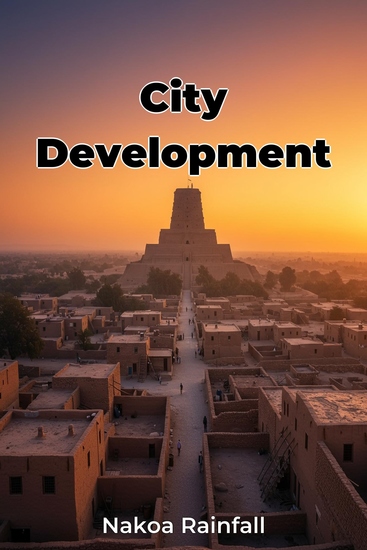
City Development - cover

City Development

Nakoa Rainfall

Traduttore A AI

Casa editrice: Publifye

  • 0
  • 0
  • 0

Sinossi

City Development explores the fascinating evolution of cities, from ancient settlements to modern metropolises, focusing on urban planning's historical trajectory. It examines how cities reflect societal values, political ideologies, and economic forces, revealing that urban planning is more than just a technical discipline. The book highlights the interplay between urban form and social function, illustrating how different eras have prioritized different aspects of urban life. The book argues that understanding the past is crucial for building equitable and resilient urban futures.

 
For example, early urban settlements in Mesopotamia and the Indus Valley laid foundational principles of urban design. Later, Greek and Roman city planning significantly influenced urban landscapes, demonstrating the profound impact of historical precedent. The book progresses through eras, analyzing the influence of the Renaissance and Industrial Revolution, and addresses contemporary issues like sustainability and social equity.

 
What sets this book apart is its emphasis on the social and political dimensions of urban planning, revealing how power dynamics shape urban form. Using diverse evidence like archaeological findings and historical maps, City Development provides a nuanced understanding of the complex interplay between history, architecture, and society. This approach makes it valuable for students, professionals, and anyone interested in urban history, architecture, and the future of city development.
Disponibile da: 29/03/2025.
Lunghezza di stampa: 76 pagine.

Altri libri che potrebbero interessarti

  • Moors of Andalusia The: The History of the Muslims in the Iberian Peninsula during the Middle Ages - cover

    Moors of Andalusia The: The...

    Editors Charles River

    • 0
    • 0
    • 0
    The history of the Spanish Peninsula is closely bound to that of the Moors. The term “Spain” was not in wide use until the region was united by the monarchs of Aragon and Castile, and the Moors called the lands they ruled in the Iberian Peninsula Al-Andalus, traditionally thought to be an Arabic transliteration of Vandal, the Germanic tribe which briefly ruled the region in the early fifth century. The English name Andalusia derives from the Spanish Andalucia, which is still used by Spain to name its southern region. 
    	Not surprisingly, three religions attempting to coexist during medieval times resulted in nearly incessant conflicts, marked by high taxation, disparate societies, rigid cultural controls, and systemic violence. Despite the odds, these three religions managed to live in a state of quasi-acceptance and peace in most of the major cities in the Iberian Peninsula like Cordoba and Toledo, with sporadic warfare occurring on the borders between Al-Andalus and the Christian kingdoms near the Pyrenees Mountains. Muslims, Christians, and Jews would attempt to reorganize their societies several times over the centuries through warfare, always with Jews on the lower rungs and Christians and Muslims fighting it out above them.  
    	Though it’s often forgotten today, the fighting that took place during the Reconquista was not originally driven by religion. Instead, the majority of the battles were fought by ambitious rulers who sought territorial expansion, like many other civilizations during the Middle Ages. In fact, the Reconquista would not gain its unique religious flavor until the 13th century, when the territories that would become Castile and Aragon drummed up religious fervor to achieve its aims and gained papal support from Rome.
    Mostra libro
  • Tower Hill - A Plantation on the Edge of Rebellion - cover

    Tower Hill - A Plantation on the...

    Alan Taylor

    • 0
    • 0
    • 0
    The Nat Turner rebellion of August 1831, the iconic uprising of enslaved people in the United States, was much more extensive than we have understood. This powerful exploration of a Tidewater Virginia plantation reveals how the daily resistance of the enslaved was heightened by spiritual beliefs to seek the divine overthrow of a wicked world.  
      
    Tower Hill draws on a previously untapped family archive to reveal the routines of daily life and the fraught family dynamics on a slave plantation in southeastern Virginia in the early- to mid-nineteenth century. Owned by generations of a local merchant family, the Blows, Tower Hill was a struggling enterprise mired in debt, degrading soil, volatile climate, endemic diseases, and social isolation. All this exacted an emotional toll that drove the Blows—husbands and wives, fathers and sons—to family turmoil and madness. The enslaved Blacks at Tower Hill endured in part by claiming an evangelical Christianity as their own, embracing its promise of ultimate deliverance from suffering and, in the here and now, its broad communities of support. Nearby, the Great Dismal Swamp provided a haven for runaways who built lasting enclaves there.  
      
    Nat Turner’s rebels struck slaveholding families near Tower Hill suddenly, killing more than fifty men, women, and children in a single day. George Blow helped lead the suppression that took twice that many Black lives. He also helped mold the memory of the uprising as an exceptional event mounted by a lone fanatic leading a few deluded followers. But Alan Taylor shows that the revolt emerged from a broader network of spiritual agitation reaching throughout Tidewater Virginia and North Carolina. A much larger uprising might have erupted but for a mistake in timing by Turner and his followers. The shockwaves of the Turner rebellion, running through secession and civil war, still reach us today.  
      
    "Against ongoing efforts to sanitize the record of slavery, Taylor sweeps away nostalgia for an orderly Old South that never was. From a remarkable collection of family papers, he distills the truth that planters persistently disavowed: They were beset by the implacable resistance of the enslaved and by other forces beyond their control. The story of Tower Hill stands as a warning against the will to dominance."—Vincent Brown, author of Tacky’s Revolt 
    Mostra libro
  • Suburbs - A Very Short Introduction - cover

    Suburbs - A Very Short Introduction

    Carl Abbott

    • 0
    • 0
    • 0
    We live in the suburban era. Well over half of all Americans and two-thirds of Canadians live in suburbs. Tracts of suburban bungalows ring Sydney and Melbourne. Suburban apartments rise on the outskirts of Paris, Prague, Singapore, and Beijing. Nearly everyone has a strong opinion about suburbs. Folks who love dense cities scorn "suburbia," while people who like big yards dislike bustling sidewalks and subways. Social scientists argue whether suburbs are losing their luster or if a supposed back-to-the-city trend is a mirage—a debate that has been exacerbated by uncertainty over the effects of COVID-19. 


    This Very Short Introduction tackles two central questions: What is the history behind a suburbanizing world? What does the suburban trend mean for society, politics, and culture? Two chapters describe the ways that the new technologies of streetcars, trains, automobiles, and internet have allowed the compact cities of Britain and the United States to grow into sprawling metropolitan regions. The following chapters explore the vertical suburbs of Europe and East Asia, improvised or do-it-yourself suburbs in both North America and Latin America, and suburbs as places of employment. The book concludes by exploring criticism and praise of suburbs in popular sociology, fiction, film, and the Americanization of twenty-first-century suburbs around the globe.
    Mostra libro
  • Religion - The Basics - cover

    Religion - The Basics

    Mallory Nye

    • 0
    • 0
    • 0
    From the local to the global level, religion is – more than ever – an important and hotly debated part of modern life in the twenty-first century.From silver rings to ringtones and from clubs to headscarves, we often find the cultural role and discussion of religion in unexpected ways.Now in its second edition, Religion: The Basics remains the best introduction to religion and contemporary culture available. The new edition has been fully revised and updated, and includes new discussions of:the study of religion and culture in the twenty-first centurytexts, films and ritualscognitive approaches to religionglobalization and multiculturalism spirituality in the West popular religion.With new case studies, linking cultural theory to real world religious experience and practice, and guides to further reading, Religion: The Basics is an essential buy for students wanting to get to grips with this hotly debated topic.
    Mostra libro
  • Cholula: The History and Legacy of the Sacred City that Dates Back to the Toltec Empire - cover

    Cholula: The History and Legacy...

    Editors Charles River

    • 0
    • 0
    • 0
    Cholula is one of the most interesting, enigmatic, and forgotten cities in ancient Mesoamerica, and few people are aware that it is the oldest continuously-occupied settlement in the entire Western hemisphere. The current city is known for the Great Pyramid, which has the largest base of all pyramids in the world, as well as its many colonial churches and constant religious celebrations. All of these things ensure that Cholula is heavily visited, but the tremendous importance of Prehispanic Cholula has mostly been lost in the historical accounts of Puebla and even Mexico as a whole. 
    	Located in the Puebla-Tlaxcala Valley within a very fertile area, the Prehispanic city of Cholula was founded around 500 BCE. It soon developed into an important city and the construction of its Great Pyramid began around 200 BCE. During the height of Teotihuacan’s influence in the Classic period and the expansion of the Aztecs in the Postclassic, Cholula managed to maintain its independence and grew to become the greatest religious center in central Mesoamerica. As the main site for the cult of the god Quetzalcoatl, Cholula received pilgrims from many Prehispanic cities, and the two high priests of the Temple of Quetzalcoatl were charged with confirming the legitimacy of these foreign rulers, making their role one of the most important in the region. 
    	In addition to its religious influence, Cholula was also a very important commercial center. Many lavish and exotic goods were traded at its market, and the city’s merchant class also exported a variety of luxury crafts produced in Cholula, such as richly adorned textiles and very fine polychrome pottery. Cholula has been mentioned on some level in modern works concerning Mesoamerica, but in most cases it is simply named alongside a list of other Prehispanic sites.
    Mostra libro
  • Auschwitz Children And Mengele Experiments - The Immoral and Atrocious Research on Children in the Auschwitz Concentration Camp during World War II - cover

    Auschwitz Children And Mengele...

    Jack Stew Barretta

    • 0
    • 0
    • 0
    This audiobook is narrated by an AI Voice. Many doctors in Germany were convinced that they were the chosen people to create a healthy, racially pure Volkskörper (body of people) and by doing so, establish a racial utopia. As strong supporters of National Socialism, they welcomed the founding of the Third Reich. After Hitler acceded to power, German physicians joined the SS in particular. During the twelve years of the Nazi era, seven percent of German doctors became members of the SS. The average membership of the population was only 0.6 percent. Moreover, doctors were also overrepresented as a profession, with teachers consisting of less than half a percent and musicians only three percent. Only lawyers had a larger share in the SS than doctors. 
    The average income of German doctors increased extremely after 1933, even exceeding the income of lawyers. The Nazi doctors of the human experiments also joined the SS in large numbers. German doctors were far more reluctant to join the NSDAP than the SS. Before 1933, only seven percent of all German doctors joined the NSDAP (Nazi party). They joined the party when it seemed opportune to do so, in 1933, and particularly in 1937. In 1933, physicians made up almost a quarter of all academic professionals in the NSDAP. Most doctors joined the NSDAP in 1937, with a membership rate of 43 percent of the total profession. German physicians sat on the fence during the first years of the Nazi era, insecure about the effects of the new regime on their profession. By 1937, the Third Reich had won the trust of several reasons. The NSDAP had solved the economic crisis and had reorganized the medical profession. Moreover, the regime had solved “the Jewish question” in the medical sector.
    Mostra libro