Unisciti a noi in un viaggio nel mondo dei libri!
Aggiungi questo libro allo scaffale
Grey
Scrivi un nuovo commento Default profile 50px
Grey
Iscriviti per leggere l'intero libro o leggi le prime pagine gratuitamente!
All characters reduced
The telekinetic Child - cover

The telekinetic Child

Mostyn Heilmannovsky

Casa editrice: BookRix

  • 0
  • 0
  • 0

Sinossi

Telekinesis and other paranormal gifts are often scorned at and derided by main-stream science, but this story should convey, that the scientific mind should at least rethink its materialistical worldviews. In this story, you will meet a doctor, who tests a boy, who seems to have humongous telekinetic abilities. 
 
Please review this book, if you liked it!
Disponibile da: 21/12/2023.
Lunghezza di stampa: 15 pagine.

Altri libri che potrebbero interessarti

  • The First Evening - From their pens to your ears genius in every story - cover

    The First Evening - From their...

    Catherine Crowe

    • 0
    • 0
    • 0
    Catherine Ann Stevens was born on 20th September 1803 in Borough Green, Kent.  
    She was mainly home-schooled.  Her marriage to Major John Crowe seemed to be an unhappy one, although she had a son in 1823.   
    By 1838 she was separated and living in Edinburgh where she was friends with several writers including de Quincey and Thackeray.  By this time too her writing had given her both an audience and an income. 
    In 1841 ‘The Adventures of Susan Hopley’ was the first of her books to establish her as a novelist and was followed by several others.  She also wrote two plays, both with historical themes. A verse tragedy ‘Aristodemus’ (1838) and the melodramatic ‘The Cruel Kindness’ (1853) brought further but limited success.  ‘The Adventures of Susan Hopley’ was reprinted several times as well as turned into a play and a penny serial.  
    Her stories were also in demand from periodicals such as the weekly Chambers' Edinburgh Journal and Dickens's Household Words. 
    Her own writing interests, inspired by German writers, turned to supernatural subjects.  The collection ‘The Night-side of Nature’ (1848) became her most popular work.  
    However, a bizarre episode happened in Edinburgh in February 1854, when she was discovered naked one night, convinced that spirits had rendered her invisible. After treatment she is said to have made a complete recovery. 
    In her later literary career Crowe also wrote a number of children’s books.  She now lived mainly in London though at times she settled abroad.   
    In 1861 her finances tightened, and she sold her copyrights.  In 1871 she moved to Folkstone 
    Catherine Crowe died in Folkstone on 14th June 1876.
    Mostra libro
  • A Slip of the Pen - From their pens to your ears genius in every story - cover

    A Slip of the Pen - From their...

    Amy Levy

    • 0
    • 0
    • 0
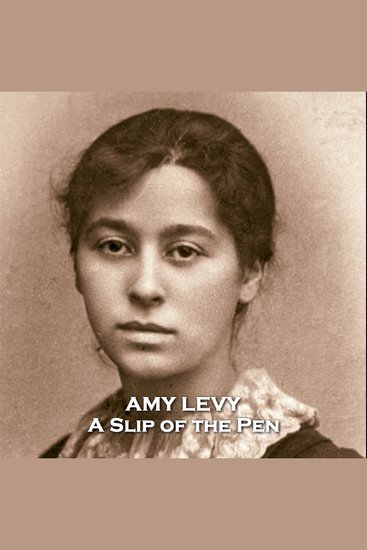
    Amy Levy was born in London, England in 1861, the second of seven in a fairly wealthy Anglo-Jewish family. The children read and participated in secular literary activities and became firmly integrated into Victorian life. 
    Her education was at Brighton High School, Brighton, before studies at Newnham College, Cambridge; she was the first Jewish student when she arrived in 1879, but left after four terms. 
    Amy’s writing career began early; her poem ‘Ida Grey’ appeared when she was only fourteen. Her acclaimed short stories ‘Cohen of Trinity’ and ‘Wise in Their Generation,’ were published by Oscar Wilde in his magazine ‘Women's World’. 
    Her poetic writings reveal feminist concerns; ‘Xantippe and Other Verses’, from 1881 includes a poem in the voice of Socrates's wife. ‘A Minor Poet and Other Verse’ from 1884 comprises of dramatic monologues and lyric poems. 
    In 1886, Amy began a series of essays on Jewish culture and literature for the Jewish Chronicle, including ‘The Ghetto at Florence’, ‘The Jew in Fiction’, ‘Jewish Humour’ and ‘Jewish Children’. 
    That same year while travelling in Florence she met the writer Vernon Lee. It is generally assumed they fell in love and this inspired the poem ‘To Vernon Lee’. 
    Her first novel ‘Romance of a Shop’, written in 1888 is based on four sisters who experience the pleasures and hardships of running a London business during the 1880s. This was followed by Reuben Sachs (also 1888) and concerned with Jewish identity and mores in the England of her time and was somewhat controversial. 
    Her final book of poems, ‘A London Plane-Tree’ from 1889, shows the beginnings of the influence of French symbolism. 
    Despite many friendships and an active life, Amy suffered for many years with serious depressions and this, together with her growing deafness, led her to commit suicide by inhaling carbon monoxide on September 10th, 1889. She was 27.
    Mostra libro
  • The Race - cover

    The Race

    Nathalie M.L. Römer

    • 0
    • 0
    • 0
    They came to our world a hundred years ago. Before we knew it they overran the world, destroyed our infrastructure and now we live in habitats. That's the best we can call our living accommodations. They terraformed the world… 
    What remains of humanity whispers about a plan to evacuate some of us. They claim that scientists hid away in a bunker somewhere where they retro-fitted one of their spaceships. 
    We don't know if it's true, but as we watch them lead away groups of humans from the nearest habitats, we decide to chance our escape.
    Mostra libro
  • Boule de Suif (version 2) - cover

    Boule de Suif (version 2)

    Guy de Maupassant

    • 0
    • 0
    • 0
    Boule de Suif (1880) is a short story by the late-19th century French writer Guy de Maupassant. It is arguably his most famous short story, and is the title story for his collection on the Franco-Prussian War, entitled "Boule de Suif et Autres Contes de la Guerre" ("Boule de Suif and Other Stories of the War"). John Ford said that his film Stagecoach was in many ways a western rewrite of Boule de Suif. (Summary by Wikipedia)
    Mostra libro
  • The Ghost and the Bone Setter - From their pens to your ears genius in every story - cover

    The Ghost and the Bone Setter -...

    Sheridan Le Fanu

    • 0
    • 0
    • 0
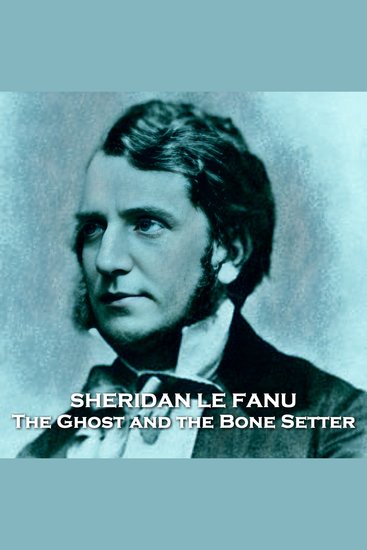
    Joseph Sheridan Le Fanu was born on 28th August 1814 in Dublin into a literary family with Huguenot, Irish and English roots.   
    For a time he and his siblings were tutored but Le Fanu would often immerse himself in the books of his father’s library. 
    In 1833 Le Fanu began his Law studies at Trinity College, Dublin and graduated in 1839. Although called to the bar he instead began a career in journalism.   
    He was also writing. His first fiction story ‘The Ghost and the Bonesetter’ was published in 1838.  In 1843 came the novella ‘Spalatro: From the Notes of Fra Giacomo’, a hero with a particular necrophiliac passion for an undead blood-drinking beauty, a forerunner to his later female vampire ‘Carmilla’.  
    In 1844 Le Fanu married Susanna Bennett with whom he had 4 children. The following year his first novel ‘The C'ock and Anchor’ was published. Works now flowed from his pen and with a rapid increase in family finances they moved, in 1851, to Merrion Square, Dublin, where he remained until his death.  
    In 1858 Susanna died and Le Fanu became reclusive. It was during this period that he produced some of his best work.  Working only by candlelight he wrote through the night, burnishing his reputation as a major figure of 19th Century supernaturalism with many classics including; ‘Green Tea’, ‘Mr Justice Harbottle’, and ‘In a Glass Darkly’.  
    Joseph Thomas Sheridan Le Fanu died in Merrion Square in his native Dublin on February 7th, 1873, at the age of 58.
    Mostra libro
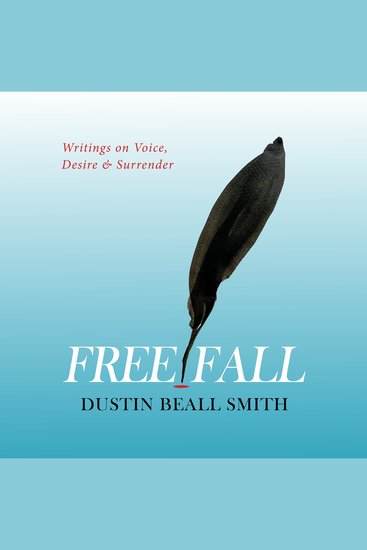
  • Free Fall - Writings on Voice Desire and Surrender - cover

    Free Fall - Writings on Voice...

    Dustin Beall Smith

    • 0
    • 0
    • 0
    A stirring literary collection that explores the human experience with wisdom and honesty, by award-winning author Dustin Beall Smith 
    In Free Fall, author and writing teacher Dustin Beall Smith delivers a powerful collection of personal essays, talks, short fiction, and poetry. With a broad range of subjects—from American culture and academia to desire, failure, love, and the impermanence of all things—Smith delves into the lived life. At the same time, he champions the importance of process over product, attention over intention, and implicit meaning over overt messaging. He infuses his writing with humor, risk, and raw emotion, using these elements to write honestly about teaching, learning, and letting go. 
      
    Told from first-, second-, and third-person perspectives—and in poetry that dives deep into life’s vicissitudes—Smith’s work embraces the power of writing in one’s true voice.
    Mostra libro