Unisciti a noi in un viaggio nel mondo dei libri!
Aggiungi questo libro allo scaffale
Grey
Scrivi un nuovo commento Default profile 50px
Grey
Iscriviti per leggere l'intero libro o leggi le prime pagine gratuitamente!
All characters reduced
The Bigfoot of Garden Lake - Creepy Tales - cover

The Bigfoot of Garden Lake - Creepy Tales

Mostyn Heilmannovsky

Casa editrice: BookRix

  • 0
  • 0
  • 0

Sinossi

A short story about a bigfoot encounter at Garden Lake, a beautiful lake in Upstate New York. Clark, Tracy and Denis have no idea, what awaits them, until they encounter a massive bigfoot, which teaches them a lesson for life. Will the survive this encounter or will it end deadly for them? Find it out for yourself and read this unusual bigfoot story.  
 
Please review this book, if you liked it!
Disponibile da: 21/12/2023.
Lunghezza di stampa: 15 pagine.
Altri libri che potrebbero interessarti

  • Dracula's Guest - From their pens to your ears genius in every story - cover

    Dracula's Guest - From their...

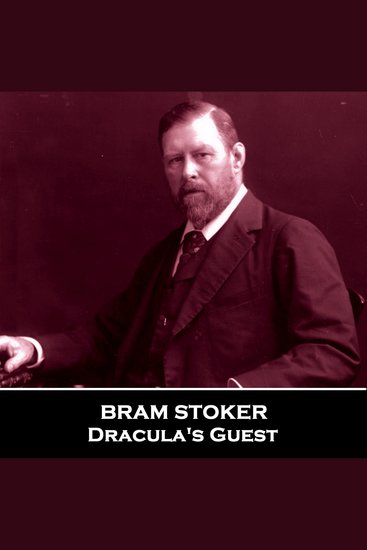
    Bram Stoker

    • 0
    • 0
    • 0
    Abraham Stoker was born in Dublin, Ireland on the 8th of November 1847, the third of seven children.  
    His early years were plagued with such ill-health that he was unable to start school until the age of seven.  He turned the long periods of recovery into an opportunity for thinking and said “I was naturally thoughtful, and the leisure of long illness gave opportunity for many thoughts which were fruitful according to their kind in later years”.  
    Strikingly at Trinity College, Dublin his health had returned with such vigour that he was named their University Athlete whilst also achieving a BA in Mathematics with honours.  
    At this time his interest in theatre became a job offer to be the Dublin Evening Mail’s theatre critic, co-owned by Sheridan Le Fanu.  He now began to also write short stories and in 1872 ‘The Crystal Cup’ was published.  An interest in art developed and he co-founded the Dublin Sketching Club.  
    In 1878 came marriage to Florence Balcombe.  She had formerly been courted by Stoker’s acquaintance, Oscar Wilde.  The marriage produced one child.   
    Stoker had some years before reviewed Henry Irving’s Hamlet and had dined with him.  That friendship now resulted in a proposal from Irving to move to London and to manage his Lyceum Theatre.  His numerous commercial innovations ensured both he and the theatre thrived.  Irving would also often take Stoker with him when he toured abroad. 
    Despite this busy life Stoker continued to write and these works paved the way for his most famous creation, published in 1897, ‘Dracula’.  It is rightly recognised as one of the greatest horror novels of all time and although not the first with a theme of Vampires, it is undoubtedly the most well-known. 
    Stoker also wrote poetry and many excellent short stories and continued to write novels and other works throughout his career. 
    Politically Stoker supported Home Rule, though only by peaceful means.  He was also keen on following scientific trends particularly in medicine. 
    In 1902 his tenure at the Lyceum Theatre ended and although he continued to write his health was deteriorating, mainly due to a series of debilitating strokes. 
    Bram Stoker died on the 20th April 1912, in Pimlico, London.  He was 64.
    Mostra libro
  • Lady Eleanor Smith - A Short Story Collection - A turn of the century Bohemian socialite that created dark tales as an author - cover

    Lady Eleanor Smith - A Short...

    Lady Eleanor Smith

    • 0
    • 0
    • 0
    Lady Eleanor Furneaux Smith was born in Birkenhead, Merseyside in England on the 7th August 1902 into a privileged family steeped in titles and politics. 
     
    Part of her education was at Miss Douglas's school at Queen's Gate.  Here she met and befriended several other young women that the British tabloid press would later call the ‘Bright Young Things’, a group of bohemian young aristocrats and socialites in 1920s London. 
     
    Smith's paternal great-grandmother, was said to have been a Gypsy, and this sparked an early and life-long interest with the Romani people, she even went so far as to learn to read and speak the language, which she called ‘musical and broken.’ 
     
    Her life was full of adventure and mishaps.  A mistaken encounter with a man she thought could help her into the film business turned out to threats of marriage and death from a man wanted for the murder of his father.  She was even arrested twice.  Once for listing her career as a journalist and another, in Rome, for walking around in a sleeveless dress. 
     
    Smith began her career writing society gossip columns for various newspapers but later received an offer to write for the newly-formed Great Carmo Circus, with which she travelled for several years and was the source material for many of her books. 
     
    Her first novel, ‘Red Wagon’, was published when she was 28 and it was an immediate bestseller.  A prolific writer several of her works were also adapted for films. 
     
    Smith also wrote ghost stories and others flavoured with evil.  Her support for the Conservative party may be forgiven but her attributed quote to be a ‘warm adherent of General Franco’ less so. 
     
    Lady Eleanor Furneaux Smith died on the 20th October 1945 in Westminster after a long illness.  She was 43. 
    1 - Lady Eleanor Smith - An Introduction 
    2 - One O'Clock by Lady Eleanor Smith 
    3 - Tamar by Lady Eleanor Smith 
    4 - Whittington's Cat by Lady Eleanor Smith
    Mostra libro
  • Forgotten Authors The - Women - Born 1800 - 1849 - Don't let great literature die - cover

    Forgotten Authors The - Women -...

    Anna Maria Hall, George Sand,...

    • 0
    • 0
    • 0
    Throughout the long centuries of human history is the want, and the need, to share information, to exchange ideas and for that knowledge and experience, for curiosity and learning, to be the basis of a civil society. 
    In literature the ambition is much narrower.  In order to be known, to be popular, you had to be published.  And for that people had to know you existed and your ideas worth reading.  Obviously for most of humanity’s time people couldn’t read and texts couldn’t be published in any great number. 
    In the 15th Century Gutenberg’s printing press began the revolution to address the second and by the 19th century had gathered pace with startling speed and mass distribution.  Education for the many was brought in to help people understand more of their world and, with new skills, how to have a better place within it.  Now, if the powers that owned the presses and means of distribution agreed an audience would now be able to avail themselves of your ideas, your printed words.  
    All too often the talents of women have been scorned, mocked and laughed at.  In reality that was more usually by those who’s own talents were hardly fit to even grace their shadows.   
    But society in general still connived and set women to one side in almost everything that men considered their rightful territory.  And literature was one such territory.  Remarkably resilient as well as talented these women strove to be published, to show themselves as equals.  The results more often than not proved that they were.  
    Sadly, in the thirst for the new, the recent and the past fell from sight, relegated to dark corners and dusty shelves.    
    But the printed word is rarely without someone, somewhere busying themselves through piles of papers and books rediscovering what a good story is, whatever its age. 
    In this volume we offer up a small selection of talents from the literary landscape of 1800 to 1849 and the Women authors whose time has now come again.
    Mostra libro
  • The Episode in Room 222 - Short tale from the Staffordshire born literary great - cover

    The Episode in Room 222 - Short...

    Arnold Bennett

    • 0
    • 0
    • 0
    Enoch Arnold Bennett was born on the 27th May 1867 in Hanley, one of the six towns that formed the Potteries and that later joined together to become Stoke-On-Trent.  
    After passing entrance examinations for Cambridge University his solicitor father instead decided that he should work for him, unpaid, in his thriving office.  In the evenings the young Bennett wrote or studied and one skill he developed was Pitman’s shorthand which gave him entrance to a position as a clerk at a solicitor’s office in London.  From there followed various jobs but none seemed to be able to ignite his career as a full-time author. 
    By 1903 he had moved to live in Paris; he was 35, unmarried and keen to settle into his new life.  In 1908 he published his first remarkable novel; ‘Clayhanger’, that drew on his earlier life in the Potteries.   
    A prolific writer he was able to deliver very fine works but also write many that were described as ‘potboilers’.  Despite this disclaimer many were lapped up by an audience eager for his prose and helped turn him into the most financially successful author of the times.    
    As the First World War drew to a close, he was appointed to run the Ministry of Information.  During the 1920s he was reputedly the highest paid literary journalist in the land and continued to write novels, plays and short stories.   
    Arnold Bennett died in his flat at Chiltern Court on the 27th March 1931, from typhoid after drinking water in France on his last holiday.  He was 63.
    Mostra libro
  • Oz: The Complete Collection - cover

    Oz: The Complete Collection

    L. Frank Baum

    • 0
    • 0
    • 0
    Here you will find the complete OZ Collection:1. The Wonderful Wizard of Oz Starts at Chapter 1 2. The Marvelous Land of Oz Starts at Chapter 253. Ozma of Oz Starts at Chapter 494. Dorothy and the Wizard in Oz Starts at Chapter 705. The Road to Oz Starts at Chapter 906. The Emerald City of Oz Starts at Chapter 1147. The Patchwork Girl of Oz Starts at Chapter 1448. Tik-Tok of Oz Starts at Chapter 1729. The Scarecrow of Oz Starts at Chapter 19710. Rinkitink in Oz Starts at Chapter 22111. The Lost Princess of Oz Starts at Chapter 24512. The Tin Woodman of Oz Starts at Chapter 27113. The Magic of Oz Starts at Chapter 29514. Glinda of Oz Starts at Chapter 318
    Mostra libro
  • Into the Sun - One of the first ever apocalyptic Sci Fi stories - cover

    Into the Sun - One of the first...

    Robert Duncan Milne

    • 0
    • 0
    • 0
    Robert Duncan Milne was born on 7th June 1844 in Cupar in Fife, Scotland. 
     
    Little is known of the life of this extraordinary author who created some of the most appealing science fiction stories ever written.   
     
    As an adult he lived in San Francisco and wrote short stories for local newspapers and periodicals of the time and principally for The Argonaut, the political and literary newspaper heavyweight of the area. 
     
    Robert Duncan Milne died in San Francisco, California on 15th December 1899.  He was 55. 
     
    Into the Sun is a compelling narrative of what happens when the doomed Earth falls into the sun.  Is survival possible?
    Mostra libro