Unisciti a noi in un viaggio nel mondo dei libri!
Aggiungi questo libro allo scaffale
Grey
Scrivi un nuovo commento Default profile 50px
Grey
Iscriviti per leggere l'intero libro o leggi le prime pagine gratuitamente!
All characters reduced
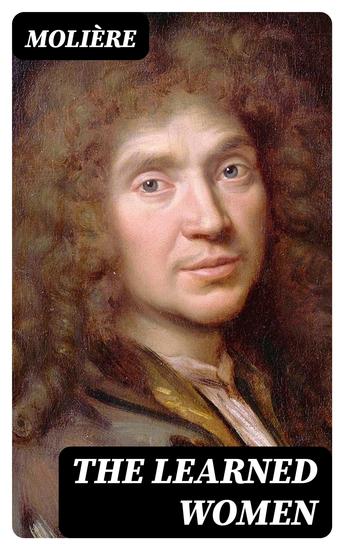
The Learned Women - cover

The Learned Women

Molière Molière

Traduttore Charles Heron Wall

Casa editrice: DigiCat

  • 0
  • 0
  • 0

Sinossi

In his comedic masterpiece, "The Learned Women," Molière deftly satirizes the pretensions of academicism and the societal constraints of 17th-century France. The play revolves around the tumultuous relationships within a household dominated by intellectual aspirations, particularly through the character of Philaminte, who is bent on acquiring knowledge at the expense of personal relationships. Molière's signature blend of farce, wit, and incisive dialogue illuminates the absurdity of elitism, while also exploring the tensions between traditional gender roles and the emergence of female intellect. The work reflects the broader literary context of the Enlightenment, challenging rigid norms of authority and education with humor and social critique. Molière, born Jean-Baptiste Poquelin in 1622, was a pioneering figure in French theater, celebrated for his sharp observations on human behavior and social norms. Raised in a prosperous family, he was exposed to the intricacies of Parisian society and its evolving intellectual climate. This background inspired him to pen works that fused satire with moral inquiry, making him a critical voice in literature. "The Learned Women" stands as a notable exemplar of his ability to navigate complex social themes with comedy and clarity. For readers seeking an engaging exploration of gender dynamics and intellectual dogma, "The Learned Women" offers both amusement and insight. Molière's keen social commentary resonates with contemporary audiences, making this play a timeless reflection on the pursuit of knowledge and the follies that accompany it. Essential for anyone interested in classic literature, this work invites contemplation on the relevance of its themes in today's world.
Disponibile da: 15/08/2022.
Lunghezza di stampa: 44 pagine.
Altri libri che potrebbero interessarti

  • Stumblings - cover

    Stumblings

    Keith Ravenscroft

    • 0
    • 0
    • 0
    ‘Better to have questions you can’t answer than answers you can’t question.’
     
    The author describes these poems as ‘stumblings’ because they are stumbling attempts to understand what can seem beyond understanding. In his writing he confronts the issues that are inescapably a part of being human, as he sees them playing out in the maelstrom of his own life. He takes us into areas of desperation, confusion, even despair, but also of acceptance, fulfilment, ecstasy, obstinate faith, and above all of tender love.
     
    The poems range widely through philosophical musings, urgent questioning about what it is to be human, irony, self-mockery, overwhelming passion – and always with an intensity that acknowledges that everything matters, everything has meaning if only we could decode it. And throughout this volume the writer attempts to comprehend and reach the elusive God who 
    he believes in but fails so comprehensively to connect with as deeply as he longs to. 
     
    Any readers who are prepared to stumble with the writer on this poetic journey through life may find themselves in a place where they can at least begin to understand, accept, and even glory in their imperfect humanity as the writer does. And maybe hope to stumble into Grace, 
    enlightened and affirmed.
    Mostra libro
  • Oscar Wilde - Chapter & Verse - Poetry and prose together from literary greats - cover

    Oscar Wilde - Chapter & Verse -...

    Oscar Wilde

    • 0
    • 0
    • 0
    Literature is a world of words and wonder, able to take us on almost unimaginable journeys from the wild and fantastic to the grind and minutiae of life. 
     
    An author’s ideas are his building blocks, his architecture of the mind, building a structure on which all else will rest; the narrative, the characters, the words - those few words that begin the adventure. 
     
    In this series we look at some of our leading classic authors across two genres: the short story and the poem.  In this modern world there is an insatiable need to categorise and pigeon-hole everyone and everything.  But ideas, these grains and saplings of the brain, need to roam, to explore and find their perfect literary use vehicle.  Our authors are masters of many literary forms, perhaps known for one but themselves favouring another. 
     
    Story. Poems. Story.  Within these boundaries come all manner of invention and cast of characters.  And, of course, each author has their own way of revealing their own chapter and verse.    
     
    1 - Chapter & Verse - Oscar Wilde 
    2 - The Devoted Friend by Oscar Wilde 
    3 - The Ballad of Reading Gaol by Oscar Wilde 
    4 - Sonnet to Liberty by Oscar Wilde 
    5 - Sonnet on Approaching Italy by Oscar Wilde 
    6 - Easter Day by Oscar Wilde 
    7 - Helas! by Oscar Wilde 
    8 - Serenade by Oscar Wilde 
    9 - Endymon by Oscar Wilde 
    10 - Her Voice by Oscar Wilde 
    11 - Impression du Matin by Oscar Wilde 
    12 - Requescat by Oscar Wilde 
    13 - A Vision by Oscar Wilde 
    14 - The Grave of Shelley by Oscar Wilde 
    15 - The Canterville Ghost - Part 1 by Oscar Wilde 
    16 - The Canterville Ghost - Part 2 by Oscar Wilde
    Mostra libro
  • After Sylvia - cover

    After Sylvia

    Sarah Corbett, Ian Humphreys

    • 0
    • 0
    • 0
    After Sylvia is an anthology of new writing celebrating the work and legacy of Sylvia Plath. Published by Nine Arches Press in October 2022, the book honours the 90th anniversary of Plath's birth through a range of compelling poems and thought-provoking essays by leading and up-and-coming poets and scholars from the UK and beyond.
    After Sylvia is shaped around five inspiring chapters, each exploring a key Plathian theme: Nature, Rebirth, Womanhood, Mothers & Fathers and Magic. Co-edited by Ian Humphreys and Sarah Corbett, contributors include Mona Arshi, Emily Berry, Mary Jean Chan, Heather Clark, Pascale Petit and Jacob Polley.
    This vital anthology sets out to help dispel the myth of Sylvia Plath as tortured genius destined to her fate, by expressing the power and complexity of her work, legacy and reputation as one of the most important and influential writers of the 20th century.
    Full list of contributors:
    Moniza Alvi, Romalyn Ante, Mona Arshi, Polly Atkin, Tiffany Atkinson, Sally Baker, Colin Bancroft, Emily Berry, Nina Billard Sarmadi, Caroline Bird, Sharon Black, David Borrott, Mary Jean Chan, Heather Clark, Angela Cleland, Jane Commane, Sarah Corbett, Jonah Corren, Gail Crowther, Mari Ellis Dunning, Samatar Elmi, Ruth Fainlight, Daniel Fraser, Rosie Garland, Victoria Gatehouse, Rebecca Goss, Annie Hayter, Gaia Holmes, Ian Humphreys, Julie Irigaray, Bhanu Kapil, Victoria Kennefick, Martin Kratz, Zaffar Kunial, Jennifer Lee Tsai, Carola Luther, Karen McCarthy Woolf, Roy McFarlane, Nina Mingya Powles, Mark Pajak, Caleb Parkin, Pascale Petit, Jacob Polley, Niamh Prior, Shivanee Ramlochan, Clara Rosarius, Devina Shah, Penelope Shuttle, Jean Sprackland, Laura Stanley, Paul Stephenson, Degna Stone, Dorka Tamás, Anastasia Taylor-Lind, Peter Wallis, Tom Weir, Sarah Westcott, Merrie Joy Williams, Sarah Wimbush, Tamar Yoseloff.
    Mostra libro
  • Losing Venice - cover

    Losing Venice

    Joe Clifford

    • 0
    • 1
    • 0
    'Our duty is plain. To bring an end to peace.'
    An empire gone wrong; an empire completely gone, in fact. A nation with delusional ideas of its place in the world, making poor choices, involved in clumsy foreign adventures, constantly on the edge of war.
    At home, class divides are stark yet all attention is on a Duke's ceremonial marriage. And surging through the chaos, the absurdities of masculinity threaten to destroy everything.
    An epic fable set in the faraway Spanish Golden Age, Jo Clifford's play Losing Venice is a joyously original, witty take-down of dangerously daft machismo and the deranged behaviour of countries that have lost an empire and still not yet found a role…
    First seen at the 1985 Edinburgh Festival Fringe, Losing Venice was revived at the Orange Tree, Richmond, in 2018.
    Mostra libro
  • The Top 10 Poets – English Romantics - Five poems each from the best English Romantic poets - cover

    The Top 10 Poets – English...

    John Keats, William Wordsworth,...

    • 0
    • 0
    • 0
    The language of Poetry is an art that most of us attempt at some point in our lives.  Although its commonplace exposure has been somewhat marginalised in today’s often fast-paced lives we all recognise good verse that can empathise with our thoughts or open us up to experience new things in new ways, to better understand and to enjoy the many strands of our lives. 
    But finding a starting point can be overwhelming, even off-putting, so in this series we offer up our Top 10 classic poets, who brim with talent and verse, on a range of subjects and themes that we can all enjoy. 
    In this volume we listen to the world through the eyes and words of the English Romantics.  This very special poetical period is filled with the loving and tender verse of poets who still beguile us all with their beauty.
    Mostra libro
  • Dybbuk Americana - cover

    Dybbuk Americana

    Joshua Gottlieb-Miller

    • 0
    • 0
    • 0
    Inventive poetry explores Jewish identity in America"How can I teach a prayer / I only know how to recite?" "America, whose death / didn't you come from?" These are some of the questions that poet Joshua Gottlieb-Miller wrestles with in his beautiful, gripping new collection. By turns experimental and documentary, Dybbuk Americana draws out the questions around Jewish identity in the United States, and what it means to pass on Jewish identity to one's child. This hybrid text draws on art, mysticism, and history, taking the dybbuk, a figure from Jewish folklore, as its central metaphor. A dybbuk is a restless spirit who inhabits another's body, and as a possessing spirit the dybbuk is often treated as a demonic force, but it can be read as merely trying to climb the ladder of the afterlife. In other words, a kind of striver. Enacting the idea of competing selves in one body, Dybbuk Americana plays with form via a series of text boxes that create a multi-channel effect on the page. The body of the poem can be read with surrounding and intercutting text boxes to generate multiple interpretations. This innovative poetic technique maintains a dialogue with Jewish literary lineages: Talmudic commentary and interpretation of the oral law, as well as the fragmented nature of geniza, a place where Jews store sacred documents when they fall out of use. Dybbuk Americana weaves together the father-son arc within a larger socio-political commentary and historical narrative. Poems move deftly between the ironic and the mystic, from aphoristic questioning and inventive narratives, to interview, oral history, and archival materials. In these lines, "the angels./ They get as close as they can." Witty, curious, warm, and searching, Dybbuk Americana signals a fresh voice in Jewish-American poetry.
    Mostra libro