Unisciti a noi in un viaggio nel mondo dei libri!
Aggiungi questo libro allo scaffale
Grey
Scrivi un nuovo commento Default profile 50px
Grey
Iscriviti per leggere l'intero libro o leggi le prime pagine gratuitamente!
All characters reduced
Bantu Migration - cover

Bantu Migration

Mira Donnelly

Traduttore A AI

Casa editrice: Publifye

  • 0
  • 0
  • 0

Sinossi

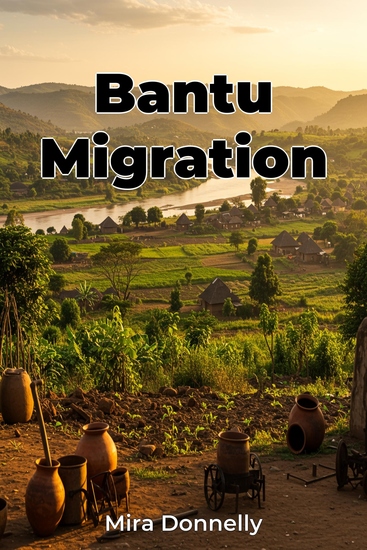
"Bantu Migration" explores the remarkable expansion of Bantu-speaking peoples across sub-Saharan Africa, a pivotal event that reshaped the continent's linguistic, cultural, and technological landscape. This comprehensive study examines the drivers behind this widespread movement, its transformative impact on existing societies, and its enduring legacy in modern Africa. The book highlights how the Bantu expansion facilitated the spread of iron smelting and advanced agricultural techniques, leading to significant societal changes.

 
The book approaches the topic by synthesizing archaeological, linguistic, and genetic evidence to provide a nuanced understanding of the Bantu migration. While the exact origins remain debated, current evidence suggests roots in modern-day Cameroon and Nigeria, from where the Bantu people spread their culture and languages.

 
The book unfolds across chapters, first introducing the early Bantu people and their language family, then analyzing the impact on existing populations, and finally tracing the long-term legacy of the migrations. This exploration offers a valuable perspective on African history, moving beyond simplistic narratives to reveal the dynamic interactions between different populations.

 
Understanding the Bantu expansion is crucial for grasping the complexities of African demographics, cultural diversity, and linguistic patterns that continue to shape the continent today.
Disponibile da: 19/03/2025.
Lunghezza di stampa: 58 pagine.
Altri libri che potrebbero interessarti

  • 20th Century’s Most Influential Artists The: The Lives and Art of Pablo Picasso Salvador Dali Andy Warhol and Jackson Pollock - cover

    20th Century’s Most Influential...

    Editors Charles River

    • 0
    • 0
    • 0
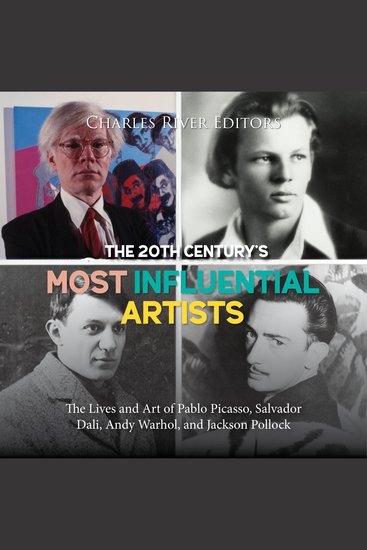
    In their biography of Pablo Picasso, Hans Ludwig and Chris Jaffe note that “for him, art was always adventure: ‘To find is the thing.’” Indeed, there is perhaps no artist who produced more art than Picasso, whose enormous oeuvre (which spanned most of his 91-year life) contained a countless number of paintings and drawings. Picasso also worked in other mediums as well, notably sculpture and lithography, and his constant experimentation with form makes him a useful case study through which to chart the growth of Modernism as an artistic movement and many of the artistic trends that would dominate the 20th century. At the same time, one of the challenges involved in examining Picasso’s body of work is the sheer breadth of it all.  
    	In his review of Salvador Dali’s first autobiography, George Orwell declared that “One ought to be able to hold in one’s head simultaneously the two facts that Dali is a good draughtsman and a disgusting human being.” Whether or not one agrees with the famous author’s assessment, Orwell captures the polarizing nature of Salvador Dali, and the extent to which his undeniable technical virtuosity often brushed against his penchant for provoking his audiences (not to mention provoking long-entrenched standards of “proper” taste).  
    	To truly grasp the significance of Jackson Pollock in 20th century art, it’s necessary to understand the dramatic departure he initiated away from the straightforward compositions associated with the social realist art of the 1930s, a Depression-era period in which political art offered readily comprehensible narratives that were grasped by viewers with little artistic training.  
    Few artists of the 20th century were as enigmatic as Andy Warhol, who once remarked, “If you want to know all about Andy Warhol, just look at the surface of my paintings and films and me, there I am. There’s nothing behind it.” This statement is hardly out of character for the famous artist.
    Mostra libro
  • The Roman Empire and Byzantine Empire - The History and Legacy of Europe’s Most Important Empire and Its Successor - cover

    The Roman Empire and Byzantine...

    Charles River Editors

    • 0
    • 0
    • 0
    For the people of the ancient Mediterranean and beyond, the city of Rome had been a symbol of power for centuries, and entering the early 5th century CE, the Eternal City hadn’t been taken by an enemy force since the Gauls had done it about 800 years earlier, an unheard of period of tranquility in a world wracked with almost constant warfare. 
    Thus, when the Visigoths, whom the Romans considered uncultured and inferior, took the city of Rome and sacked it in 410, the world was stunned. It made theologians of the newly Christianized empire question God’s plan on Earth, and it encouraged many leading Romans to look east to Constantinople for their future. Indeed, the Western Roman Empire would completely collapse in the late 5th century, less than 70 years after the Visigoths sacked Rome, and just how it went from being a superpower to a poorly led, weak, and vulnerable shadow of its former self has preoccupied historians for centuries. 
    To this day, it remains difficult to trace just when the decline began, but it’s fair to say that the sack of Rome was the result of a number of factors that had been coalescing for many years. In the end, the fall of the Roman Empire was not a tale of cataclysmic events that shattered the sprawling power, but the culmination of centuries of internal dissent and decay, combined with growing external threats that led to gradual decline and eventually to the empire’s final destruction.  
    In terms of geopolitics, perhaps the most seminal event of the Middle Ages was the successful Ottoman siege of Constantinople in 1453. The city had been an imperial capital as far back as the 4th century, when Constantine the Great shifted the power center of the Roman Empire there, effectively establishing two almost equally powerful halves of antiquity’s greatest empire. Constantinople would continue to serve as the capital of the Byzantine Empire even after the Western half of the Roman Empire collapsed.
    Mostra libro
  • The Whigs and the Know Nothings - The History of the Influential Political Parties that Collapsed Before the Civil War - cover

    The Whigs and the Know Nothings...

    Editors Charles River

    • 0
    • 0
    • 0
    It was in the wake of the election of Andrew Jackson that the Whigs emerged as opponents to the Jacksonian Democrats during a period of American history known as the Second Party System (1828-1854). Initially, the conflict was rooted not only in different visions for the United States – the Whigs believed in a strong central bank and federally funded infrastructure projects (known as “internal improvements”) – but also in opposition to one man: Andrew Jackson. When it first formed, the Democratic Party coalesced around Jackson, and his beliefs and actions became Democratic Party dogma, which left the diverse group of people who opposed Jackson to become the Whigs.  
    The problem with this arrangement is that while the Whigs scored some notable successes as an opposition party, they found governing more difficult. The two Whigs elected president, William Henry Harrison and Zachary Taylor, died in office, raising to the presidency their respective vice-presidents, John Tyler and Millard Fillmore. Neither man succeeded in uniting the Whig Party behind him (a gargantuan task, to be sure), and neither was ever elected president in his own right. The increasing rancor over slavery is what finally killed the Whig Party.  
    	In the wake of contemporary debates over immigration, the “Know-Nothings” have been regularly cited as an example of how dangerous nativist attitudes can become and, indeed, have proven to be in America’s history. Several columnists, for instance, have striven to make comparisons between the Know-Nothings of antebellum America and the country’s recent immigration policies, helping in part to generate modern interest in a political party that many Americans have heard of but tend to know little about. The Know-Nothing movement can actually be tied to a number of violent episodes and ethnically charged riots that occurred during the late 1850s.
    Mostra libro
  • Freedom of Choice is Not Freedom - cover

    Freedom of Choice is Not Freedom

    Jiddu Krishnamurti

    • 0
    • 0
    • 0
    Freedom of choice is not freedom - 11 November 1968 
    • What do we mean by free will? Is there such thing? 
    • Is choice ever necessary? 
    • Freedom exists only when I perceive very clearly, when the mind sees things as they are. 
    • Q: Is it possible to be free in society? 
    • Q: Is love the absence of hate? 
    • To find out what truth is you must be free of propaganda: the propaganda of 
    the Church, the propaganda of literature, propaganda of tradition, so that you see things clearly for yourself.
    Mostra libro
  • The World Record Book of Racist Stories - cover

    The World Record Book of Racist...

    Amber Ruffin, Lacey Lamar

    • 0
    • 0
    • 0
    A new collection of hilarious, intergenerational anecdotes full of absurd detail about everyday experiences of racism from the New York Times bestselling authors of You’ll Never Believe What Happened to Lacey, comedian Amber Ruffin and her sister Lacey.Families may not always see eye to eye; we get on each other’s nerves, have different perspectives and lives—especially when we consider how we've grown up in different generations. But for the Ruffin family and many others, there has been one constant that connects them: racism hasn’t gone anywhere.From her raucous musical numbers to turning upsetting news into laughs as the host of The Amber Ruffin Show or in her Late Night with Seth Meyers segments, Amber is no stranger to finding the funny wherever she looks. With equal parts heart and humor, she and her sister Lacey Lamar shared some of the eye-opening and outrageous experiences Lacey had faced in Nebraska in their first book. Now, the dynamic duo makes it clear—Lacey isn’t the only one in the family with ridiculous encounters to share! Amber and Lacey have many more uproarious stories, both from their own lives and the entire Ruffin family.Recounting the wildest tales of racism from their parents, their siblings, and Amber’s nieces and nephews, this intergenerational look at ludicrous (but all too believable) everyday racism as experienced across age, gender, and appearance will have you gasping with shock and laughter in turn. Validating for anyone who has first-hand experience, and revealing for anyone who doesn’t, Amber and Lacey’s next book helps us all find the absurdity in the pervasive frustrations of racism. Illuminating and packed with love and laughter, this is a must-read for just about everyone.
    Mostra libro
  • Glorious Lessons - John Trumbull Painter of the American Revolution - cover

    Glorious Lessons - John Trumbull...

    Richard Brookhiser

    • 0
    • 0
    • 0
    The complicated life and legacy of John Trumbull, whose paintings portrayed both the struggle and the principles that distinguished America's founding moment 


    John Trumbull (1756–1843) experienced the American Revolution firsthand—he served as aid to George Washington and Horatio Gates, was shot at, and was jailed as a spy. He made it his mission to record the war, giving visual form to what most citizens of the new United States thought: that they had brought into the world a great and unprecedented political experiment. His purpose, he wrote, was "to preserve and diffuse the memory of the noblest series of actions which have ever presented themselves in the history of man." Although Trumbull's contemporaries viewed him as a painter, Trumbull thought of himself as a historian. 


    Richard Brookhiser tells Trumbull's story of acclaim and recognition, a story complicated by provincialism, war, a messy personal life, and, ultimately, changing fashion. He shows how the artist's fifty-year project embodied the meaning of American exceptionalism and played a key role in defining the values of the new country. Trumbull depicted the story of self-rule in the modern world—a story as important and as contested today as it was 250 years ago.
    Mostra libro