Unisciti a noi in un viaggio nel mondo dei libri!
Aggiungi questo libro allo scaffale
Grey
Scrivi un nuovo commento Default profile 50px
Grey
Iscriviti per leggere l'intero libro o leggi le prime pagine gratuitamente!
All characters reduced
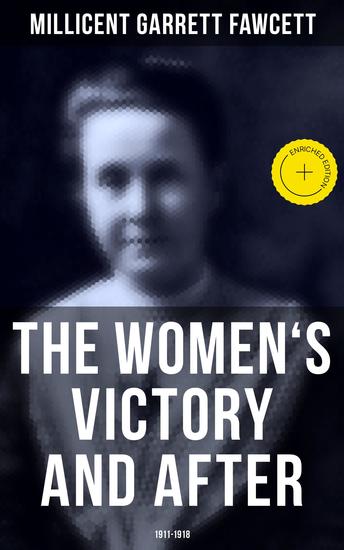
The Women's Victory and After: 1911-1918 - Enriched edition Personal Reminiscences - cover

The Women's Victory and After: 1911-1918 - Enriched edition Personal Reminiscences

Millicent Garrett Fawcett

Casa editrice: Musaicum Books

  • 0
  • 0
  • 0

Sinossi

Millicent Garrett Fawcett's 'The Women's Victory and After: 1911-1918' is a pivotal text in feminist literature, focusing on the suffrage movement in the early 20th century. Fawcett's writing is a combination of historical analysis and personal reflection, providing a unique insight into the challenges faced by women in the fight for equality. The book captures the spirit of the times and the voices of the women who fought tirelessly for their rights. Fawcett's elegant prose and powerful storytelling make the book a compelling read for anyone interested in women's history and social justice movements of the past. The book also sheds light on the aftermath of the suffrage victory and the ongoing struggles for gender equality. Millicent Garrett Fawcett, a leading suffragist and advocate for women's rights, brings authority and passion to her writing, drawing from her own experiences in the women's movement. Her dedication to the cause is evident in every page of this book, making it a must-read for feminist scholars and activists alike.

In this enriched edition, we have carefully created added value for your reading experience:
- A succinct Introduction situates the work's timeless appeal and themes.
- The Synopsis outlines the central plot, highlighting key developments without spoiling critical twists.
- A detailed Historical Context immerses you in the era's events and influences that shaped the writing.
- A thorough Analysis dissects symbols, motifs, and character arcs to unearth underlying meanings.
- Reflection questions prompt you to engage personally with the work's messages, connecting them to modern life.
- Hand‐picked Memorable Quotes shine a spotlight on moments of literary brilliance.
- Interactive footnotes clarify unusual references, historical allusions, and archaic phrases for an effortless, more informed read.
Disponibile da: 21/03/2018.
Lunghezza di stampa: 108 pagine.
Altri libri che potrebbero interessarti

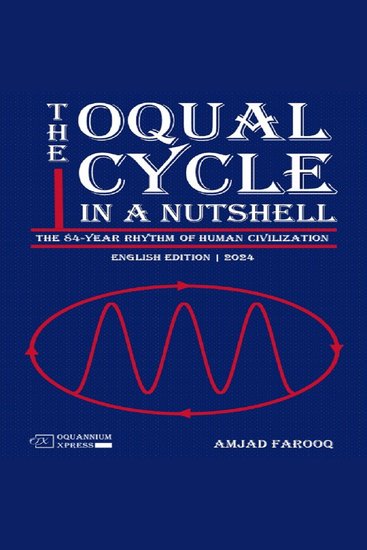
  • Oqual Cycle In A Nutshell The: The 84-Year Rhythm of Human Civilization (2024) - cover

    Oqual Cycle In A Nutshell The:...

    Amjad Farooq

    • 0
    • 0
    • 0
    With much of the world having been in a precipitous meltdown over the past couple of decades and continuing to hit a new low with each passing year with no end in sight, one wonders whether this is the new normal or whether the ongoing madness will eventually end so as to usher in a brighter dawn. 
    Fortunately, Mother Nature has blessed us with a hitherto unknown phenomenon dubbed the “oqual cycle” that helps us to revitalize our society after we have gone astray as is the case across much of the globe today—coined from Latin, the adjective "oqual" literally means "84-year".  
    In a manner that the daily cycle lends us an indispensable mechanism for recharging our batteries during the night after a hectic day at work, the oqual cycle is equally necessary to reboot our society after it becomes corrupted and choppy over what appears to be a period of 84 years on average. 
    Since our childhood, we have not only heard ad nauseam the cliché that history is cyclical but it has also been shoved down our throat time and again.   
    Well, our gurus and mentors were truly onto something in that we now know that history is in fact oquacyclical—it repeats exactly 84 years on average courtesy of the unavoidable spell of oqual cycle on our precarious civilization.  
    In short, the oqual cycle serves as a model par excellence for making sense of the ongoing sociopolitical trials-and-tribulations of our own times that in no small part elicit a wistful yearning for the rather sweet memories of our recent past from the second half of the 20th century.  
    Why has humanity lost its moral compass today?  
    Why are our leaders clueless about how to change course?  
    How will the ongoing madness around the globe end?  
    Are we teetering on the brink of a nuclear armageddon?  
    When will the good old days return?  
    The oqual cycle has you covered from every angle. 
    Mostra libro
  • Beyond Quantity - Research with Subsymbolic AI - cover

    Beyond Quantity - Research with...

    Jens Schröter, Andreas Sudmann,...

    • 0
    • 0
    • 0
    How do artificial neural networks and other forms of artificial intelligence interfere with methods and practices in the sciences? Which interdisciplinary epistemological challenges arise when we think about the use of AI beyond its dependency on big data? Not only the natural sciences, but also the social sciences and the humanities seem to be increasingly affected by current approaches of subsymbolic AI, which master problems of quality (fuzziness, uncertainty) in a hitherto unknown way. But what are the conditions, implications, and effects of these (potential) epistemic transformations and how must research on AI be configured to address them adequately?
    Mostra libro
  • How America Worksand Why It Doesn't - A Brief Guide to the US Political System - cover

    How America Worksand Why It...

    William Cooper

    • 0
    • 0
    • 0
    Twenty-first-century America isn’t working the way it’s supposed to. 
    This book explains why. 
    Americans in the twenty-first century are becoming increasingly untethered from both reality and the essential principles and traditions that have shaped the nation’s historic success. A big part of why America isn’t working is because far too many Americans neither know nor care how it’s supposed to work. 
    “William Cooper presents an insightful, sensitive, and accessible account of the trials that face American democracy in the twenty-first century. This fair- and broad-minded volume makes compelling reading for those who are looking to build a better democracy.” Alexander Yen, Department of Politics and International Relations, University of Oxford 
    “Partisanship fuels personal convictions more than ever in our society, and convictions fuel mysided thinking and other cognitive biases. At no time have we needed this discussion of bias and partisan thinking more than now.” Keith E. Stanovich, author of The Bias That Divides Us 
    “William Cooper logically and authoritatively takes you step by step through all the reasons a President Trump couldn’t imprison his enemies, pardon his friends, overrule judges, weaponize the Department of Justice, prosecute Joe Biden, or order the military to enforce his unconstitutional actions” Cleveland Plain Dealer 
    “William Cooper is an insightful and thought-provoking writer about US politics. He deserves to be widely read.” Thomas Plate, former Editorial Page Editor, Los Angeles Times 
    "In How America Works . . . and Why It Doesn’t, William Cooper gives a thoughtful, readable guide to what ails American democracy. Required reading for any student of political science.” Uri Kaufman, author of Eighteen Days in October 
    "A must-read. His well-written and brief book covers a lot of important ground in a learned but accessible manner. Probably most noteworthy, though, is his astute and fair judgment―the book is not a polemic for the left or the right, but rather a fair appraisal of the strengths and weaknesses of both. I highly recommend reading it―it is an enjoyable tour of key aspects of history (as well as current events), ethics, political philosophy, constitutional law, environmental science, and cognitive psychology―all told in a lucid, efficient way." William O'Donohue, PhD, Professor, University of Nevada, Reno
    Mostra libro
  • Emotion-Savvy Parenting - A Shame-Free Guide to Navigating Emotional Storms and Deepening Connection - cover

    Emotion-Savvy Parenting - A...

    PhD Alissa Jerud

    • 0
    • 0
    • 0
    Intense emotions–whether your own or your child's–can make it incredibly difficult to be the parent you want to be. This book is designed to help you become a more emotionally agile parent so you can better navigate whatever emotional storms you inevitably encounter. 
    Emotion-Savvy Parenting is an empowering, science-informed guide for breaking free of the hold that unwanted emotions so often have over parents. With compassion and wit, licensed clinical psychologist Dr. Alissa Jerud draws on decades of research to present a refreshing, theory-driven approach that encourages parents to focus on changing the only behaviors they truly have control over: their own. Rooted in highly effective, cognitive-behavioral strategies and a respectful, relationship-centered stance, her ART (Accept, Regulate, and Tolerate) framework enables parents to relate more skillfully to challenging emotions, model invaluable lessons, connect more deeply with their kids, and enjoy parenting more. 
    Packed with real-life examples and step-by-step techniques, this book supports parents of infants to teens in creating a more harmonious home by becoming their ideal, most emotionally adept selves. It also serves as a valuable resource for educators and mental health professionals seeking to help lighten the heavy load of parenthood.
    Mostra libro
  • Secularity and Science - What Scientists Around the World Really Think About Religion - cover

    Secularity and Science - What...

    Anonimo

    • 0
    • 0
    • 0
    Do scientists see conflict between science and faith? Which cultural factors shape the attitudes of scientists toward religion? Can scientists help show us a way to build collaboration between scientific and religious communities, if such collaborations are even possible? 


    To answer these questions and more, the authors of Secularity and Science: What Scientists Around the World Really Think About Religion completed the most comprehensive international study of scientists' attitudes toward religion ever undertaken, surveying more than 20,000 scientists and conducting in-depth interviews with over 600 of them. From this wealth of data, the authors extract the real story of the relationship between science and religion in the lives of scientists around the world. The book makes four key claims: there are more religious scientists than we might think; religion and science overlap in scientific work; scientists—even atheist scientists—see spirituality in science; and finally, the idea that religion and science must conflict is primarily an invention of the West. Secularity and Science leaves inaccurate assumptions about science and religion behind, offering a new, more nuanced understanding of how science and religion interact and how they can be integrated for the common good.
    Mostra libro
  • Stutters - A Book of Hope - cover

    Stutters - A Book of Hope

    Mary Ricketson

    • 0
    • 0
    • 0
    Mary Ricketson's book, Stutters, A Book of Hope, takes the reader through Ricketson's journey of fear and frustration. Every word is a struggle in school. "Children tease, mock, mimic...copy my dreaded stutter." Ricketson suffers shame "tension grows like weeds." This book pulls at your heart's strings. It's honest and fascinating. Her voice finally responds to practicing rhythm and she finds peace in the healing power of nature. Ricketson's courage and strength shine through the pages. This book is informative and an amazing story of a woman who overcomes the storms of life. Ricketson writes with candor about her son who also stutters. Families struggling in the shadows of stuttering will find hope in this collection of poems.
    Mostra libro