Unisciti a noi in un viaggio nel mondo dei libri!
Aggiungi questo libro allo scaffale
Grey
Scrivi un nuovo commento Default profile 50px
Grey
Iscriviti per leggere l'intero libro o leggi le prime pagine gratuitamente!
All characters reduced
Towards an Operational Social Anthropology - Volume 2: An Operational Social Anthropology - cover

Towards an Operational Social Anthropology - Volume 2: An Operational Social Anthropology

Michel Verdon

Casa editrice: Grosvenor House Publishing

  • 0
  • 0
  • 0

Sinossi

In volume 1, Professor Verdon sought to identify what crippled social anthropology's original project, that of understanding sociocultural variability. He found its cause in a universal, Aristotelian cosmology that renders groups ontologically variable to their principles of social organization, by defining them in terms of behaviour regulation. 
In this second volume, he develops a cure to that cosmological malaise: to define groups outside all behaviour regulation, and to define a separate group for every type of activity (unifunctional groups). From these two new cosmological requirements he sets out to define all the main concepts of social anthropology in what he calls an 'operational' language (defined with respect to anthropology's aims, not as entities with intrinsic anthropological attributes): groups, corporations, descent, territoriality, lineages, segmentation, sovereignty and so on.
He then applies this language to 'translate' classical ethnographies operationally. He first chose the most famous ethnographies of so-called segmentary lineage societies, the Nuer (Sudan), Tallensi (Ghana) and Tiv (Nigeria), and then added the Berbers from the Rif (Morocco), the Yao (Malawi) and Australian Aborigines. All those societies were described as having descent groups. Translated operationally, ONLY ONE of them retains descent groups (the Tallensi). This leads him radically to transform the ethnographic landscape of social anthropology. Where all ethnographers saw descent groups almost everywhere, he finds them to be rare occurrences, now replaced with clientelistic social formations.
Overall, setting out to define a set of etic (objective) concepts, he discovers that this language actually yields much better emic approaches to social organization (an approach closer to the actors' subjective experience).
Disponibile da: 06/03/2025.
Lunghezza di stampa: 221 pagine.


Altri libri che potrebbero interessarti

  • Summary of George Soros’s In Defense of Open Society - cover

    Summary of George Soros’s In...

    Falcon Press

    • 0
    • 0
    • 0
    Buy now to get the main key ideas from George Soros’s In Defense of Open Society 
      
    In Defense of Open Society (2019) is a collection of essays, articles, and speeches by George Soros, an international philanthropist. Soros examines the many dangers facing open societies, from rising dictatorships to the growing threat of tech companies and artificial intelligence. He chronicles his journey to philanthropy in detail, telling how he survived Nazi Germany, started a hedge fund, became mega-rich, and turned his attention toward protecting democracy and resolving world economic problems. Soros touches on many current global issues, especially in Europe - including a prophetic look at Ukraine’s perilous situation.
    Mostra libro
  • Audio Snaps Volume Two - the first six chapters of his book Black Vinyl White Powder - cover

    Audio Snaps Volume Two - the...

    Simon Napier-Bell

    • 0
    • 0
    • 0
    Audio Snaps is a series of 100-minute audio books, each featuring a dozen or so stories from each of my five books. Black Vinyl White Powder is a bit different from the other books in that it was written as a continuous narrative moving through story after story. So the best way to fit it into the formula for the series was simply to read the first six chapters (later, I'll do the rest of the book). Black Vinyl White Powder is a history of the British pop music with insight into the recreational drugs of the the day and their relevance. Since I was there, and a part of it, it's very much written from my own point of view. The reviews when it was first published were exceptional, for instance - "One of the most authoritative, intelligent, diligently researched, 
    conscientiously indexed, and thoroughly unpretentious disquisitions on 
    the history of the British pop scene yet written." SUNDAY TELEGRAPH - "Napier-Bell provides a one-stop-shop education in what the music business – as opposed to the music itself – has always been about: get rich, get high, get laid." THE INDEPENDENT - "His preoccupation with trivia is what makes his book so compelling and informative. Napier-Bell knows that if you scratch the surface of pop music you will find more surface." TIMES HIGHER EDUCATIONAL SUPPLEMENT.
    Mostra libro
  • Nor Fish Nor Fowl: From Deckhand to Flight Lieutenant - The Story of a Merchant Navy seaman in the Royal Air Force Marine Branch - cover

    Nor Fish Nor Fowl: From Deckhand...

    Colin Yorke

    • 0
    • 0
    • 0
    In 1934, after five years travelling the world as a Merchant Seaman, my father, aged 21, enlisted in the British Royal Air Force to escape the Depression. Entering the Marine Branch, he swapped big ships for small fast boats - Seaplane Tenders, Armoured Target Boats and High Speed Launches. 
    In 1940, when the Air Sea Rescue service was formed, he joined the crew of High Speed Launch 102 (now fully restored and based at Portsmouth) as a Coxswain, stationed at Blyth. Three busy years on the "Spitfires of the Sea" followed, before his leg was "smashed" in heavy seas. 
    On recovery, he spent time in the Faroe Islands and in the English Channel, after "D-Day", and before being commissioned. The war's end found him in West Africa. After VJ Day he was demobbed, then recalled and posted to Egypt. 
    After a brief unhappy spell in "Civvy Street", he re-enlisted in the RAF as an acting corporal. First on the scene when HSL 2555 blew up, he was commended and subsequently carried the RAF ensign at the 1950 Battle of Britain celebrations in Paris, France. On return to the UK he was once again commissioned. 
    In Malta, during the Suez Crisis, he supervised a flying boat airlift of families and service personnel through Malta as the Canal Zone was evacuated. Later, serving in Cold War Germany, he skippered German boats with mixed German/British crews and was present when the Unit was handed back to the Germans. 
    In 1961, aged just 48, injuries forced his retirement from the RAF. 
    Now, fittingly narrated by my actor daughter, this book reveals a great deal of the little known story of the RAF Marine Branch, its boats and the life of a British serviceman's family in war and peace.
    Mostra libro
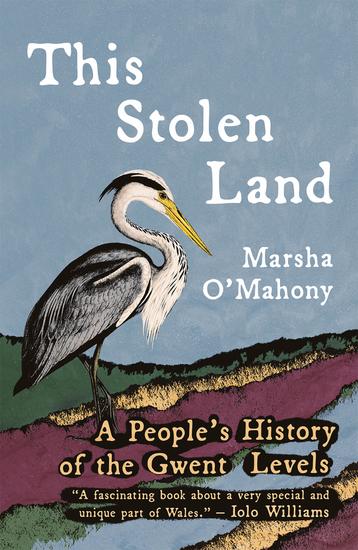
  • This Stolen Land - A People's History of the Gwent Levels - cover

    This Stolen Land - A People's...

    Marsha O'Mahony

    • 0
    • 0
    • 0
    The Gwent Levels line the north shore of the Severn Estuary in South Wales: Chepstow at their head; their more famous cousin, the Somerset Levels, across the water; the Welsh capital, Cardiff at their feet. You could waste an hour crossing the Levels by motorway. Or brush aside the journey by train. But writer Marsha O'Mahony has chosen the slow route of foreshore, footpath, and country lane. Over the course of two years, she meandered from village to village collecting conversations and anecdotes as she went. The result is a remarkable oral and social history of this unique landscape and the people who live there.
    Mostra libro
  • Egyptian Warfare - Battles Strategies and Military Innovations - cover

    Egyptian Warfare - Battles...

    Omar Khalil

    • 0
    • 0
    • 0
    In the earliest periods of Ancient Egypt, military organization was relatively simplistic, reflecting the needs of a society transitioning from small, independent communities to a unified state. During the Predynastic and Early Dynastic periods, military efforts were often led by local chieftains or emerging kings, whose power was consolidated through the control of small, regional armies. These early forces primarily consisted of able-bodied men called upon when conflicts arose, rather than a standing army.  
    The unification of Upper and Lower Egypt under King Narmer marked a significant turning point in the military structure. With this unification came the need for more organized military strategies to maintain control over the expansive territories. The pharaoh, regarded as both a political and military leader, played a central role in directing military campaigns and defending borders. Early depictions on palettes and reliefs show the pharaoh as a warrior, symbolizing strength and divine authority in battle. This image was crucial in asserting dominance and maintaining internal order. 
    Weapons used during this time were relatively basic, often crafted from stone, wood, and copper. Warriors wielded maces, spears, and simple bows, which were effective in close combat and hunting but limited in more advanced warfare. Shields made from animal hides provided some defense, but armor was scarce, as mobility remained more valued than heavy protection. Chariots, which would later become integral to Egyptian military prowess, had not yet been introduced, and combat primarily involved foot soldiers engaging in skirmishes.
    Mostra libro
  • Italy - the History of Italy from Etruscans to Contemporary Times - cover

    Italy - the History of Italy...

    Will Forrest

    • 0
    • 0
    • 0
    Do you want to uncover the secrets of Italy's ancient civilizations, such as the Etruscans and the roman empire? 
    Are you drawn to the captivating tales of legendary figures like Leonardo da Vinci, Michelangelo, Machiavelli and Italian Culture? 
    If so, this book is for you! 
    Discover Italy's captivating history, from the enigmatic Etruscans to the modern marvel of today. Together we will unveil the secrets of ancient civilizations, experience the rise of Rome's grandeur, and immerse ourselves in the Renaissance's artistic brilliance. Witness Italy's unification and its transformative triumphs, leading to its modern role in the European Union. This book, enriched with vivid narratives, invites you to traverse the epochs and relish Italy's rich past. 
    This book consist of:Etruscan origins and Roman Empire dominance.Renaissance sparks cultural rebirth.Unification effort shapes modern Italy.World Wars impact and post-war revival.European Union integration, enduring legacy. 
    Whether a history enthusiast or curious traveler, this treasure trove will illuminate Italy's vibrant journey through time. 
    Don´t wait any longer. Scroll up and buy this book now!
    Mostra libro