Unisciti a noi in un viaggio nel mondo dei libri!
Aggiungi questo libro allo scaffale
Grey
Scrivi un nuovo commento Default profile 50px
Grey
Iscriviti per leggere l'intero libro o leggi le prime pagine gratuitamente!
All characters reduced
Unceasing War on Poverty - Beatrice & Sidney Webb and their world - cover

Unceasing War on Poverty - Beatrice & Sidney Webb and their world

Michael Ward

Casa editrice: The Conrad Press

  • 0
  • 0
  • 0

Sinossi

This engaging biography of Sidney and Beatrice Webb, ‘Unceasing War on Poverty’, takes the reader into the world of the Webbs, the remarkable couple who changed Britain, inspiring a generation to fight for a better society. 
Born in the 1850s, they came from very different backgrounds. They married in 1892 - but only after Beatrice had previously experienced a long, unhappy relationship. Their fifty-year partnership produced books and reports rather than children. Many of the reforms the Webbs demanded were enacted after their deaths. The hated Poor Law was abolished, and a National Health Service was established, transforming millions of lives. Michael Ward’s fascinating book details their methods: meticulous research, private persuasion and hospitality, barnstorming public campaigning, and hard political organisation. They created and shaped institutions - the Fabian Society, the London School of Economics, and the ‘New Statesman’ - which flourish to this day. Their work is central to understanding change in twentieth century British politics and society.
Disponibile da: 29/03/2024.
Altri libri che potrebbero interessarti

  • Frederick Douglass 2 Complete Works - Life & Times Of Frederick Douglass Narrative On The Life Of Frederick Douglass - cover

    Frederick Douglass 2 Complete...

    Frederick Douglass

    • 0
    • 0
    • 0
    Frederick Douglass, born into slavery in Maryland in 1818, became one of the most prominent abolitionists, orators, and writers in American history. His life story is a testament to the resilience of the human spirit and the pursuit of freedom. Douglass escaped slavery in his early twenties and dedicated his life to the abolitionist cause. Through his powerful speeches, autobiographical writings, and activism, he fought for the rights of African Americans and became a leading voice in the fight against slavery. 
     
    Douglass's legacy is rooted in his tireless efforts to expose the atrocities of slavery and advocate for equal rights. His first autobiography, "Narrative of the Life of Frederick Douglass, an American Slave," published in 1845, vividly depicted the brutalities of slavery and its dehumanizing effects. The book became a bestseller and an influential tool in the abolitionist movement. Douglass went on to write two additional autobiographies, "My Bondage and My Freedom" (1855) and "Life and Times of Frederick Douglass" (1881), chronicling his life, experiences, and evolving viewpoints. His writings not only shed light on the horrors of slavery but also provided a platform for him to advocate for education, suffrage, and social justice. 
     
    In addition to his writings, Douglass's oratory skills captivated audiences and galvanized support for the abolitionist cause. He was a powerful and persuasive speaker, delivering speeches that stirred emotions, challenged societal norms, and demanded equality for all. His most famous speech, "What to the Slave Is the Fourth of July?" delivered in 1852, remains a poignant critique of the hypocrisy of celebrating freedom while denying it to enslaved individuals.
    Mostra libro
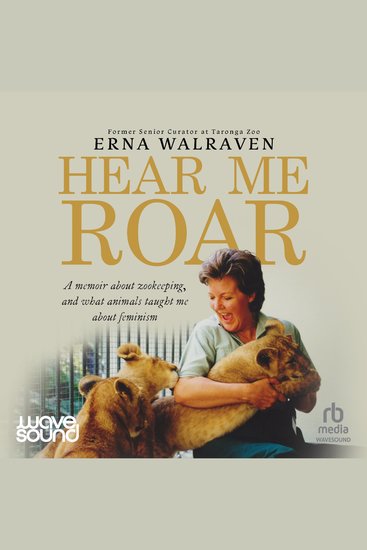
  • Hear Me Roar - cover

    Hear Me Roar

    Erna Walraven

    • 0
    • 0
    • 0
    A memoir about zookeeping, and what animals taught me about feminism. 
     
    In the early 1980s, when Erna Walraven decided to follow her dreams and become one of the first female zookeepers in Australia, she thought her biggest challenges would be feeding big cats and subduing irate gorillas. In fact, it was her male colleagues who made work miserable, harassing and humiliating her for doing a 'man's job'. So, she looked to the animals under her care to prove them wrong. 
     
    Despite what Erna's colleagues seemed to think, the females of the animal world were far from weak and demure. Elephant matriarchs led their herds; female bonobos revelled in sexual exploration; emu mothers abandoned their chicks to the care of their fathers. Her colleagues wouldn't dare tell a female tiger that hunting was a 'male's job' - why were they so intent on limiting Erna? 
     
    In this insightful and delightful book, Erna blends memoir and pop science to tell a fiercely female story. She recounts a life spent caring for animals in a fast transforming industry, and dives into scientific evidence and evolutionary history to debunk the myths that once held her back.
    Mostra libro
  • America’s Most Influential Jazz Artists - cover

    America’s Most Influential Jazz...

    Editors Charles River

    • 0
    • 0
    • 0
    Louis Armstrong once claimed that “Every time I close my eyes blowing that trumpet of mine—I look right in the heart of good old New Orleans…It has given me something to live for.” This statement conjures an image which most anyone familiar with jazz music can recall: Armstrong clutching his trumpet forcefully, his eyes closed in a manner that distances him from his physical surroundings in favor of a perfect harmony between the man and his instrument. As Armstrong alludes to in this remark, this connection also speaks to the enduring influence of his New Orleans background, which informed his musical style and indeed continued to live on through his music.  
    In 1956, Duke Ellington was featured on the cover of Time Magazine after a bravura performance at the Newport Jazz Festival that summer. This remains one of his most iconic achievements, and a landmark for jazz music as a whole (only four jazz musicians were ever displayed on the cover of Time). At the same time, however, this recognition stands as one of the prevailing ironies of Ellington’s career, as he was deep into the latter stages of his performing life by this point.  
    While those two men became jazz’s most famous performers, others rose as legendary singers. If Billie Holiday wanted to become a jazz singer, she chose the best of all eras in which to attempt it. A wave of great jazz and jazz/pop crossover artists swept over the United States from the 1920s through the 1950s, generating a golden age for the genre. This wondrous jazz era was well represented by both black and white master artists, men, women, vocalists, and instrumentalists, and Billie Holiday has stood the test of time as well as any, despite struggling with an environment that easily could have doomed such aspirations.
    Mostra libro
  • Hollywood’s Most Famous Silent Film Actresses - cover

    Hollywood’s Most Famous Silent...

    Editors Charles River

    • 0
    • 0
    • 0
    At the end of the 20th century, the American Film Institute compiled a list of the 25 greatest actors and actresses in Hollywood over the past 100 years, but only a select few worked all the way back in the silent era of films, before “talkies” revolutionized the industry at the end of the 1920s. Among them was Mary Pickford, who was ranked 24th but was arguably the most influential actress when it came to creating the career template for all actresses who followed, from name changes to salary. 
    Of all the great movie stars, there may be none more enigmatic than Greta Garbo, who remains internationally famous despite the fact her life and career raise more questions than answers. How did a Swedish actress with very little film acting experience in her native land arrive in the United States and achieve instant stardom? Most actresses had to wait years before they were offered starring roles in major films, yet Garbo was ushered to the front of the line and perched atop the MGM pantheon at a time in which it was the studio par excellence. How was she able to transition from silent films to “talkies” so fluidly, giving many of her most decorated performances during the 1930s? 
    It goes without saying that the most enduring image of Gloria Swanson is the famous shot of her in Sunset Boulevard (1950), head tilted backward, stating, “Alright, Mr. DeMille, I’m ready for my close up.” Indeed, for many, the very mention of “Gloria Swanson” conjures the name of “Norma Desmond,” her character in Sunset Boulevard, directed by Billy Wilder. That the shot of Desmond requesting her close-up remains indelibly imprinted in the minds of so many speaks in large part to the power of Sunset Boulevard, one of the most revered films of its times and the most famous film of Gloria Swanson’s career. By dint of her performance in the film, Swanson has become almost synonymous with Hollywood’s silent era. 
    Mostra libro
  • Marley & Me - Life and Love with the World's Worst Dog - cover

    Marley & Me - Life and Love with...

    Anonimo

    • 0
    • 0
    • 0
    Is it possible for humans to discover the key to happiness through a bigger-than-life, bad-boy dog? Just ask the Grogans. 
    John and Jenny were just beginning their life together. They were young and in love, with not a care in the world. Then they brought home Marley, a wiggly yellow furball of a puppy. Life would never be the same. 
    Marley grew into a barreling, ninety-seven-pound streamroller of a Labrador retriever. He crashed through screen doors, gouged through drywall, and stole women's undergarments. Obedience school did no good -- Marley was expelled. 
    But just as Marley joyfully refused any limits on his behavior, his love and loyalty were boundless, too. Marley remained a model of devotion, even when his family was at its wit's end. Unconditional love, they would learn, comes in many forms. 
    Marley & Me is John Grogan's funny, unforgettable tribute to this wonderful, wildly neurotic Lab and the meaning he brought to their lives.
    Mostra libro
  • America’s Greatest First Ladies - cover

    America’s Greatest First Ladies

    Editors Charles River

    • 0
    • 0
    • 0
    American presidents have shaped the course of global affairs for generations, but as the saying goes, behind every great man there’s a great woman. While the First Ladies often remain overshadowed by their husbands, some have carved unique niches in their time and left their own lasting legacy. Dolley Madison helped establish the role of the First Lady in the early 1800s, Eleanor Roosevelt gave voice to policy issues in a way that made her a forerunner of First Ladies like Hillary Clinton, and Jackie Kennedy created glamorous trends that made her more popular than her husband.  
    	Eleanor Roosevelt and Hillary Clinton may have been the most politically active First Ladies in American history, but Abigail Adams was the first to act as political advisor for her husband and the first to be dubbed “Mrs. President”. Indeed, Abigail was politically inclined to degree highly unusual among women of the 18th and 19th century, and she had originally impressed her future husband John because she was so well versed in poetry, philosophy and politics. Abigail was also very progressive, championing women’s rights and abolition long before they became widely held views even in traditionally liberal Massachusetts.  
    	In addition to being instrumental in decorating the White House, Dolley Madison also set the standard for the First Lady’s traditional hosting and ceremonial duties. 150 years later, Jackie Kennedy was largely credited for helping boost her husband’s popularity during their time in the White House, but the same could easily be said about Dolley, who was renowned for her social graces and her hospitality. Having helped boost her husband’s popularity during his presidency, Dolley went about maintaining his legacy after 1836, collecting and organizing the papers and notes of the Constitution’s most influential drafter, and eventually selling them to the government in full. 
    Mostra libro