Begleiten Sie uns auf eine literarische Weltreise!
Buch zum Bücherregal hinzufügen
Grey
Einen neuen Kommentar schreiben Default profile 50px
Grey
Jetzt das ganze Buch im Abo oder die ersten Seiten gratis lesen!
All characters reduced
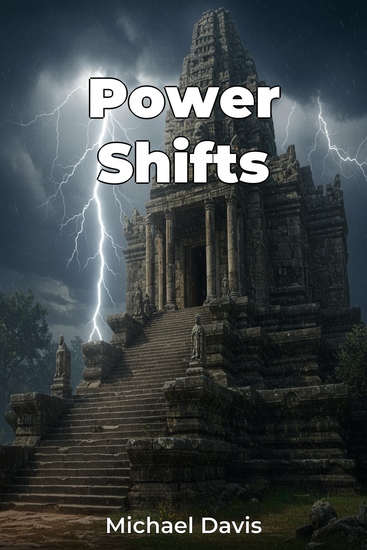
Power Shifts - cover

Power Shifts

Michael Davies

Übersetzer A AI

Verlag: Publifye

  • 0
  • 0
  • 0

Beschreibung

Power Shifts explores the complex journey of nations transitioning from monarchies to democracies, examining the pivotal roles of revolutions, wars, and political reforms. It emphasizes how institutional change and civic engagement drive political evolution, highlighting that successful democratization requires more than just structural adjustments. The book analyzes historical events across continents, from the decline of European feudal systems to the rise of democratic republics in the Americas, underscoring that active citizen participation is crucial for stable democratic governance.

 
The book begins with fundamental political science concepts before diving into three core sections. These sections analyze revolutions, the impact of wars, and the effects of political reforms, using case studies like the French and American Revolutions, post-World War II Europe, and the Arab Spring. By adopting a comparative historical approach, Power Shifts offers a nuanced understanding of political transformation, drawing lessons from diverse cases and grounding its analysis in empirical data.

 
It argues that adaptable political leadership, robust institutions, and active civic participation must exist symbiotically for democratic governance to succeed.
Verfügbar seit: 29.03.2025.
Drucklänge: 73 Seiten.

Weitere Bücher, die Sie mögen werden

  • Generative Artificial Intelligence - What Everyone Needs to Know ® - cover

    Generative Artificial...

    Jerry Kaplan

    • 0
    • 0
    • 0
    Advances in Generative Artificial Intelligence (GAI) have created a new class of computer systems that exhibit astonishing proficiency on a wide variety of tasks with superhuman performance, producing novel text, images, music, and software by analyzing enormous collections of digitized information. Soon, these systems will provide expert medical care; offer legal advice; draft documents; write computer programs; tutor our children; and generate music and art. These advances will accelerate progress in science, art, and human knowledge, but they will also bring new dangers. 


    Have we finally discovered the holy grail of AI—machines that match or exceed human intelligence? Which industries and professions will thrive, and which will wither? What risks and dangers will it pose? How can we ensure that these systems respect our ethical principles? Will the benefits be broadly distributed or accrue to a lucky few? How will GAI alter our political systems and international conflicts? Are we merely a stepping stone to a new form of non-biological life, or are we just getting better at building useful gadgets? 


    Generative Artificial Intelligence: What Everyone Needs to Know® equips listeners with the knowledge to answer these pressing questions.
    Zum Buch
  • Girl Next Door The: An Erotic Adventure ( Human Narrated Audiobook ) - First Time Lesbian Romance - cover

    Girl Next Door The: An Erotic...

    Victoria Rush

    • 0
    • 2
    • 0
    Spying on the neighbors just got a lot more interesting... 
    When the parents of the shy college girl next door decide to take a vacation, recent divorcée Jade sees a window of opportunity to meet her. One night before heading to bed, she notices a light in the girl's bedroom and a crack in her blinds. 
    Jade grabs a spyglass and sees the girl viewing an erotic video while touching herself. The girl notices movement in the window across the lane and catches Jade watching her. 
    Things escalate quickly as they exchange increasingly provocative displays, until Jade decides to ask the girl over for dinner. When they finally meet, Jade is shocked to find the shy girl next door isn't nearly as innocent as she's let on...
    Zum Buch
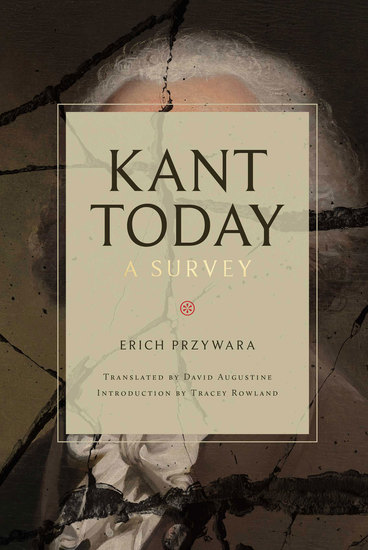
  • Kant Today - A Survey - cover

    Kant Today - A Survey

    Erich Przywara

    • 0
    • 0
    • 0
    In Kant Today: A Survey, Erich Przywara explores the enduring impact of the tensions inherent in Immanuel Kant’s thought on continental philosophy over nearly a century and a half. Drawing parallels to the efforts at synthesis of Thomas Aquinas, Przywara presents Kant as a thinker striving to reconcile disparate currents of contemporary thought. While Aquinas fused neo-Platonic Augustinian philosophy with the neo-Aristotelianism of the Parisian Arts Faculty, Kant sought to harmonize continental idealism with the skepticism and empiricism exemplified by a British thinker like David Hume.   Aquinas’s synthesis maintained coherence due to his reliance on the analogia entis. In contrast, Kant’s synthesis lacked such a unifying principle, leading to the proliferation of philosophical antitheses reverberating throughout nineteenth- and early-twentieth-century Europe. Kant Today chronicles the aftermath of Kant’s tumultuous synthesis and suggests that the resolution may lie in a thinker capable of uniting Augustine’s fervent pursuit of God with Aquinas’s distinctive epistemological equilibrium—namely, John Henry Newman.  
    Zum Buch
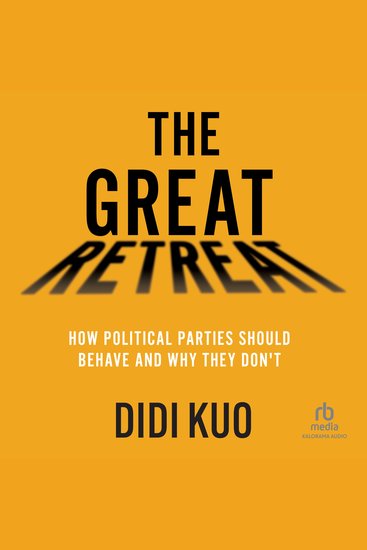
  • The Great Retreat - How Political Parties Should Behave and Why They Don't - cover

    The Great Retreat - How...

    Didi Kuo

    • 0
    • 0
    • 0
    Once a centralizing force of the democratic process, political parties have eroded over the past fifty years. Parties now rank among the most unpopular institutions in society—less trusted than business, the police, and the media. Identification with parties has plummeted, and even those who are loyal to a party report feeling that parties care more about special interests than about regular citizens. What does a "good" political party look like? Why do we urgently need them? And how do we get them? 


    The Great Retreat explores the development of political parties as democracy expanded across the West in the nineteenth century. It focuses in particular on mass parties, and the ways they served as intermediaries that fostered ties between citizens and governments. 


    For democracy to adapt to a new era of global capitalism, Kuo makes the case that we need strong intermediaries like mass parties—socially embedded institutions with deep connections to communities and citizens. Parties are essential to long-term democratic stability and economic growth, while the breakdown of party systems, on the other hand, has historically led to democratic collapse. As trust in political parties has plummeted, The Great Retreat provides a powerful defense of political parties—for without parties, democratic representation is impossible.
    Zum Buch
  • Did Columbus discover America? - How was America discovered? - cover

    Did Columbus discover America? -...

    Shreyas Pande, Sharad Baggonkar

    • 0
    • 0
    • 0
    Christopher Columbus was an explorer, fine mapmaker and navigator. He also had deep interest in geography, astronomy, and history. Columbus loved sailing the high seas and was keen to explore a sea passage to the East which would help him reach India. With that in mind he went to the King of Spain in with a proposal in 1492 who immediately approved the plan. Thus began Columbus's voyage to reach India but little did he know that it was not going to be India but a completely different continent, that was waiting to be discovered.
    Zum Buch
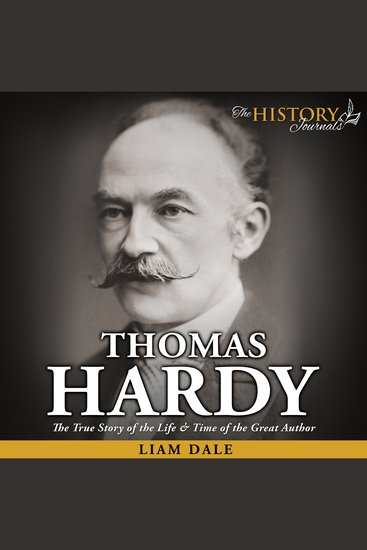
  • Thomas Hardy - The True Story of the Life & Time of the Great Author - cover

    Thomas Hardy - The True Story of...

    Liam Dale

    • 0
    • 0
    • 0
    Would you like to explore the life of the renowned author Thomas Hardy but lack the time for lengthy biographies? Join The History Journals on an hour-long historical journey through his life. 
     
    Thomas Hardy, a 19th-century author and poet, penned some of the most enduring stories in literary history. He vividly depicted the Dorset countryside, drawing inspiration from his rural upbringing, and addressed the societal conflicts of Victorian England, challenging class divisions and the influence of an unyielding clergy. 
     
    In works like "Far from the Madding Crowd", "The Return of the Native", and "Tess of the D’Urbervilles", Hardy created literary masterpieces. Yet, behind the facade of a respectable elderly gentleman, he grappled with emotional turmoil, revealing the depths of his soul through his poetry. 
     
    Step into the settings of his novels, inspired by his life experiences and the landscapes he inhabited, both rural and urban. 
     
    This journal offers: 
    - Insights into Hardy's life from start to finish 
    - Exploration of his family life and residences 
    - Contextual quotes from his poetry, shedding light on his life 
    - The influence of his living environments on his literary settings 
    - Exploration of his affair and the guilt stemming from his first wife's death
    Zum Buch