Unisciti a noi in un viaggio nel mondo dei libri!
Aggiungi questo libro allo scaffale
Grey
Scrivi un nuovo commento Default profile 50px
Grey
Iscriviti per leggere l'intero libro o leggi le prime pagine gratuitamente!
All characters reduced
New Deal Begins - cover

New Deal Begins

Michael Davies

Traduttore A AI

Casa editrice: Publifye

  • 0
  • 0
  • 0

Sinossi

New Deal Begins explores President Franklin Delano Roosevelt's ambitious policies during the crucial first year of his presidency in 1933, amidst the Great Depression. It examines the initial impact of the New Deal's relief programs, such as the Civilian Conservation Corps (CCC) and the Federal Emergency Relief Administration (FERA), and their role in shaping American history. The book objectively assesses whether these programs achieved their goals of alleviating unemployment and stimulating economic recovery, and how they altered the relationship between the government and its citizens. Government reports from the Roosevelt administration are used to provide a contemporary perspective on the programs' effectiveness. The book argues that while the New Deal provided immediate assistance, it also fundamentally changed the role of government in American society, setting a precedent for future intervention in the economy and individual lives. It begins by depicting pre-New Deal America and then progresses to detailed analyses of key relief programs established in 1933. The book avoids retrospective interpretations, prioritizing contemporary data to offer an objective assessment, and concludes with a discussion of the New Deal's lasting legacy and relevance to modern debates about government intervention and social welfare.
Disponibile da: 27/02/2025.
Lunghezza di stampa: 56 pagine.

Altri libri che potrebbero interessarti

  • Sanctuary of Healing - Transforming Churches into Trauma-Informed Spaces - cover

    Sanctuary of Healing -...

    Julia Matallana Freedman

    • 0
    • 0
    • 0
    A timely and compassionate resource that equips religious leaders to engage with the reality of trauma within their congregations.Grounded in both lived experience and theological depth, this guide sheds light on the pervasive impact of sexual, racial, and generational trauma in the US, urging faith communities to become intentional spaces of refuge and restoration. Through a powerful call to "hold space," it offers practical tools for pastors and ministry leaders to walk alongside those carrying deep wounds. It reframes the role of the Church—not merely as a place of spiritual guidance, but as a sanctuary where healing and wholeness can take root. With a focus on embodiment, community, and the sacredness of vulnerability, Sanctuary of Healing provides a vital roadmap for transforming congregations into havens of empathy, resilience, and hope.
    Mostra libro
  • Ion - cover

    Ion

    Plato

    • 0
    • 0
    • 0
    "Ion" is a dialogue by Plato that explores the nature of artistic inspiration and the role of the artist in society. The main character, Ion, is a rhapsode who specializes in reciting epic poetry by Homer. Socrates engages Ion in a conversation, and the discussion unfolds as Socrates questions Ion about the source of his ability to recite poetry. Socrates argues that Ion's talent is not the result of his own knowledge or expertise, but rather a divine inspiration. He compares Ion to a magnetic ring that is capable of attracting and transmitting the power of the gods through his recitation. Socrates also points out that Ion's expertise is limited only to the works of Homer, and he has no real knowledge of the subjects he is reciting about. Read in English, unabridged.
    Mostra libro
  • German and Allied Air Forces in World War I: The History and Legacy of the Rivals in the Sky during the Great War - cover

    German and Allied Air Forces in...

    Editors Charles River

    • 0
    • 0
    • 0
    One of the most important breakthroughs in military technology associated with World War I, and certainly the one that continues to capture the public imagination, was the use of airplanes, which were a virtual novelty a decade before. While the war quickly ground to a halt in its first few months, the skies above the Western Front became increasingly busy. The great powers had already been acquiring aircraft for potential uses, but given that aerial warfare had never been a major component of any conflict, it’s understandable that few on either side had any idea what the planes were capable of doing. Furthermore, at the start of the war, all sides’ aircraft were ill-equipped for combat mostly because the idea that planes might somehow fight was still a novel one, and the adaptations had not yet been developed that would allow the aerial battles later in the war.  
    	As a result, aircraft were used almost entirely for reconnaissance early on, allowing generals to gain unprecedented levels of information about enemy movements. Such intelligence allowed the French to counter German movements in what became the First Battle of the Marne, ending Germany’s hopes for victory through the Schlieffen plan. Similarly, in the east, German planes were vital in tracking, encircling and destroying Russian forces at Tannenberg. 
    	The Royal Air Force (RAF), Britain's legendary air arm, was born in the skies above the First World War. The British had previously used balloons for spotting and reconnaissance for decades, and in the years leading up to the war, planes started seeing military use. They mostly provided reconnaissance, though experiments were made in using them offensively. During the Boer War of 1899-1902, the British Army used the crews of helium-filled balloons to plot and help target artillery fire. But these were small, tentative steps. The first patent to fit a machine gun to a plane, taken out in 1910, had not yet led to active fighting vehicles.
    Mostra libro
  • On the Legal Democratic Mass Movement - cover

    On the Legal Democratic Mass...

    José Maria Sison

    • 0
    • 0
    • 0
    The crisis of the world capitalist system and that of the Philippine ruling system have become worse than in any period after World War II. The US-instigated policies of neoliberal globalization, state terrorism and aggressive war have wrought havoc on the lives of the people and continue to escalate oppression and exploitation. The Filipino people cannot tolerate their suffering and they are fighting back against imperialism and all reaction. 
      
    The loss or erosion of livelihoods is the most concrete and widespread impact of the current crisis of the world capitalist system on people's lives, both in the advanced capitalist countries as well as in the underdeveloped countries. Despite recent pronouncements from state officials and the business press that economic recovery is in sight, the global economy continues to tumble with the gross domestic product of the leading capitalist countries still contracting, consumer spending still in decline and unemployment still rising.
    Mostra libro
  • How Schools Really Matter - Why Our Assumption about Schools and Inequality Is Mostly Wrong - cover

    How Schools Really Matter - Why...

    Douglas B. Downey

    • 0
    • 0
    • 0
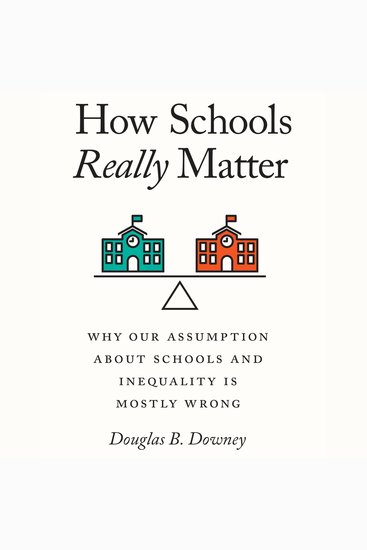
    Most of us assume that public schools in America are unequal—that the quality of the education varies with the location of the school and that as a result, children learn more in the schools that serve mostly rich, white kids than in the schools serving mostly poor, black kids. But it turns out that this common assumption is misplaced. As Douglas B. Downey shows in How Schools Really Matter, achievement gaps have very little to do with what goes on in our schools. Not only do schools not exacerbate inequality in skills, they actually help to level the playing field. The real sources of achievement gaps are elsewhere.
    
    A close look at the testing data in seasonal patterns bears this out. It turns out that achievement gaps in reading skills between high- and low-income children are nearly entirely formed prior to kindergarten, and schools do more to reduce them than increase them. And when gaps do increase, they tend to do so during summers, not during school periods. So why do both liberal and conservative politicians strongly advocate for school reform, arguing that the poor quality of schools serving disadvantaged children is an important contributor to inequality? 
    It’s because discussing the broader social and economic reforms necessary for really reducing inequality has become too challenging and polarizing—it’s just easier to talk about fixing schools.
    
    How Schools Really Matter offers a firm rebuke to those who find nothing but fault in our schools, which are doing a much better than job than we give them credit for. It should also be a call to arms for educators and policymakers: the bottom line is that if we are serious about reducing inequality, we are going to have to fight some battles that are bigger than school reform—battles against the social inequality that is reflected within, rather than generated by—our public school system.
    Mostra libro
  • From Zero to Four Figures - Making $1000 a Month Self-Publishing Fiction - cover

    From Zero to Four Figures -...

    Paul Austin Ardoin

    • 0
    • 0
    • 0
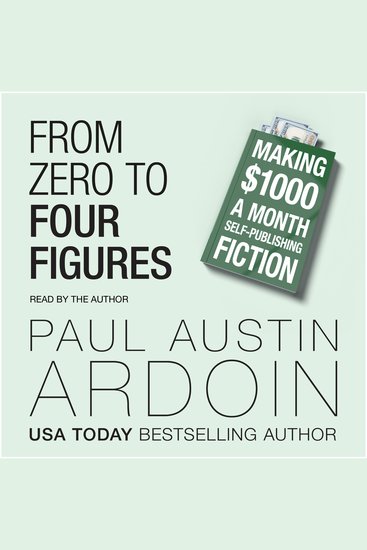
    Starting out as an indie author can be daunting, especially if you don't have much money to invest in marketing. If you've published one or more books but are struggling to get sales, this is the book for you! 
    In From Zero to Four Figures, USA TODAY bestselling author Paul Austin Ardoin shows you the strategy that helped him build an audience and grow his self-published fiction business to $1,000 a month within two years. Increasing your sales requires the right books, mindset, and marketing — many new authors lack one or more of these pillars. This book helps identify the gaps and mistakes that are holding you back. 
    These guidelines are repeatable, proven, inexpensive, and attainable—and will help get your self-published fiction business off the ground.
    Mostra libro