
Unisciti a noi in un viaggio nel mondo dei libri!
Aggiungi questo libro allo scaffale
Grey
Scrivi un nuovo commento Default profile 50px
Grey
Iscriviti per leggere l'intero libro o leggi le prime pagine gratuitamente!
All characters reduced
Europe Defense Shift - cover

Europe Defense Shift

Michael Davies

Traduttore A AI

Casa editrice: Publifye

  • 0
  • 0
  • 0

Sinossi

Europe Defense Shift examines Europe's increasing focus on military independence amidst shifting global dynamics. It explores the historical context of European defense cooperation, noting past attempts at military integration and analyzing the current political climate that fuels the need for a stronger, more self-reliant European defense posture. The book highlights how factors like transatlantic tensions and the perceived decline of American influence are driving this shift. The book argues that Europe is re-evaluating its security dependencies due to both internal and external pressures. While complete independence from the U.S. is unlikely soon, the trend towards greater strategic autonomy is deemed irreversible.

 
Europe Defense Shift begins by examining the historical foundations of European defense structures, progresses to analyzing current challenges and opportunities, and culminates in exploring practical applications, including policy recommendations. This book provides a unique perspective by combining historical analysis with contemporary political and technological assessments. It bridges the gap between academic theory and practical policymaking, offering valuable insights into European Politics, International Relations, and the evolving landscape of European Security.
Disponibile da: 12/03/2025.
Lunghezza di stampa: 67 pagine.

Altri libri che potrebbero interessarti

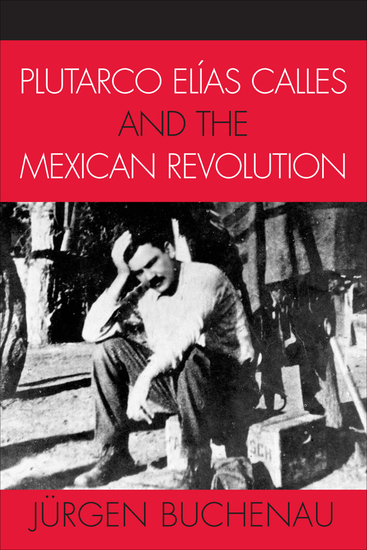
  • Plutarco Elías Calles and the Mexican Revolution - cover

    Plutarco Elías Calles and the...

    Jürgen Buchenau

    • 0
    • 0
    • 0
    This biography of the Mexican revolutionary examines his rise from soldier to president to his continued influence as Jefe Maximo. Hailing from the border state of Sonora, Plutarco Elías Calles found his calling in the early years of the revolution, quickly rising to national prominence. As president from 1924 to 1928, Calles undertook an ambitious reform program, modernized the financial system, and defended national sovereignty against an interventionist U.S. government. Yet these reforms failed to eradicate underdevelopment, corruption, and social injustice. Moreover, his unyielding campaigns against political enemies and the Catholic Church earned him a reputation as a repressive strongman. After his term as president, Calles continued to exert broad influence as his country's foremost political figure while three weaker presidents succeeded each other in an atmosphere of constant political crisis. He played a significant role in founding a ruling party that reined in power-hungry military leaders and helped workers attain better living conditions. This dynastic party and its successors, including the present-day Partido Revolucionario Institucional (Party of the Institutional Revolution), remained in power until 2000. Through this comprehensive assessment of a quintessential Mexican politician, Buchenau opens an illuminating window into both the Mexican Revolution and contemporary Mexico.
    Mostra libro
  • Tracing Florida Journeys - Explorers Travelers and Landscapes Then and Now - cover

    Tracing Florida Journeys -...

    Leslie Kemp Poole

    • 0
    • 0
    • 0
    How has Florida's land changed across five centuries? What has stayed the same, and what remains only in memory? In Tracing Florida Journeys, Leslie Poole delves into the stories of well-known explorers and travelers who came to the peninsula and wrote about their experiences, looking at their words and the paths they took from the perspective of today. 


    In this book, John Muir and Harriet Beecher Stowe write about their visits to Florida, reflecting their expectations of a place that was touted to be "paradise." John James Audubon finds riches of bird life in the Keys. Zora Neale Hurston travels to turpentine camps and sawmills documenting the stories and music of workers and residents. Jonathan Dickinson and Stephen Crane recount shipwrecks along a sparsely populated coastline. 


    Using journals and articles by these and other authors that date back to the early European exploration of the region, Poole retraces their steps. The land they write about is often hard to imagine in today's Florida, a top destination for tourists filled with almost twenty-two million residents. These stories show the evolving history of the state and the richness of its natural resources. Poole's comparisons also point to the people who have been displaced and the ecosystems that have been dramatically altered by exploration and development.
    Mostra libro
  • Driving Back the Nazis - The Allied Liberation of Western Europe Autumn 1944 - cover

    Driving Back the Nazis - The...

    Martin King

    • 0
    • 0
    • 0
    A gripping account of the Allied liberation of Western Europe, masterfully told by Emmy-award winning writer and historian Martin King. 
     
    Through the autumn of 1944, Allied troops made their way across Nazi-occupied Europe, liberating towns and villages as they went. Driving Back the Nazis explores this process of liberation, from the arrival of Allied forces in Paris through the emancipation of Belgium to the closing down of Nazi prison camps. But there was a darker side to liberation too - collaborators were harshly punished, and in some cases the liberating forces brought their own troubles with them. 
     
    Martin King tells the story of liberation from all sides - we hear the voices of Allied high command, ordinary American and British soldiers, local civilians, and even the defeated German forces.
    Mostra libro
  • Many Languages One Classroom 2nd ed - Teaching Multilingual Language Learners - cover

    Many Languages One Classroom 2nd...

    Karen Nemeth

    • 0
    • 0
    • 0
    Update to Many Languages, One Classroom (2009) with new content on family connections, understanding and respecting family culture, implementing high-quality curriculum, developmentally appropriate practice, incorporating technology in the classroom, and preparing children to enter kindergarten 
    Mostra libro
  • The Six Gosvami's Of Vrndavana - Sections From The Yoga Library - cover

    The Six Gosvami's Of Vrndavana -...

    B.H. Mangalniloy Maharaj

    • 0
    • 0
    • 0
    The Six Goswamis of Vrindavan was a group of scholars and devotees who lived in Vrindavan during the 16th century. The group consisted of Rupa Goswami, Sanatana Goswami, Jiva Goswami, Gopal Bhatta Goswami, Raghunatha Bhatta Goswami, and Raghunatha Dasa Goswami. They were instrumental in the development of the Gaudiya Vaishnavism tradition and the spread of the Bhakti yoga movement. They were known for their scholarship, devotion, and austere lifestyle, and were revered by the people of Vrindavan and beyond. 
     
    The Six Goswamis of Vrindavan left a lasting impact on the development of Hinduism, particularly the Gaudiya Vaishnavism tradition. They wrote extensively on the philosophy, theology, and practices of Bhakti, and their works continue to be studied and revered by scholars and devotees alike. Their teachings emphasized the importance of devotion to Krishna as the ultimate path to liberation, and their writings provide insight into the practices and rituals of Bhakti, as well as the historical and cultural context of the Bhakti movement. The legacy of the Six Goswamis of Vrindavan continues to inspire and guide those who seek a deeper understanding of the path of devotion. 
     
    With selections from The Yoga Library. Narrated by Emmy-nominated actor and lifelong yogi Sripad Jagannatha Das
    Mostra libro
  • In the Penal Colony - cover

    In the Penal Colony

    Franz Kafka

    • 0
    • 0
    • 0
    "In the Penal Colony" is a short story by Franz Kafka written in German in October 1914, revised in November 1918, and first published in October 1919. As in some of Kafka's other writings, the narrator in this story seems detached from, or perhaps numbed by, events that one would normally expect to be registered with horror. Internal clues and the setting on an island suggest Octave Mirbeau's The Torture Garden as an influence. The story is set in an unnamed penal colony and describes the last use of an elaborate torture and execution device that carves the commandment that the condemned prisoner has transgressed on his skin as he slowly dies over the course of twelve hours. As the plot unfolds, the reader learns more and more about the machine, including its origin and original justification.
    Mostra libro