Unisciti a noi in un viaggio nel mondo dei libri!
Aggiungi questo libro allo scaffale
Grey
Scrivi un nuovo commento Default profile 50px
Grey
Iscriviti per leggere l'intero libro o leggi le prime pagine gratuitamente!
All characters reduced
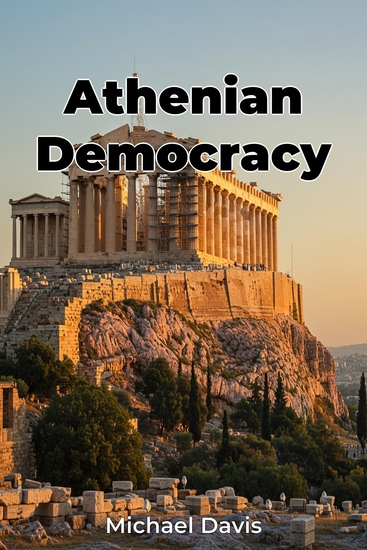
Athenian Democracy - cover

Athenian Democracy

Michael Davies

Traduttore A AI

Casa editrice: Publifye

  • 0
  • 0
  • 0

Sinossi

Athenian Democracy explores the radical experiment in self-governance that defined ancient Athens and forever altered political thought. This history examines the core tenets of direct participation, civic responsibility, and the common good, analyzing their enduring impact on contemporary political systems. The book delves into the historical context, from the reforms of Cleisthenes to the contributions of Pericles, illustrating how these leaders championed citizen involvement. Discover how the Assembly allowed all male citizens to debate and vote on laws, ensuring accountability and preventing the concentration of power.

 
The book progresses by introducing direct democracy and its roots, then explores the institutions of Athenian government, examining their powers and limitations. Later chapters delve into the social and cultural context, assessing the legacy of Athenian democracy and its relevance to modern challenges. By drawing upon primary sources and modern scholarship, Athenian Democracy offers a comprehensive, analytical account of this unique political system.
Disponibile da: 29/03/2025.
Lunghezza di stampa: 58 pagine.

Altri libri che potrebbero interessarti

  • Capitalism Socialism and Democracy - cover

    Capitalism Socialism and Democracy

    Joseph A. Schumpeter

    • 0
    • 0
    • 0
    "Capitalism, Socialism, and Democracy," authored by Joseph A. Schumpeter and first published in 1942, stands as a cornerstone in the study of economics and political science. In this profound and ambitious work, Schumpeter delves into the intricate mechanisms that drive capitalist economies and the transformative forces that shape them. Central to his analysis is the concept of "creative destruction," a process through which old industries and economic structures are continuously dismantled and replaced by innovative enterprises and technologies. This relentless cycle of innovation, while fostering economic growth and progress, also brings about significant disruption and dislocation, posing challenges to established businesses and labor markets.Schumpeter's exploration of capitalism is multifaceted. He acknowledges the system's remarkable capacity for innovation and wealth creation but also highlights its inherent vulnerabilities. These include tendencies toward monopolistic practices, social inequality, and cyclical crises. Schumpeter provocatively argues that capitalism, despite its successes, harbors the seeds of its own decay. As capitalism progresses, he suggests, it creates conditions—such as the rise of large corporations and bureaucratic structures—that may eventually undermine its dynamic and entrepreneurial spirit.Turning his attention to socialism, Schumpeter offers a nuanced examination of its potential as an alternative to capitalism. He considers socialism's promise to address the inequities and inefficiencies of capitalism, particularly through the redistribution of wealth and more centralized economic planning. However, he also recognizes significant obstacles, such as the potential stifling of individual initiative and the complexities of managing a planned economy on a large scale. Schumpeter's analysis of socialism is neither purely optimistic nor wholly dismissive; instead, it reflects a balanced inquiry into its feasibility and implications.A key component of Schumpeter's work is his discussion on democracy and its interaction with economic systems. He questions whether democratic institutions can withstand the pressures and demands of a rapidly evolving economic landscape. Schumpeter introduces the idea of "democratic elitism," suggesting that modern democracies are managed by a select group of individuals rather than by the populace at large. This perspective leads to critical reflections on the sustainability of democratic governance in the face of economic upheaval and social change.Overall, "Capitalism, Socialism, and Democracy" is a thought-provoking and comprehensive treatise that continues to resonate with scholars and policymakers. Schumpeter's insights into the dynamics of economic change, the potential trajectories of capitalist and socialist systems, and the challenges facing democratic governance remain relevant in understanding the complexities of contemporary economic and political life.
    Mostra libro
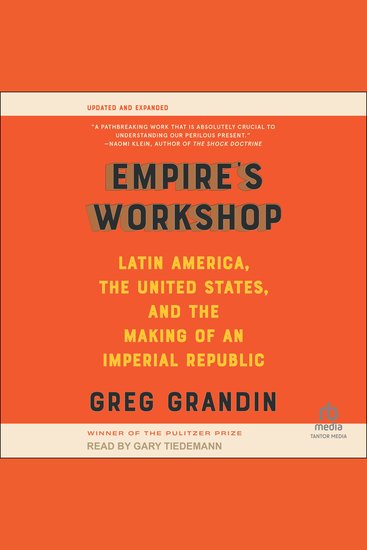
  • Empire's Workshop - Latin America the United States and the Making of an Imperial Republic (Updated and Expanded Edition) - cover

    Empire's Workshop - Latin...

    Greg Grandin

    • 0
    • 0
    • 0
    Examining over a century of US intervention in Latin America, acclaimed historian Greg Grandin reveals how the region has long served as a laboratory for US foreign policy, providing generations of Washington policy makers with an opportunity to rehearse a broad range of diplomatic and military tactics―tactics that then were applied elsewhere in the world as the US became a global superpower. During the Great Depression, for instance, FDR's Good Neighbor policy taught the United States to use "soft power" effectively and provided a blueprint for its postwar "empire by invitation." In the 1980s, Reagan likewise turned to Latin America, but now to rehabilitate "hard power" after the debacle of Vietnam, putting the United States on the road to its current crisis: endless, forever wars.This completely revised edition includes new information on the US invasion of Panama, US interventions in Cuba, Guatemala, and Chile, Plan Colombia and the War on Drugs, the Obama administration's involvement in the 2009 coup in Honduras, and the current crisis at the US-Mexico border. Most provocatively, Grandin argues that the origins of many of the current threats to American democracy―disinformation, permanent surveillance, political extremism and out-of-control militarism―were foreshadowed in the United States' Central American policy.
    Mostra libro
  • Happy Endings - Sensual Lesbian Massage Erotica - cover

    Happy Endings - Sensual Lesbian...

    Giselle Renarde

    • 0
    • 0
    • 0
    Linda's never heard of "happy endings." She's shocked when she finds out that people pay for orgasms along with their massages. Of course, once the idea's in her head, she can't stop thinking about it. When she meets a gorgeous masseuse at a film premiere, long-divorced Linda asks for an appointment. Never in her life did she envision herself paying for pleasure, but after years with no touch, she's more than willing. 
    For Mature Audiences.
    Mostra libro
  • Violence - A Very Short Introduction - cover

    Violence - A Very Short...

    Philip Dwyer

    • 0
    • 0
    • 0
    Violence is part and parcel of human history and of human nature. It is one of our most distinctive traits, the one thing that all cultures and societies, across time, share in common. It has defined not only the ways in which individuals relate to each other, but also how collective entities and states have interacted with each other over the millennia. All societies are violent and all individuals have the capacity for violence. However, not all societies and not all individuals are equally violent, and nor does violence exist with the same intensity across cultures. 


    This Very Short Introduction examines the more visible, physical acts of violence—interpersonal, gendered, collective, religious, sexual, criminal, and political—in the modern world. It explores how violence in the pre-modern world was different from the modern world, and what is significant about those differences. It also discusses what violence is by examining understandings of the ideas, values, and cultural practices embedded in an act of violence, and considering acts of violence as the outcome of a process dependent on the cultural context in which they take place. Along the way Dwyer considers some core questions, asking whether violence is always 'bad', and if there are any limits to human violence? And, are we becoming more or less violent?
    Mostra libro
  • The Official CIA Manual of Trickery and Deception - cover

    The Official CIA Manual of...

    H. Keith Melton, Robert Wallace

    • 0
    • 0
    • 0
    A top-secret manual for training CIA field agents in deception and sleight-of-hand was thought to be a rumor…until a single surviving copy was discovered in the agency’s archives. 
    In 1953, a top-secret manual teaching agents sleight-of-hand and other deception techniques was written for the CIA by America’s then most famous magician. All copies were believed destroyed by the CIA’s purge of the infamous MKULTRA documents in 1973, and there was no proof of the manual’s existence . . . until a copy was discovered among the CIA’s recently declassified archives. 
    The manual in this work is thought to represent the only surviving copy of magician John Mulholland’s instructions: 
    Handling Tablets (preparing pills and tablets; hiding pills in hand, matchbook, wallet, and money) 
    Handling Powders (creating containers for holding powders; using duplicate pencils to make drops) 
    Handling Liquids (making containers to drop or spray liquids; using matchbooks, coins, wallets, cigarettes, and bare hands; creating distracting stories that are both rational and simple) 
    Removing Objects (mastering preparatory actions, timing, body position, and the art of distraction; making secret pockets; picking up and secretly folding paper) 
    Special Notes for Women (modifying earlier techniques for women’s use; using pocket mirrors, jewelry, cosmetics, handkerchiefs, and evening bags) 
    Working as a Team (Setting the roles of trickster and assistant; notes on the proper use of signals) 
    Along with the original text, espionage historian H. Keith Melton and longtime CIA gadgeteer Robert Wallace provides an introduction illuminating the history of CIA agent deception and dirty tricks, and the role of this secret manual in that highly controversial program.
    Mostra libro
  • The Communist Manifesto - cover

    The Communist Manifesto

    Karl Marx

    • 0
    • 0
    • 0
    "Workers of the world, unite! You have nothing to lose but your chains".
    The Communist Manifesto lays out the principles of Marxism, analysing the historical development of class struggles and the dynamics of capitalism. Marx and Engels argue that all history is the history of class conflict, and that capitalism, like previous systems, contains the seeds of its own destruction. Written in 1848, The Communist Manifesto remains one of the most influential political documents ever written, presenting a laser-sharp critique of inequality and presenting a vision for a radically different, classless society where "the free development of each is the condition for the free development of all."
    
    But the Manifesto is most valuable as an historical document, one that led to the greatest political upheavals of the nineteenth and twentieth centuries and to the establishment of the Communist governments that until recently ruled half the globe.
    Karl Marx (1818–1883) was a German philosopher, historian, sociologist, economist, and revolutionary socialist best known for co-authoring The Communist Manifesto and writing Das Kapital. Due to his political writings, he was forced to live in exile in London, where he continued to develop his thought in collaboration with German thinker Friedrich Engels and publish his writings. His ideas have had enormous influence on political and philosophical thought, laid the foundation for modern communism and have influenced political movements worldwide.
    Friedrich Engels (1820–1895) was a German philosopher, social scientist, and political theorist best known for his collaboration with Karl Marx. Born in Barmen, Prussia (now Wuppertal, Germany), Engels came from a wealthy textile manufacturing family. His early experiences in the family business exposed him to the harsh realities of industrial capitalism, which shaped his views on class struggle and social justice. Engels was a strong advocate for workers' rights and played a key role in the development of Marxist thought. He died in 1895 in London, leaving a lasting legacy in political theory.
    Mostra libro