Unisciti a noi in un viaggio nel mondo dei libri!
Aggiungi questo libro allo scaffale
Grey
Scrivi un nuovo commento Default profile 50px
Grey
Iscriviti per leggere l'intero libro o leggi le prime pagine gratuitamente!
All characters reduced
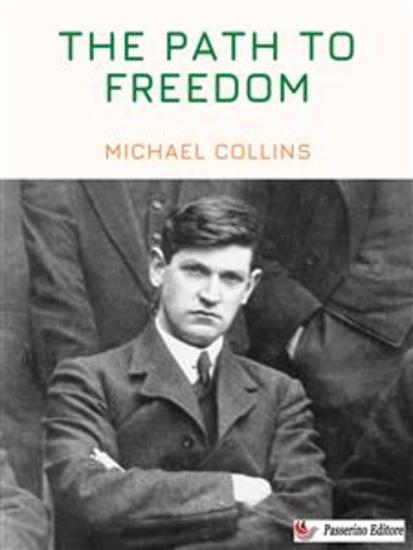
The Path to Freedom - cover

The Path to Freedom

Michael Collins

Casa editrice: Passerino

  • 0
  • 0
  • 0

Sinossi

Michael Collins (16 October 1890 – 22 August 1922) was an Irish revolutionary, soldier and politician who was a leading figure in the early-20th century struggle for Irish independence. During the War of Independence he was Director of Intelligence of the Irish Republican Army (IRA) and a government minister of the self-declared Irish Republic. He was then Chairman of the Provisional Government of the Irish Free State from January 1922 and commander-in-chief of the National Army from July until his death in an ambush in August 1922, during the Civil War.

Collins bequeathed to posterity a considerable body of writing: essays, speeches and tracts, articles and official documents in which he outlined plans for Ireland's economic and cultural revival, as well as a voluminous correspondence, both official and personal. Selections have been published in The Path to Freedom and Michael Collins in His Own Words.
Disponibile da: 07/02/2023.
Altri libri che potrebbero interessarti

  • A Room of One's Own - cover

    A Room of One's Own

    Virginia Woolf

    • 0
    • 0
    • 0
    A Le Monde 100 Books of the Century book  
    Women have burnt like beacons in all the works of all the poets from the beginning of time. … [Woman] pervades poetry from cover to cover; she is all but absent from history. She dominates the lives of kings and conquerors in fiction; in fact she was the slave of any boy whose parents forced a ring upon her finger. Some of the most inspired words and profound thoughts in literature fall from her lips; in real life she could hardly read; scarcely spell; and was the property of her husband. 
    A Room of One's Own is an extended essay, originally delivered in 1928 as two lectures at two of Cambridge University's women's colleges—Newnham College and Girton College. Through the use of several metaphors, lauded author Virginia Woolf explores the social injustices and structures that prevent women from engaging in free expression and contributing to literature.  
    A Room of One's Own was published as a book in 1929, and would go on to become a seminal work of feminist criticism. Considered one of the great modernist writers of the 20th century, Virginia Woolf has been named as an influence for writers including Margaret Atwood, Toni Morrison, and Gabriel García Márquez.
    Mostra libro
  • A Therapist's Guide to Consensual Nonmonogamy - Polyamory Swinging and Open Marriage - cover

    A Therapist's Guide to...

    Rhea Orion

    • 0
    • 0
    • 0
    Consensual nonmonogamy (CNM) means that all partners in a relationship consent to expanded monogamy or polyamory. Clinicians are on the front line in providing support for the estimated millions pioneering these modern relationships. This first available guide for therapists provides answers to prevalent questions: What is the difference between expanded monogamy and polyamory? Is CNM healthy and safe? Why would someone choose the complexities of multiple partners? What about the welfare of children? Through illustrative case studies from research and clinical practice, therapists will learn to assist clients with CNM agreements, jealousy, sex, time, family issues, and much more. A Therapist's Guide to Consensual Nonmonogamy serves as a step forward toward expanding standard clinical training and helps inform therapists who wish to serve the CNM population.
    Mostra libro
  • Jacobites The: The History and Legacy of the Movement to Restore the Stuart Dynasty to the British Throne - cover

    Jacobites The: The History and...

    Editors Charles River

    • 0
    • 0
    • 0
    The Jacobites conjure up many images to 21st century Britons, including romantic heroism, the Outlander series, and Bonnie Prince Charlie as the doomed hero of the cause, but Jacobitism was a cause that had far reaching consequences across 18th century Europe. The Jacobites were not only supporters of the exiled Stuart monarchy, but also against the political and religious settlements agreed to across the British Isles. As Jacobite historians such as Daniel Szechi and Frank McLynn have noted, the specter of the Jacobite threat was present for the British government and monarchy in their dealings with European powers throughout the 18th century.[1] This was especially true in France, the country that supported the exiled Stuarts and gave them a home until 1714. This soured the French monarchy’s relationship with Britain, and the Hanoverian kings who replaced the Stuarts were always aware of French and Spanish attempts to return the British throne to the Catholic Stuarts.  
    	The Jacobite court in exile regularly issued propaganda detailing the policies they would enact if restored, and this often reflected the agitations of anyone opposed to the political status quo in Britain at any given time. The Jacobites after 1707 in Scotland were often associated with the repeal of the Treaty of Union, mostly as that coincided with popular opinion. Szechi has noted over the years that Jacobitism was fairly politically radical in its objectives, from religious toleration to freely elected Parliaments and curbs on political corruption.[2] The restoration of the Stuarts would also have seen a return to multi-kingdom monarchy in Britain and Ireland, and it would have changed the European alliances which were forged in the many wars fought during this period.  
    	Given all that, it’s no surprise the Jacobites continue to interest so many people, as do the plot twists, near misses, and “what-ifs” involved.
    Mostra libro
  • Into the Dark - What darkness is and why it matters - cover

    Into the Dark - What darkness is...

    Jacqueline Yallop

    • 0
    • 0
    • 0
    Can you remember the first time you encountered true darkness? The kind that remains as black and inky whether your eyes are open or closed? Where you can't see your hand in front of your face? 
     
    Jacqueline Yallop can. It was in an unfamiliar bedroom while holidaying in Yorkshire as a child, and ever since then she has been fascinated by the dark, by our efforts to capture or avoid it, by the meanings we give to it and the way our brains process it. 
     
    Taking a journey into the dark secrets of place, body and mind, she documents a series of night-time walks, exploring both the physical realities of darkness and the psychological dark that helps shape our sense of self. Exploring our enduring love-hate relationship with states of darkness, she considers how we attempt to understand and contain the dark, and, as she comes to terms with her father's deteriorating Alzheimer's, she reflects on how our relationship to the dark can change with time and circumstance. 
     
    Darkness captivates, baffles and appals us. It's a shifty thing of many textures, many moods, a state of fascination and of horror, an absence and a presence, solace and threat, a beginning and an end. Into the Dark is the story of the many darks that fascinate and assail us. It faces the darkness full on in all its guises and mysteries, celebrating it as a thing of beauty while peering into the void.
    Mostra libro
  • Trust Shattered - Cases of Government Betrayal - cover

    Trust Shattered - Cases of...

    Peter Serefine

    • 0
    • 0
    • 0
    "Trust Shattered: Cases of Government Betrayal" is a meticulously researched, compelling narrative that unravels the complex tapestry of government actions and their profound impact on individual rights and societal trust. Spanning three distinct parts - Betrayed Bodies, Betrayed Liberty, and Betrayed Estates - this book delves into historical and contemporary instances where government intervention has overstepped, leading to significant ramifications on life, liberty, and property.Part 1, "Betrayed Bodies," exposes medical and scientific missteps and overreaches by the government. From the Tuskegee Syphilis Study to the FDA's drug revocations, it reveals how health policies and decisions have sometimes led to distrust and harm, rather than protection and healing.Part 2, "Betrayed Liberty," focuses on cases where the government’s actions have infringed upon civil liberties. It revisits moments like the McCarthy era, the Patriot Act, and the COVID-19 pandemic, highlighting how fear and crisis have been catalysts for the erosion of freedoms historically championed by democratic societies.Part 3, "Betrayed Estates," shifts the focus to property rights. It examines eminent domain, zoning laws, intellectual property, and taxation policies, demonstrating how these can sometimes betray the very essence of ownership and economic freedom.Peter Serefine masterfully intertwines historical contexts with contemporary relevance, offering a critical perspective on government actions. Each chapter is not only a recount of events but also an analysis of their ethical, legal, and societal implications. The book questions the delicate balance between public good and individual rights, scrutinizing the justifications and consequences of government policies."Trust Shattered" challenges readers to ponder the role of government in their lives. It brings to light the precarious balance between safeguarding citizens and respecting their autonomy. The book’s in-depth examination
    Mostra libro
  • Yin Chih Wen - The Tract Of The Quiet Way - cover

    Yin Chih Wen - The Tract Of The...

    Teitaro Suzuki

    • 0
    • 0
    • 0
    Teitaro Suzuki's 'Yin Chih Wen: The Tract of the Quiet Way' explores ancient Chinese wisdom. Delving into the philosophy of Yin and Yang, Suzuki unveils the path of harmony and balance. This insightful tract reflects on tranquillity, Taoist principles, and the art of living a serene, contemplative life, offering timeless guidance for those seeking inner peace and spiritual understanding. Read in English, unabridged.
    Mostra libro