Unisciti a noi in un viaggio nel mondo dei libri!
Aggiungi questo libro allo scaffale
Grey
Scrivi un nuovo commento Default profile 50px
Grey
Iscriviti per leggere l'intero libro o leggi le prime pagine gratuitamente!
All characters reduced
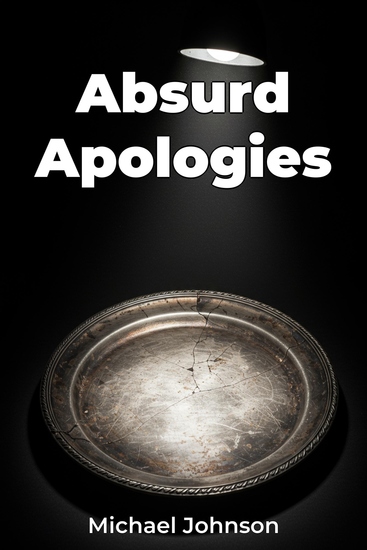
Absurd Apologies - cover

Absurd Apologies

Michael A Johnson

Traduttore A AI

Casa editrice: Publifye

  • 0
  • 0
  • 0

Sinossi

Absurd Apologies examines why some public apologies, intended for crisis management and effective communication, backfire spectacularly, turning transgression into full-blown outrage. From political apologies to business management blunders, the book dissects what makes an apology fail, revealing that insincerity or deflection can be worse than silence. It highlights how societal norms and social media have reshaped accountability, underscoring that a mismanaged apology inflicts lasting damage on reputation and trust.

 
The book offers a framework for understanding the psychology of apologies and public perception, emphasizing that aligning words with tangible actions is vital. It explores how the language of denial and the timing of delivery impact an apology's reception. Through case studies and analysis of public statements, Absurd Apologies demonstrates that poorly executed apologies intensify negative perceptions and erode ethical leadership.

 
Starting with the core elements of an effective apology, such as acknowledging responsibility and expressing remorse, the book progresses through high-profile failures, identifying specific missteps. It provides practical guidelines for crafting authentic apologies, emphasizing proactive communication strategies. This approach allows readers to understand the nuances of sincere apologies versus absurd apologies, making it a valuable resource for leaders and communicators.
Disponibile da: 29/03/2025.
Lunghezza di stampa: 90 pagine.

Altri libri che potrebbero interessarti

  • Power of your Subconscious Mind The: Book summary & analysis - cover

    Power of your Subconscious Mind...

    Briefly Summaries

    • 0
    • 0
    • 0
    This is a concise summary and analysis of The Power of Your Subconscious Mind, by Joseph Murphy. It is not the original book and is not affiliated with or endorsed by Joseph Murphy. Ideal for those seeking a quick and insightful overview.
     
    "The Power of Your Subconscious Mind" is a transformative guide that explores the untapped potential of the human mind. Through a blend of practical techniques and profound insights, the book reveals how to harness the power of the subconscious to achieve personal success, health, and happiness. The author delves into the mechanisms of the mind, illustrating how positive thinking, visualization, and affirmations can reprogram the subconscious to manifest desired outcomes. With a focus on mental healing, wealth creation, and emotional well-being, this book offers a comprehensive roadmap for personal transformation and empowerment.
    Mostra libro
  • Grammar - Learn English Grammar Fast - cover

    Grammar - Learn English Grammar...

    Cory Weston

    • 0
    • 0
    • 0
    This is a clear, concise and easy-to-listen-to guide on English grammar, punctuation, and usage. The book contains clear explanations, which are appropriate for all ages. This authoritative guide makes learning English grammar simple and enjoyable. The book is fully updated to reflect the most recent grammar rules.
    Mostra libro
  • Get It Out - On the Politics of Hysterectomy - cover

    Get It Out - On the Politics of...

    Andréa Becker

    • 0
    • 0
    • 0
    At least one hysterectomy is performed every minute of the year, making it the most common gynecological surgery worldwide. By the age of sixty-five, one out of five people born with a uterus will have it removed. So, why do we seldom talk about this surgery? Highly performed yet overlooked, examining the paradox of hysterectomy begins to unravel the various problems with how we medically treat uteruses and the people who have them. 


    Get It Out weaves centuries of medical history with rich qualitative data from 100 women, trans men, and nonbinary people who had, want, or are considering hysterectomy. In compelling detail, Andréa Becker reveals how America’s healthcare system routinely deprives people of the ability to control their own bodies along race and gender lines. When people ask for a hysterectomy, they are often met with pushback: Are you sick enough? Old enough? Have you had enough babies? Will you regret this? How will your future husband feel about this? Yet this pushback is not equally experienced. While some people are barred access, others are ushered toward a hysterectomy. These contradictory recommendations reveal the persistent biases entrenched within healthcare. 


    Get It Out interrogates how little choice people with uteruses ultimately have over their reproductive health, and explores what these "choices" signify amid interlocking systems of inequality.
    Mostra libro
  • Roman and Byzantine Armies The: The History of the Militaries in the Western Roman Empire and Eastern Roman Empire - cover

    Roman and Byzantine Armies The:...

    Editors Charles River

    • 0
    • 0
    • 0
    The Roman army is one of the most famous fighting forces in history. Through its power and prowess, a once obscure Italian city forged an empire that encircled the Mediterranean and covered half of Europe. The physical remains of its presence can be traced from the mountainous borders of Scotland to the arid deserts of Egypt, but its legacy is far greater and more enduring, as Rome's influence continues to shape the political, legal, and cultural landscape of Europe to this very day. 
    While the Roman army is rightly famed as an institution, the image of the individual legionary is also an iconic one. The uniformed, disciplined soldier of the late Republic and early Empire is one of the first things many people imagine when they think of Rome. They are the ultimate image of the ancient soldier, their arms and armor instantly recognizable. Their abilities, not only as warriors but also as engineers and administrators, have made them role models for other soldiers through the centuries. In the same vein, their commanders are still celebrated and studied, and generals the world over have tried to emulate the likes of Julius Caesar. 
    The Byzantine Empire was the heir to two great cultures that cradled and nurtured European civilization: Greece and Rome. Constantinople, now called Istanbul, became a center of power, culture, trade, and technology poised on the edges of Europe and Asia, and its influence was felt not only throughout Europe but the Middle East, Africa, Central Asia, and the Far East. In reality, Byzantium was a strong, organized, highly effective and adaptable civilization for most of its long history. It owed its success in no small part to its military, which, in contrast to the feudal armies of Western Europe and the tribally based forces of the Middle East, operated with a high level of discipline, strategic prowess, efficiency, and organization.
    Mostra libro
  • Victory for the Axis - How World War II Might Have Been Won - cover

    Victory for the Axis - How World...

    Marcus Draysun

    • 0
    • 0
    • 0
    World War II was a conflict shaped by countless strategic decisions, moments of chance, and pivotal battles. While the Axis powers achieved stunning victories in the early years, several key turning points ultimately led to their downfall. But what if just a few of these moments had played out differently? Could the Axis have secured victory? 
    One of the most significant turning points was the Battle of Britain. After the fall of France in 1940, Germany stood at the doorstep of the United Kingdom, preparing for a possible invasion. The Luftwaffe launched a fierce aerial assault, aiming to cripple British defenses and force a surrender. However, the Royal Air Force, supported by radar technology and an unyielding civilian spirit, held firm. If the Luftwaffe had adjusted its strategy—focusing more on airfields instead of shifting to city bombings—the RAF might have been overwhelmed. A weakened Britain could have been forced to negotiate peace, removing a major Allied power from the war. 
    Another crucial moment came with Operation Barbarossa, Germany’s invasion of the Soviet Union in 1941. Hitler’s decision to open an Eastern Front spread Axis forces thin and underestimated Soviet resilience. If the invasion had started earlier in the year, avoiding the brutal Russian winter, German forces might have reached Moscow before Soviet reinforcements stabilized the front. Additionally, had Germany prioritized capturing Soviet oil fields in the Caucasus over direct assaults on major cities, the Wehrmacht could have sustained its war machine much longer. A Soviet collapse would have left Germany dominant in Europe, free to shift its focus elsewhere.
    Mostra libro
  • Blind Obedience and Denial - The Nuremberg Defendants - cover

    Blind Obedience and Denial - The...

    Andrew Sangster

    • 0
    • 0
    • 0
    "...offers a unique and valuable insight into the psychology of human beings who violate the laws of war. Anyone interested in war crimes generally and the IMT in particular should read this interesting book." — Journal of Military HistoryA revealing yet accessible examination of the Nuremberg trial, and most crucially all 23 men who stood accused, not just the most infamous—Speer, Hess, and Göring. This account sets the scene by explaining the procedures, the legal context, and the moments of hypocrisy in the Allies’ prosecution—ignoring the fact that the Katyn massacre was a Soviet crime and overlooking carpet bombing.  Author Andrew Sangster discusses how the word “Holocaust” was not used until long after the trial, probably due to Russian objection as they had lost many more people, and because the Allies generally were not innocent of anti-Semitism themselves, especially Russia and Vichy France. However, the defendants to a person immediately recognized that this was the singular issue which placed them on the steps of the gallows, and their various defenses on this charge are therefore crucial to understanding the trial. Sangster also explores how the prisoners related to one another in their approach to defending themselves on the charge of genocide and extermination camps, especially in facing the bully-boy Göring.  This new study utilizes not only the trial manuscripts, but the pre-trial interrogations, the views of the psychiatrists and psychologists, and the often-overheard conversations between prisoners—who did not know their guards spoke German—to give the fullest exploration of the defendants, their state of mind, and their attitudes towards the Third Reich, Hitler and each other as they faced judgement by the victors of the war.
    Mostra libro