


Best Laid Schemes
Meredith Nicholson
Casa editrice: Word Well Books
Sinossi
“Best Laid Schemes,” written by Meredith Nicholson (1866-1947), published in 1922, is a collection of fictional short stories.
Disponibile da: 17/06/2022.

Casa editrice: Word Well Books
“Best Laid Schemes,” written by Meredith Nicholson (1866-1947), published in 1922, is a collection of fictional short stories.
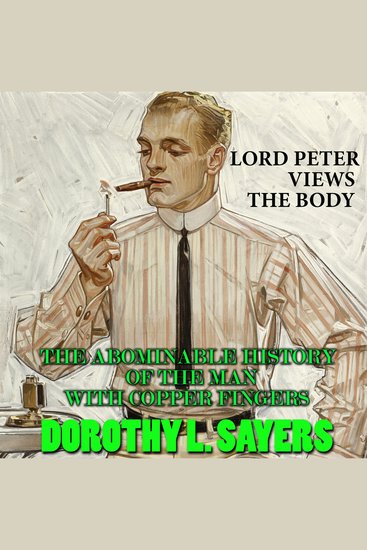
In this thrilling short story from Lord Peter Views the Body, Dorothy L. Sayers presents another gripping adventure featuring the sharp-witted aristocratic detective, Lord Peter Wimsey. "The Abominable History of the Man with Copper Fingers" unfolds as Lord Peter is drawn into a bizarre case involving a peculiar and unsettling figure—an artist with a sinister reputation and mysterious copper-coated fingers. When the artist's dark obsessions lead to murder, Lord Peter must unravel the clues hidden in the shadows of high society and the world of the avant-garde to reveal the truth.With Sayers' characteristic blend of wit, keen psychological insight, and intricate plotting, this story showcases Lord Peter's impeccable skills as a detective and a gentleman. Rich in atmosphere and intrigue, it offers readers a captivating mystery with a chilling edge.Mostra libro
WINNER OF THE ACT BOOK OF THE YEAR

SHORTLISTED FOR THE NED KELLEY AWARD FOR BEST CRIME FICTION

Yuwonderie's seven founding families have lorded it over their district for a century, growing ever more rich and powerful.

But now—in startling circumstances—one of their own is found dead in a ditch and homicide detectives Ivan Lucic and Nell Buchanan are sent to investigate.

Could the murder be connected to the execution of the victim's friend thirty years ago—another member of The Seven—or even to the long-forgotten story of a servant girl on the brink of the Great War?

What are the secrets The Seven are so desperate to keep hidden?

With the killer still on the loose and events spiralling out of control, the closer Ivan and Nell get to discovering the truth, the more dangerous their investigation becomes. Can they crack the case before more people die?

The Seven is a compelling thriller filled with intrigue, emotional depth and an evocative sense of place—where nothing is ever quite what it seems. Chris Hammer, the acclaimed and bestselling author of the international bestsellers Scrublands, Treasure & Dirt and The Tilt, can take his place among the world's finest crime writers.
Mostra libro
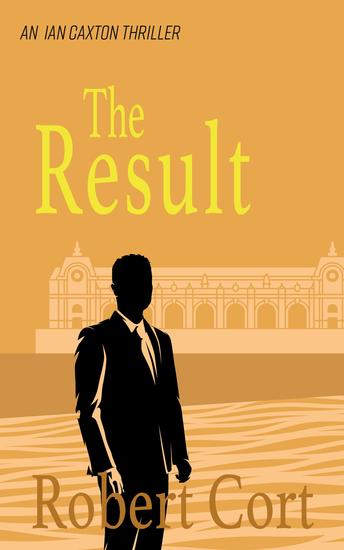
The Result is the fifth volume in the Ian Caxton Thriller series. When Ian Caxton is offered a 'gift' of a painting worth £25 million he knows it comes with 'strings'... and he'll also be breaking the law. The result could be a fortune... or a long term in prison. Viktor sees a chance to help repatriate hidden paintings stolen by the Nazis during the Second World War, but could his honest intentions bring him into conflict with Ian? Emma is close to unravelling the history of her 'Mademoiselle Chad' painting, worth an estimated £3 million. However, this value can only be realised if she can identify the owner prior to 1889. Another absorbing page-turning tale involving more risks and rewards, but could The Result be the moment when Ian's successes finally come to an end?Mostra libro

After Ray Holden is told by his doctor that his stress levels are dangerously high, he decides to take drastic action…The Moment Before forms part of the Case Files series of short crime fiction stories from USA Today bestselling author Rachel Amphlett.Mostra libro
‘I gobbled it up in two sittings, quickly turning pages to see what would happen next. The windswept, desolate setting, cold, gloomy manor house and dark characters created the perfect stormy day read… And did I mention the twists? Oh my goodness!’ NetGalley reviewer, ⭐⭐⭐⭐⭐
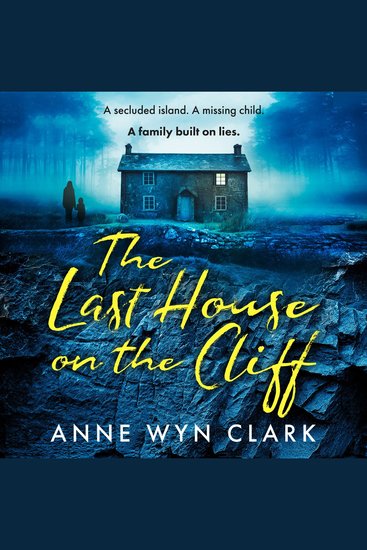
When a young widow’s little girl vanishes, could a dark family secret hold the answer?
On the death of her aunt Gwyn, Lowri returns once more to Gwyn’s home on the remote island of Anglesey, Wales, with her young daughter Ruby in tow. Lowri hadn’t seen her aunt in years, but this beautiful island offers a fresh start.
Yet right away, strange things begin to happen. Ruby insists an old woman is visiting her when no one else is watching, and a tattered old doll keeps being left for Ruby to find.
Then Ruby goes missing. Desperately seeking answers no one seems to have, Lowri looks to her dark family past for clues. But the secrets she uncovers suggest that Ruby is not the only one in danger, and time is running out – for both of them…
A terrifically dark and twisty tale that asks: can you ever really trust those closest to you? Perfect for fans of Ruth Ware, Cass Green and C.J. Tudor.Readers are gripped by The Last House on the Cliff:
‘I absolutely loved [this], I loved the chills it gave me, especially reading it in the dark!’ @Rubiereads, ⭐⭐⭐⭐⭐
‘Wonderful and captivating…I loved how the story unfolded with so many twists and turns and family secrets you could never imagine. Heart wrenching and heart breaking at times. It was utterly compelling and a real page turner.’ NetGalley reviewer, ⭐⭐⭐⭐⭐
‘I loved this…! Super suspenseful – had me turning pages late through the night because I could not put it down until I had worked out all the twists… Five stars.’ NetGalley reviewer, ⭐⭐⭐⭐⭐
‘Such a tense and atmospheric read… This was gripping right from the first page and I could not put it down, twisty and unpredictable.’ NetGalley reviewer, ⭐⭐⭐⭐⭐
‘Gave me goosebumps the entire time … the twists in the novel made it one of my fastest reads of the year. The family dynamics were so complicated, I had no idea who to trust.’
NetGalley reviewer, ⭐⭐⭐⭐⭐
Anne Wyn Clark's The Last House on the Cliff is a psychological thriller that explores the best of supernatural fiction. The domestic setting is rife with occult elements, making it a top pick for fans of thrillers.
For fans of Riley Sager (With a Vengeance), Freida Mcfadden (The Tenant), Miranda Rijks (The Other Mother), Claire Mcgowan (Blood Tide), and Ben Cheetham (House Of Mirrors).
HarperCollins 2022
Mostra libro
After six weeks in a nuclear submarine gathering computer data on Soviet activity, the mysterious, bespectacled spy known as Patrick Armstrong is desperate to return home. But when he arrives at his London flat, it appears to be occupied by someone who looks just like him—and he finds himself propelled into the heart of a conspiracy stretching from the remote Scottish highlands to the Arctic ice.Mostra libro





