Join us on a literary world trip!
Add this book to bookshelf
Grey
Write a new comment Default profile 50px
Grey
Subscribe to read the full book or read the first pages for free!
All characters reduced
Digital Privacy Literacy - cover

Digital Privacy Literacy

Mei Gates

Translator A AI

Publisher: Publifye

  • 0
  • 0
  • 0

Summary

Digital Privacy Literacy offers a comprehensive exploration of personal information protection in our increasingly connected world, where data collection has become both sophisticated and ubiquitous. The book uniquely bridges the gap between technical knowledge and practical implementation, examining how everyday digital interactions contribute to detailed personal profiles while providing actionable strategies for privacy protection.

 
The work progresses logically through three main themes: understanding data collection mechanisms, evaluating privacy risks, and implementing protection strategies. By examining real-world case studies and research from multiple jurisdictions, the book reveals how seemingly innocent digital interactions, from social media usage to IoT device operations, contribute to an interconnected web of personal data collection.

 
One particularly compelling insight is the book's emphasis on privacy as an active process rather than a passive state, requiring ongoing vigilance and strategic decision-making. The interdisciplinary approach sets this book apart, combining elements of computer science, behavioral psychology, and law to create a holistic understanding of digital privacy.

 
Written for both privacy-conscious individuals and IT professionals, the content maintains accessibility while diving deep into complex concepts. Each chapter builds upon the previous one, moving from fundamental principles to advanced protection techniques, with practical applications woven throughout.

 
The book's balanced treatment of current privacy challenges and emerging threats makes it an invaluable resource for anyone seeking to understand and implement effective privacy protection measures in the digital age.
Available since: 01/23/2025.
Print length: 142 pages.

Other books that might interest you

  • Being Digital - cover

    Being Digital

    Wendell Yanick

    • 0
    • 0
    • 0
    Being Digital: The Ultimate Guide on How to Earn Money Online. Get a Comprehensive Guide on How to Make the Most Money in this Digital Product AgeThere are millions of people making a full time income on the internet, working part time hours from the comfort of their own home. These people set their own working hours, live wherever they choose and have a ton of spare time to spend with their family, friends and simply do things they love to do. Is this something that you think would fit well with your lifestyle? If you are interested in working online but have no idea where or how to start, look no further because this audiobook is the perfect guide for you. This audiobook will teach you the basics of starting your own online business. You will get example of some of the most successful online businesses today that you can get inspiration from.This audiobook will cover the following topics:- Basic Fundamentals- The Simple And Easy Way To Start An Online Business- How To Start A Business Selling Other People's Products- Internet Business Models You Can Follow- Successful Online Businesses You Can Learn From- And many more!With an Internet Business, you don’t have to wake up in the wee hours of the morning so that you can get to work by 9am, anymore. You can start work at any time since you are your own boss! If you want to learn more, scroll up and click “add to cart” now!
    Show book
  • Evolution Is Wrong - A Radical Approach to the Origin and Transformation of Life - cover

    Evolution Is Wrong - A Radical...

    Erich von Däniken

    • 0
    • 0
    • 0
    A Fascinating Exploration on Why the Darwinists’ Theory No Longer Explains EverythingThere was once a set of ideas called the theory of evolution, conceived by clever people and confirmed by countless scientists. Then people discovered the electron microscope. This made it possible to make the molecules within the cell visible, and suddenly questions about evolution arose that were not possible before. Which force actually bundles the atoms in the right order? What moves the molecular chains into the correct position? How did the first living unit within the cell actually come about? How does inheritance work, how does information pass on to the next generation? Did humans descend only and exclusively from primates—as Charles Darwin and countless other great minds assumed—or did additional “engines” intervene in evolution? Today it is clear: countless questions can no longer be answered with the previous theory of evolution. There is a form of life called “Blob” (Physarum polycephalum). The “thing” has neither eyes nor ears, neither a mouth nor a nose or even a brain. Nevertheless, it takes in food, overcomes obstacles by the shortest route and exchanges information with other “blobs.” The “blob” contradicts any evolutionary thought that one develops from the other. Or the “gastric-brooding frogs” (Rheobatrachus) found in Australia. They hatch their young in the stomach. Impossible in a slow, evolutionary process. Everywhere there are characteristics of animals that do not want to fit into the theory of evolution anywhere. And man? Are we really the most adapted life-form on this planet? Today, more and more scientists who contradict the previous theory of evolution speak out. The theory fits the changes within the species, but it can no longer be reconciled with the inner workings of the cell. Some other influence that has so far escaped us is affecting evolution. It is called “Intelligent Design.” Intelligent planning is suspected behind this. Anyone or anything—a spirit of the universe? Aliens?—could be behind this planning. Erich von Däniken uses countless examples to demonstrate the impossibility of the previous evolutionary idea. He quotes scientists who argue against the previous teaching, but also those who defend it. Unfortunately, established science still refuses to look at discrepancies and holes in the theory of evolution, even though it is quite obvious that there is more going on with regard to the development of all species, as well as human culture, than could be explained by the theory of evolution alone.
    Show book
  • Hedgelaying - The Complete Guide to a Traditional Rural Craft - cover

    Hedgelaying - The Complete Guide...

    Nigel Adams

    • 0
    • 0
    • 0
    Hedges are one of Great Britain's most iconic landscape features. They are the stitching in the patchwork quilt of fields and meadows that defines the countryside. Hedgelaying first developed to form living stock-proof barriers, and has always been considered an art and a skill, taking something wild and unruly and giving it order, structure and perhaps even beauty. The book examines over 25 regional styles in England and Wales, introducing local experts who proudly explain their native style and offer a wealth of informed advice.
    Show book
  • Underworld The: Book Summary & Analysis - cover

    Underworld The: Book Summary &...

    Briefly Summaries

    • 0
    • 0
    • 0
    This is a concise summary and analysis of The Underworld , by Susan Casey.
     
    It is not the original book and is not affiliated with or endorsed by Susan Casey.
     
    Ideal those seeking a quick and insightful overview.
    
     
    The Underworld takes readers on an exhilarating exploration of the mysterious and often dangerous world beneath the surface of the ocean. The book delves into the lives of marine creatures, underwater explorers, and scientists who study the deep sea, shedding light on the wonders and perils of this largely unexplored realm. Through vivid storytelling and scientific insights, it highlights the significance of the ocean's depths in shaping life on Earth.
    Show book
  • The Future of Packaging - From Linear to Circular - cover

    The Future of Packaging - From...

    Tom Szaky

    • 0
    • 0
    • 0
    Tom Szaky sets out to do the impossible - eliminate all waste. This book paints a future of a "circular economy" that relies on responsible reuse and recycling to propel the world towards eradicating overconsumption and waste. 
     
     
    The Future of Packaging provides a straightforward solution to tackling the daunting issues of waste in the packaging industry by returning to a "circular economy." Beginning with a critique of the irresponsibility of the packaging industry and its contributions to wastefulness, Tom Szaky and his coauthors illuminate the path towards a waste-free future with lessons from the past. The goal of this book is to serve as a guide for designing a circular economy, showcasing how the world has moved away from circular systems of consumption (i.e. refillable milk/water/beer) to largely linear systems (i.e. milk bags/plastic bottles/plastic kegs). Objects were circular up until the 1940s, after which complex materials and a culture of consumerism began to create waste that nature couldn't handle. The way to get back to more circular systems starts with design and, after that, implementing systems. With the support and experiences of industry leaders in sustainable development, Szaky helps readers make the shift from a linear economy, which depends on extracting resources and overconsumption, to a circular economy that allows for growth.
    Show book
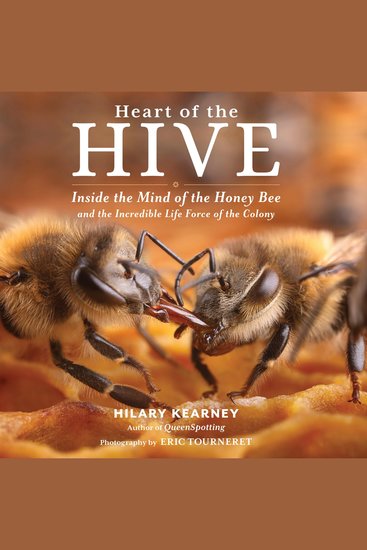
  • Heart of the Hive - Inside the Mind of the Honey Bee and the Incredible Life Force of the Colony - cover

    Heart of the Hive - Inside the...

    Hilary Kearney

    • 0
    • 0
    • 0
    Expert beekeeper and swarm-catcher Hilary Kearney offers a unique window into the social lives and biology of these remarkable creatures Readers will be awestruck by the hive as superorganism and how the individual bee lives and behaves within it, perfectly suited to each specific job it performs. From their intricate dances and information-rich pheromones to how they sense and respond to their environment, learn, and remember, this immersive journey into the world of bees offers an entirely new perspective on the wisdom of nature and our relationship to it.
    Show book