¡Acompáñanos a viajar por el mundo de los libros!
Añadir este libro a la estantería
Grey
Escribe un nuevo comentario Default profile 50px
Grey
Suscríbete para leer el libro completo o lee las primeras páginas gratis.
All characters reduced
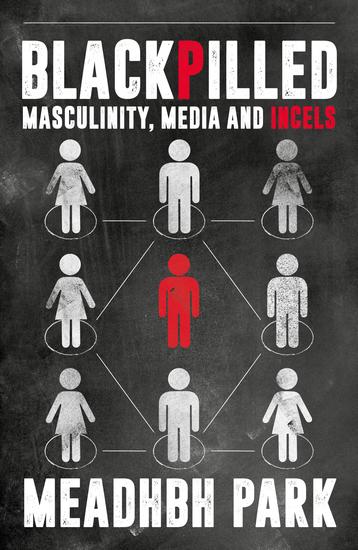
Blackpilled - Masculinity Media and Incels - cover

Blackpilled - Masculinity Media and Incels

Meadhbh Park

Editorial: Biteback Publishing

  • 0
  • 0
  • 0

Sinopsis

Incels – involuntary celibates – are often cast as violent, misogynistic loners, consumed by resentment towards women. With shocking tragedies like the 2014 Isla Vista killings and the 2024 Bondi Junction stabbings heightening fears about the threat they pose, understanding this phenomenon has never been more crucial.
But it's important not to view incels as aliens who came down to earth on women-hating spaceships from a distant women-hating planet. Though their belief system – referred to as the 'blackpill' – is no doubt extreme, they haven't constructed it from nothing. These young men are shaped by the media they consume and the society that surrounds us.
In Blackpilled, Meadhbh Park takes an unflinching look at the incel movement through the lenses of masculinity and media studies. Drawing on interviews with incels across the globe and analysing cultural touchstones such as The Matrix, Fight Club, Taxi Driver, Euphoria, Joker and Blade Runner 2049, Park uncovers the origins of their beliefs and what they really think. She also examines potential ways to help incels break free from the nihilistic and hate-fuelled grip of the blackpill.
With extremist misogyny on the rise and governments debating whether incels should be labelled a terror threat, Blackpilled delivers urgent, thought-provoking conclusions that couldn't be more timely.
Disponible desde: 03/04/2025.
Longitud de impresión: 352 páginas.

Otros libros que te pueden interesar

  • Ougat - From a hoe into a housewife and then some - cover

    Ougat - From a hoe into a...

    Shana Fife

    • 0
    • 0
    • 0
    There’s an entire generation of South African women who ought to read this book.’ – Sara-Jayne King, author of Killing Karoline 
      
    ‘Ougat is masterfully written – raw, unpretentious, unsettling. Shana Fife captures all the darkness from her body, psyche and life with fearless honesty and transparency.’ – Frazer Barry, award-winning theatre practitioner, writer and musician 
    By the time Shana Fife is 25 she has two kids from different fathers. To the Coloured people she grew up around, she is a jintoe, a jezebel, jas, a woman with mileage on the pussy. She is alone, she has no job and, as she is constantly reminded by her community, she is pretty much worthless and unloveable. How did she become this woman, the epitome of everything she was conditioned to strive not to be? 
    Unsettlingly honest and brutally blunt, Ougat is Shana Fife’s story of survival: of surviving the social conditioning of her Cape Flats upbringing, of surviving sexual violence and depression and of ultimately escaping a cycle of abuse. 
    A powerful, fresh and disarming new voice – Shana’s writing is like nothing you’ve read before.
    Ver libro
  • One Perfect Day - Memoir of Veronika Csosz - cover

    One Perfect Day - Memoir of...

    Sandy Watson

    • 0
    • 0
    • 0
    One Perfect Day – Hungary 1956 is the profoundly moving story of Veronika Csosz, her experiences during the 1956 Hungarian Uprising and her traumatic escape. Veronika's story is also about young people with an unshakeable desire to be free of the fear, violence and oppression of Communist rule which, on a beautiful autumn day, led to the tragic events of 1956. Despite calls for help to the leaders of the free world, Hungary's fight for freedom was overshadowed by the international stand-off over the Suez Canal. Help never came, and the desperate fight for democracy was crushed by the Soviet Army just days after freedom seemed to be won.
    Ver libro
  • Ottoman Empire’s Greatest Victories The: The History and Legacy of the Most Important Battles Won by the Ottomans - cover

    Ottoman Empire’s Greatest...

    Editors Charles River

    • 0
    • 0
    • 0
    In terms of geopolitics, perhaps the most seminal event of the Middle Ages was the successful Ottoman siege of Constantinople in 1453. The city had been an imperial capital as far back as the 4th century, when Constantine the Great shifted the power center of the Roman Empire there, effectively establishing two almost equally powerful halves of antiquity’s greatest empire. Constantinople would continue to serve as the capital of the Byzantine Empire even after the Western half of the Roman Empire collapsed in the late 5th century. Naturally, the Ottoman Empire would also use Constantinople as the capital of its empire after their conquest effectively ended the Byzantine Empire, and thanks to its strategic location, it has been a trading center for years and remains one today under the Turkish name of Istanbul.  
    The end of the Byzantine Empire had a profound effect not only on the Middle East but Europe as well. Constantinople had played a crucial part in the Crusades, and the fall of the Byzantines meant that the Ottomans now shared a border with Europe. The Islamic empire was viewed as a threat by the predominantly Christian continent to their west, and it took little time for different European nations to start clashing with the powerful Turks. In fact, the Ottomans would clash with Russians, Austrians, Venetians, Polish, and more before collapsing as a result of World War I, when they were part of the Central powers. 
    In the wake of taking Constantinople, the Ottoman Empire would spend the next few centuries expanding its size, power, and influence, bumping up against Eastern Europe and becoming one of the world’s most important geopolitical players. It was a rise that would not truly start to wane until the 19th century.
    Ver libro
  • The Fraternity of the Rose Cross - cover

    The Fraternity of the Rose Cross

    Manly Palmer Hall

    • 0
    • 0
    • 0
    Who were the Rosicrucians? Were they an organization of profound thinkers rebelling against the inquisitional religious and philosophical limitations of their time or were they isolated transcendentalists united only by the similarity of their viewpoints and deductions? Where was the "House of the Holy Spirit, " in which, according to their manifestoes, they met once a year to plan the future activities of their Order? Who was the mysterious person referred to as "Our Illustrious Father and Brother C.R.C."? Did those three letters actually stand for the words "Christian Rosie Cross"? Was Christian Rosencreutz, the supposed author of the Chymical Nuptials, the same person who with three others founded "The Society of the Rose Cross"? 
    What relationship existed between Rosicrucianism and mediæval Freemasonry? Why were the destinies of these two organizations so closely interwoven? Is the "Brotherhood of the Rose Cross" the much-sought-after link connecting the Freemasonry of the Middle Ages with the symbolism and mysticism of antiquity, and are its secrets being perpetuated by modern Masonry? Did the original Rosicrucian Order disintegrate in the latter part of the eighteenth century, or does the Society still exist as an organization, maintaining the same secrecy for which it was originally famous? What was the true purpose for which the "Brotherhood of the Rose Cross" was formed? Were the Rosicrucians a religious and philosophic brotherhood, as they claimed to be, or were their avowed tenets a blind to conceal the true object of the Fraternity, which possibly was the political control of Europe? These are some of the problems involved in the study of Rosicrucianism.
    Ver libro
  • The Secret of Creation - cover

    The Secret of Creation

    Walter Russell

    • 0
    • 0
    • 0
    The Secret of Creation, a profound exploration of universal laws, human potential, and the divine essence that permeates all of creation. Russell presents his unique insights into the nature of light, energy, and consciousness, offering practical wisdom on how to achieve balance, unlock creativity, and align with the rhythms of the universe. 
    This work represents the culmination of a lifetime of discovery, where science and spirituality converge to reveal the hidden truths of existence. Through his teachings, Russell invites listeners to transcend the limitations of materialism and embrace their divine potential as co-creators in the universe. 
    Prepare to journey beyond the boundaries of conventional thought and into a realm where imagination, balance, and universal law guide the path to enlightenment and self-mastery. Let this work serve as a reminder of the infinite possibilities within you and the divine light that illuminates all creation.
    Ver libro
  • Bridgebuilders - How Government Can Transcend Boundaries to Solve Big Problems - cover

    Bridgebuilders - How Government...

    William D. Eggers, Donald F. Kettl

    • 0
    • 0
    • 0
    Our government is in crisis, mired in bureaucracy and often unable to fix tough problems. This book provides an essential new model for transforming the system and getting things done. 


    COVID. Climate change. Refugee resettlement. Global supply chains. We're facing a new generation of complex problems, stretching across the public and private sectors. Historically we've looked to government for big solutions, but the reality is, the government we have now is a poor match for the problems we face. 


    We need a fresh, new approach. As William D. Eggers and Donald F. Kettl show in this indispensable book, we need a government of bridgebuilders—public managers and leaders who collaborate with partners, both inside and outside government, to get the job done. They manage horizontally instead of vertically, they see their role as connectors, and they identify which players have the assets needed to solve the problems at hand. 


    Each chapter examines one of the ten core principles of bridgebuilding and features practical tips and dynamic cases of how effective leaders have put each principle to work. Also included is a special section on creating a hundred-day bridgebuilding plan.
    Ver libro