Unisciti a noi in un viaggio nel mondo dei libri!
Aggiungi questo libro allo scaffale
Grey
Scrivi un nuovo commento Default profile 50px
Grey
Iscriviti per leggere l'intero libro o leggi le prime pagine gratuitamente!
All characters reduced
Fractured Promises - Seven Twists of Love Fear and the Games We Cannot Escape - cover

Fractured Promises - Seven Twists of Love Fear and the Games We Cannot Escape

M.D. Thorn

Casa editrice: Twist & Tether Press

  • 0
  • 0
  • 0

Sinossi

Every vow, every game, every secret comes with a cost. This collection brings together seven stories where the lines between devotion, deception, and destiny blur—each pushing its characters to the edge of what they can endure.
 
A bride discovers that the man she thought she married may be hiding a darker truth than love can cover. A craftsman’s dolls whisper of debts unpaid, where each creation carries the memory of a soul unwilling to rest. A paradise crafted in circuits begins to tremble under the weight of its own fail-safe, paradise on the brink of collapse.
 
In the underworld of finance and betrayal, three keys unlock not fortune but destruction, when loyalty collides with greed. Beyond the stars, a lonely outpost refuses to release its crew, wrapping them in a silence that cuts deeper than space itself. In the ring, a fighter’s final round ends not with glory but with a truth too dangerous to strike. And on the icy edge of perfection, a young prodigy discovers that medals gleam brightest when they are cursed with secrets no one dares to confess.
 
Romance and suspicion, horror and betrayal, ambition and sacrifice—all collide in tales where nothing is certain, and everything is at stake.
 
When the vows break, the machines glitch, and the truth demands a price—who will stand, and who will fall?
Disponibile da: 18/08/2025.
Lunghezza di stampa: 435 pagine.

Altri libri che potrebbero interessarti

  • Scenes of Clerical Life - cover

    Scenes of Clerical Life

    George Eliot

    • 0
    • 0
    • 0
    Three novellas that brilliantly portray English country and clergy life at the turn of the nineteenth century from the author of Middlemarch.   Initially appearing in Blackwood’s Magazine, this trio of linked stories comprises George Eliot’s first published work. Together they form a portrait of small-town life in Midlands, England, where changes are affecting both society at large and religious beliefs and institutions.   In “The Sad Fortunes of Reverend Amos Barton,” the clergyman struggles to raise funds for church repairs and perform his parochial duties, while a target of gossip—both good and bad. Meanwhile, few in Shepperton can find fault with his shy and hardworking wife, who cares for their six children, stretching Barton’s meager salary—and herself—to the limit.   Set before the arrival of Amos Barton, “Mr. Gilfil’s Love Story” features well-liked parish priest Maynard Gifil, who is known for smoking long pipes and preaching short sermons. Shockingly tumultuous events lead up to his marriage—including a love triangle, deception, and a murder plot.   An argument over religious doctrine splits the market town of Milby into two factions in “Janet’s Repentance.” With the arrival of Reverend Tryan, a rumor spreads that Evangelicalism has invaded the parish, angering local lawyer Robert Dempster. But his long-suffering wife finds in Tryan a kindred spirit, leading her to embark on a new life.  “The exquisite truth and delicacy, both of the humour and the pathos of those stories, I have never seen the like of.” —Charles Dickens “A first-rate novel, and its author takes rank at once among the masters of the art.” —The Times
    Mostra libro
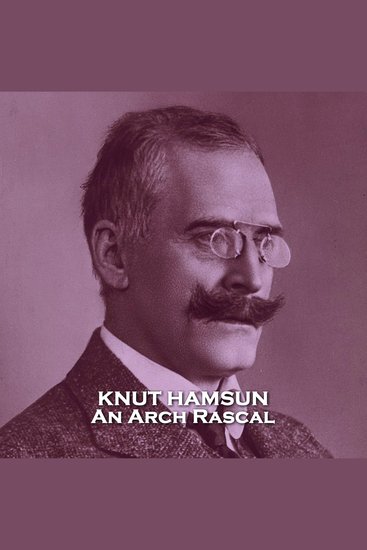
  • Arch Rascal An - From their pens to your ears genius in every story - cover

    Arch Rascal An - From their pens...

    Knut Hamsun

    • 0
    • 0
    • 0
    Knud Pedersen was born in Lom in the Gudbrandsdal valley of Norway on the 4th of August, 1859 in what was then the United Kingdoms of Sweden and Norway.  He was the fourth son of seven children born to poor parents who, when he was three, were invited to an uncle’s farm to work his land. 
    When he was nine he moved away from his family to help another uncle who ran a post office.  Whilst with him he was beaten and starved which manifested in a series of chronic nervous difficulties.  The treatment endured for six years until he managed to escape back to Lom. 
    For some time he now took any job that was available to him, including store clerk, peddler, shoemaker's apprentice, sheriff's assistant, elementary-school teacher and ropemaker's apprentice.  At about the same time, with the wealth of these gained experiences, he began to explore his literary talents. 
    In 1877 he published his first book ‘The Enigmatic Man: A Love Story from Northern Norway’, others soon followed but real success only came in 1890 with ‘Hunger’, an influential work for later novelists with its internal monologue and bizarre logic.  His work is often associated with Pantheism; where nature and mankind are unified in a strong and often mystical bond.   
    His work was so influential that in 1920 he was awarded the Novel Prize for Literature. 
    Shortly after this point his works became fewer and his interests darker.  During World War II he became a fervent admirer of the Nazi’s, even meeting Hitler, even though German armies had overrun Norway.  With the war’s end he was detained on charges of treason.  His old age was apparently the primary reason given for Hamsun receiving only a fine.  Other reasons also sought to excuse his abhorrent behaviour but it was clear that whilst he was loved for his literature he was detested for his politics and morals. 
    His literary canon includes more than 20 novels, a poetry collection, short stories, plays, a travelogue, other works of non-fiction and essays. 
    Knut Hamsun died on the 19th February 1952 in Grimstad. He was 92.
    Mostra libro
  • Tombs Without Bodies - (Halfway to Better 4) - cover

    Tombs Without Bodies - (Halfway...

    Susan Kaye Quinn

    • 0
    • 0
    • 0
    SHORT STORY: Humanity has left the cities to live in the "greenbelt," but a young woman’s curiosity brings her back to the bot-patrolled streets where human beings used to live... until she gets caught.Tombs Without Bodies is one of six short solarpunk stories in the Halfway to Better collection.If you enjoyed the optimistic climate solutions in Kim Stanley Robinson’s Ministry for the Future or the cozy cooperative future in Becky Chambers’ Monk and Robot series, you will enjoy Halfway to Better.
    Mostra libro
  • Dark Tales of Mystery & Suspense - 15 Weird Thrillers - cover

    Dark Tales of Mystery & Suspense...

    Alan Nelson, Charles Hilan...

    • 0
    • 0
    • 0
    A collection of those intriguing thrillers that keep us on the edge of our seats. 
    Contents: 
    "Man in a Hurry" by Alan Nelson 
    The pudgy little man was always hurrying. 
    "Bitter Gold" by B. C. Bridges 
    A brief, grim tale of Siberia. 
    "The Gray Rider" by Charles Hilan Craig 
    The strange tale of a famous racing driver. 
    "What Is It?" by Charles M. Morris 
    Retribution, swift and terrible. 
    "The Sixth Tree" by E. L. Stewart 
    The weirdest game that ever was played. 
    "His Brother's Keeper" by George Fielding Eliot 
    A not-so-typical case of jealousy. 
    "Country House" by Ewen Whyte 
    A strange rendezvous with the beauty of the country. 
    "Murder Man" by Ewen Whyte 
    This perfect killing. 
    "They've Got a Killer View" by Ian Gordon 
    A woman adds her name to a strange waiting list. 
    "Croatan" by Malcolm Ferguson 
    Creatures summoned from outer eons. 
    "Stranger at Dusk" by Malcolm Kenneth Murchie 
    The plight of a boy visited by a mysterious stranger. 
    "The Three Marked Pennies" by Mary Elizabeth Counselman 
    A strange destiny awaited the holders of the pennies. 
    "Piecemeal" by Oscar Cook 
    He slipped in a pool of blood... 
    "The Oval Portrait" by Edgar Allan Poe 
    An odd portrait in a chateau. 
    "The Oblong Box" by Edgar Allan Poe 
    A sea voyage and a peculiar, pine box.
    Mostra libro
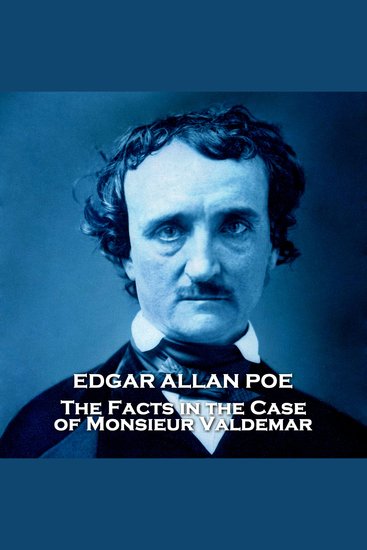
  • The Facts in the Case of Monsieur Valdemar - From their pens to your ears genius in every story - cover

    The Facts in the Case of...

    Edgar Allan Poe

    • 0
    • 0
    • 0
    Edgar Poe was born in Boston Massachusetts on 19th January 1809. His father abandoned his family the following year and within a year his mother had died leaving him an orphan.   
    He was taken in by the Allan family but never formally adopted although he now referred to himself as Edgar Allan Poe.  His father alternatively spoiled or chastised him and tension was frequent over gambling debts and monies for his education.  His university years to study ancient and modern languages was cut short by lack of money and he enlisted as a private in the army claiming he was 22, it is more probable he was 18. After 2 years he obtained a discharge in order to take up an appointment at the military academy, West Point, where he failed to become an officer. 
    Poe had released his 1st poetry volume in 1827 and after his 3rd turned to prose and placing short stories in several magazines and journals.  At age 26 he obtained a licence to marry his cousin.  She was a mere 13 but they stayed together until her death from tuberculosis 11 years after. 
    In January 1845 ‘The Raven’ was published and became an instant classic.  Thereafter followed the prose works for which he is now so rightly famed as a master of the mysterious and the macabre. 
    Edgar Allan Poe died at the tragically early age of 40 on 7th October 1849 in Baltimore, Maryland. Newspapers at the time reported Poe's death as ‘congestion of the brain’ or ‘cerebral inflammation’, common euphemisms for death from disreputable causes such as alcoholism but the actual cause of death remains a mystery.
    Mostra libro
  • 3 Christmas Stories - About Child Poverty - A trio of Xmas themed stories for the holiday season - cover

    3 Christmas Stories - About...

    Anton Chekhov, Hans Christian...

    • 0
    • 0
    • 0
    There is something about the number 3.    
     
    The Ancient Greeks believed 3 was the perfect number, and in China 3 has always been a lucky number, and they know a thing or two.   
     
    Most religions also have 3 this and 3 that and, of course, in these more modern times, three’s a crowd may be too many, except when it’s a ménage à trois.  It seems good things usually come in threes. 
     
    Whatever history and culture says WE think 3, a hat-trick of stories, is a great number to explore themes and literary avenues that classic authors were so adept at creating. 
     
    From their pens to your your ears.
    Mostra libro