


The Comrade
Mazo de la Roche
Casa editrice: Alien Ebooks
Sinossi
A wounded soldier in World War I comes across a woman and her newborn baby in the mud and misery of battle.
Disponibile da: 24/10/2023.
Lunghezza di stampa: 10 pagine.

Casa editrice: Alien Ebooks
A wounded soldier in World War I comes across a woman and her newborn baby in the mud and misery of battle.
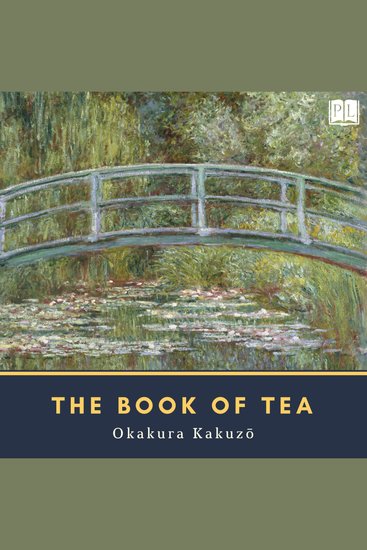
The Book of Tea, one of the great English tea classics, is a long essay about the connection between teaism, Taoism, and the aesthetics of Japanese culture. It was written by Okakura Kakuzō in English and was published in the United States in 1906.
The essay targets a Western audience and seeks to explain the importance of tea in Japanese culture, not just as a beverage, but as a form of art expressed in different aspects. After a brief introduction of the Western attitude towards tea, Okakura demystifies the admiration of the Japanese people for this green plant by presenting the different schools of tea, its connection to Zen philosophy, and how it has affected the arts. The famous tea ceremony and its rigid formalities are explained, together with the contributions of the great tea-masters.
The Book of Tea is considered by many to be one of the first books to introduce Eastern culture and philosophy to the Western world. This was possible due to Okakura's early contact with the English language and Western thought, but also due to his later involvement in the Asian art division of the Boston Museum of Fine Arts, which he came to head in 1910.
Mostra libro
Medea by Euripides is one of the most powerful and haunting tragedies of ancient Greek drama. First performed in 431 BCE, this timeless play explores the depths of human passion, betrayal, and revenge, presenting one of the most complex and unforgettable characters in classical literature.

The story centers on Medea, a foreign princess and powerful sorceress who has sacrificed everything for her husband, Jason. Years earlier, she betrayed her own family and homeland to help him obtain the Golden Fleece, leaving her past behind to build a new life together. Yet in the city of Corinth, Medea's devotion is cruelly repaid when Jason abandons her in order to marry the daughter of King Creon, seeking wealth and political advantage.

Cast aside and humiliated, Medea finds herself isolated in a society that already views her as an outsider. Stripped of status and threatened with exile, she confronts the devastating betrayal that has shattered her life. What begins as grief soon transforms into a fierce and calculated desire for justice.

Through Medea's struggle, Euripides explores the intense emotions of love, anger, pride, and wounded dignity. The play reveals the dangers of arrogance and the devastating consequences of betrayal. Medea's intelligence and determination make her both terrifying and compelling, forcing audiences to confront the darker aspects of human nature.

As her plan unfolds, the tragedy builds toward one of the most shocking and unforgettable climaxes in classical theatre. Euripides challenges traditional ideas about heroism, morality, and gender roles, presenting a character who refuses to accept humiliation or powerlessness.

Rich with emotional intensity and poetic language, Medea examines themes of revenge, exile, injustice, and the struggle for dignity in a hostile world. The play remains deeply relevant, continuing to provoke debate about justice, loyalty, and the limits of human rage.

Dark, dramatic, and profoundly thought-provoking, Medea stands as a masterpiece of ancient tragedy—a gripping exploration of betrayal and the destructive power of wounded pride.
Mostra libro

Written by R.Austin Freeman, The Adventures of Dr Thorndyke (also sometimes known as The Singing Bone) present five tales of crime and forensic detection from the inventor of the inverted detective story:The Case of Oscar BrodskiA lost diamond merchant chances upon the house of a fence and burglar, with fatal consequences...A Case of PremeditationWhere a former prison guard tries his hand at blackmail, to his cost...The Echo of a MutinyOn a lonely lighthouse, a man, hiding from the world, has a chance encounter with the one person he least expected to ever see, and vice-versa...A Wastrel's RomanceDown on his luck, and living by his wits, a disgraced former officer attends a Spinsters ball under false pretences and looking for an easy score to put food on the table, but a chance encounter leaves him running for his life...The Old LagA reformed criminal comes to Dr Thorndyke, claiming he's been framed for murder. The fingerprint evidence seems conclusive... but is all as it appears?Narrated by Michael Ward.Mostra libro
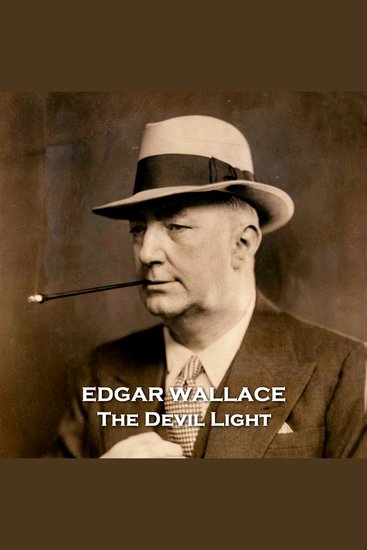
Richard Horatio Edgar Wallace was born on the 1st April 1875 in Greenwich, London.  Leaving school at 12 because of truancy, by the age of fifteen he had experience; selling newspapers, as a worker in a rubber factory, as a shoe shop assistant, as a milk delivery boy and as a ship’s cook.

By 1894 he was engaged but broke it off to join the Infantry being posted to South Africa. He also changed his name to Edgar Wallace which he took from Lew Wallace, the author of Ben-Hur.

In Cape Town in 1898 he met Rudyard Kipling and was inspired to begin writing. His first collection of ballads, The Mission that Failed! was enough of a success that in 1899 he paid his way out of the armed forces in order to turn to writing full time.

By 1904 he had completed his first thriller, The Four Just Men. Since nobody would publish it he resorted to setting up his own publishing company which he called Tallis Press.

In 1911 his Congolese stories were published in a collection called Sanders of the River, which became a bestseller. He also started his own racing papers, Bibury’s and R. E. Walton’s Weekly, eventually buying his own racehorses and losing thousands gambling.  A life of exceptionally high income was also mirrored with exceptionally large spending and debts.

Wallace now began to take his career as a fiction writer more seriously, signing with Hodder and Stoughton in 1921. He was marketed as the ‘King of Thrillers’ and they gave him the trademark image of a trilby, a cigarette holder and a yellow Rolls Royce. He was truly prolific, capable not only of producing a 70,000 word novel in three days but of doing three novels in a row in such a manner. It was estimated that by 1928 one in four books being read was written by Wallace, for alongside his famous thrillers he wrote variously in other genres, including science fiction, non-fiction accounts of WWI which amounted to ten volumes and screen plays. Eventually he would reach the remarkable total of 170 novels, 18 stage plays and 957 short stories.

Wallace became chairman of the Press Club which to this day holds an annual Edgar Wallace Award, rewarding ‘excellence in writing’.

Diagnosed with diabetes his health deteriorated and he soon entered a coma and died of his condition and double pneumonia on the 7th of February 1932 in North Maple Drive, Beverly Hills. He was buried near his home in England at Chalklands, Bourne End, in Buckinghamshire.
Mostra libro
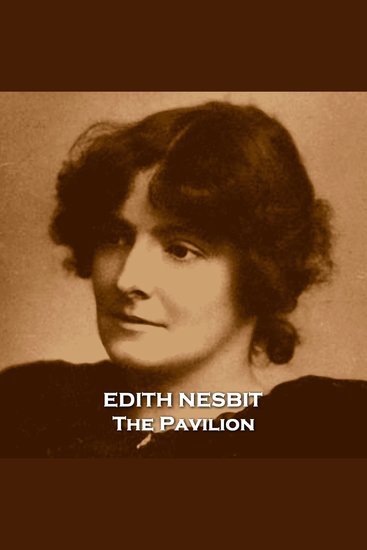
Edith Nesbit was born on the 15th August 1858 in Kennington, then part of Surrey.

Due to the health issues and tuberculosis of her sister Mary, Nesbit’s early life was one of constant changes of house both in England and on the continent.

At age 17, Nesbit met Hubert Bland and they married three years later―whilst she was 7 months pregnant.  Bland also kept his affair with another woman going throughout their marriage and the two children of that relationship were raised by Nesbit as well as her own three with Bland.

Together they were founder members of the Fabian Society in 1884 naming their son Fabian in its honour.  They also edited the Society's journal; ‘Today’.  Nesbit was an active lecturer and prolific writer on socialism during those years but gradually her work for them dwindled as her career as a children’s writer grew.  Her most famous success was ‘The Railway Children’ but she was also very prolific and greatly accomplished in poetry, short stories―especially her macabre ghost and supernatural stories―and novels for adults.

In February 1917, some three years after the death of Bland she married Thomas ‘the Skipper’ Tucker in Woolwich, where he was a ship's engineer on the Woolwich Ferry.

Edith Nesbit died from lung cancer on the 4th May 1924 at her house ‘The Long Boat’ at Jesson, St Mary's Bay, New Romney in Kent.  She was 65.
Mostra libro
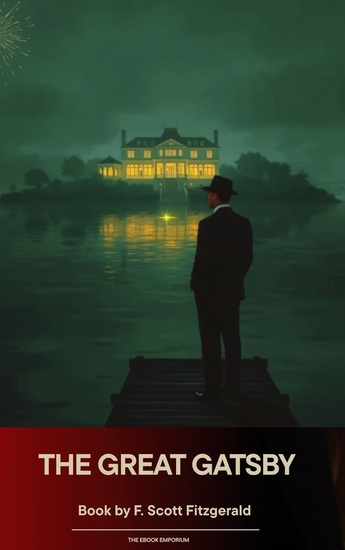
"So we beat on, boats against the current, borne back ceaselessly into the past."

In the sweltering summer of 1922, young bondsman Nick Carraway moves to West Egg, Long Island, finding himself neighbor to the mysterious millionaire Jay Gatsby. Gatsby is famous for his decadent, star-studded parties, yet he remains a man of shadows, driven by a singular, consuming purpose: to reclaim the love of the beautiful, ethereal Daisy Buchanan. As the jazz plays and the champagne flows, Fitzgerald unfolds a glittering tragedy of social climbing, infidelity, and the high cost of reinventing one's past.

The Gilded Surface of the 1920s: Fitzgerald's prose captures the frantic energy of the Prohibition era—the "flapper" culture, the illegal speakeasies, and the soaring stock market. Yet beneath the sequins and the yellow Duesenbergs lies a biting critique of a society hollowed out by materialism. Through the eyes of the "within and without" narrator Nick Carraway, we witness the careless cruelty of the ultra-wealthy.

Symbolism and the Soul: From the haunting "Eyes of Doctor T.J. Eckleburg" overlooking the Valley of Ashes to the iconic "Green Light" at the end of Daisy's dock, the novel is a masterclass in symbolism. It explores the impossibility of repeating the past and the tragic vulnerability of the romantic heart in a cynical world. The Great Gatsby remains the quintessential American novel, questioning if any amount of gold can truly buy a seat at the table of the elite.

Step into the world of Gatsby. Purchase "The Great Gatsby" today and experience the most beautiful and brutal story of the 20th century.
Mostra libro





