Unisciti a noi in un viaggio nel mondo dei libri!
Aggiungi questo libro allo scaffale
Grey
Scrivi un nuovo commento Default profile 50px
Grey
Iscriviti per leggere l'intero libro o leggi le prime pagine gratuitamente!
All characters reduced
The Mesnevi - cover

The Mesnevi

Maulana Jalal al-Din Rumi

Traduttore James W. Redhouse

Casa editrice: DigiCat

  • 0
  • 0
  • 0

Sinossi

The Mesnevi, a monumental work by the 13th-century Persian poet and Sufi mystic Maulana Jalal al-Din Rumi, is a profound exploration of spiritual themes interwoven with intricate storytelling. Composed of six books, Rumi's verses employ a rhymed couplet form, blending narrative and lyric poetry to convey profound philosophical insights. Rich in allegory, The Mesnevi addresses moral dilemmas, the nature of love, and the quest for self-knowledge, often drawing on parables and tales that resonate with universal truths and spiritual wisdom against the backdrop of Islamic mysticism. Maulana Jalal al-Din Rumi, born in present-day Afghanistan, was deeply influenced by the socio-political turmoil of his time, as well as the spiritual teachings of his mentor, Shams-e Tabrizi. Rumi's works emerge from a unique fusion of Persian, Arabic, and Greek thought, reflecting his diverse intellectual landscape. His personal experiences of love, loss, and transcendence are intricately woven into his poetry, revealing a commitment to exploring the depth of human emotion and spirituality. For readers seeking a deeper understanding of Sufi philosophy and its poetic expressions, The Mesnevi is essential. Rumi's work offers not only spiritual guidance but also a universal lens through which to view the human experience. Engaging with The Mesnevi will inspire readers to reflect on their own spiritual journeys, making it a timeless companion for seekers and scholars alike.
Disponibile da: 13/06/2022.
Lunghezza di stampa: 324 pagine.
Altri libri che potrebbero interessarti

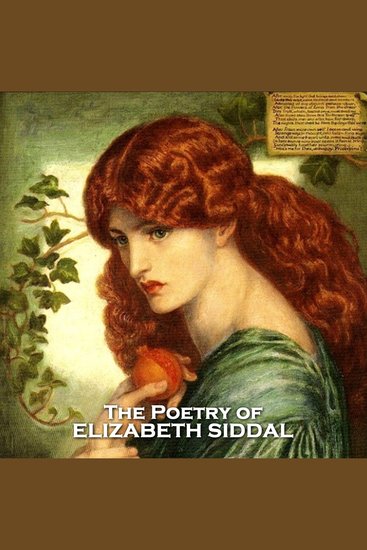
  • The Poetry of Elizabeth Siddal - Talented poet who was also one of the most famous art models of her age - cover

    The Poetry of Elizabeth Siddal -...

    Anonimo

    • 0
    • 0
    • 0
    Elizabeth Eleanor Siddall was born on the 25th July, 1829 in London into a working-class family where she received an ‘ordinary education’.   
    Whilst accounts differ, it is clear that she met the Pre-Raphaelite painter William Deverell whilst working in a millinery shop and he asked her to model for him, describing her as "magnificently tall, with a lovely figure, and a face of the most delicate and finished modelling ... she has grey eyes, and her hair is like dazzling copper, and shimmers with luster."  She personified female beauty for the Pre-Raphaelite Brotherhood and her face became well known in Victorian Britain, gracing many famous paintings such as John Everett Millais's Ophelia, where she is portrayed drowned, floating in a pond. From the experience she also caught pneumonia.  
    Although Siddal (she later changed the spelling of her name) endured a toxic and probably controlling relationship with Dante Gabriel Rossetti, who wouldn’t allow her to model for anyone but himself, she made great strides under his tuition and in her endeavours as an artist.  She was the only woman to exhibit with the Pre-Raphaelites in 1857 where she sold one of her paintings to an American collector. 
    She created many paintings, often inspired by Medieval themes, but her output of poetry was scant despite the positive reception to her verse.  Their motifs were sad and often tragic, dwelling on lost or doomed love.  As well they suggest a strong connection with nature and often plead with God with a haunting yet evocative simplicity. 
    Allied to this was a laudanum addiction which may have contributed to a still-born birth in 1861 and from which she never fully recovered.   
    Elizabeth Siddal committed suicide by an overdose, whilst pregnant, on the 11th February 1862.  She was 32.
    Mostra libro
  • The Creditors - A Tragedy in One Act - cover

    The Creditors - A Tragedy in One...

    August Strindberg

    • 0
    • 0
    • 0
    When is vengeance justified? And to what extent? 
    Adolf, an artist, is having martial problems with his independent wife Tekla. Meanwhile, Gustav, his friend, attempts to get Adolf to stand up for himself and "be the man of the house." But behind all of this superficial talk is a psychological war being waged on three fronts, and each party will do nearly anything to get their desires met. The only question now, is who will be the first to fall.... 
    Join me in experiencing the first of many plays by August Strindberg this season, where we'll be exposed to various forms of existentialism, interpersonal dynamics, and the struggle for power amidst some light-hearted satire by Guy Wetmore Carryl. But for now, please, sit back, relax, and enjoy, "The Creditors."
    Mostra libro
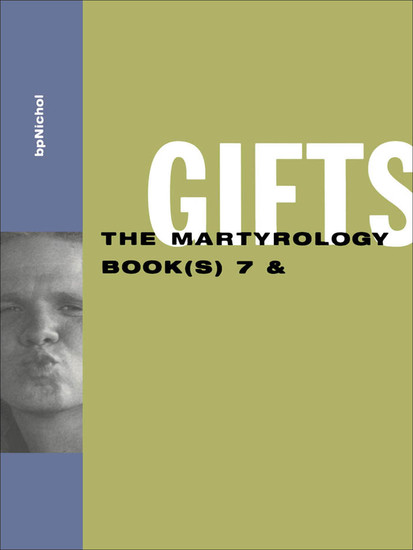
  • Gifts: The Martyrology Book(s) 7 & - The Martyrology Book(s) 7 & 8 - cover

    Gifts: The Martyrology Book(s) 7...

    bp Nichol

    • 0
    • 0
    • 0
    ‘All of Nichol’s work is stamped by his desire to create texts that are engaging in themselves as well as in context, and to use indirect structural and textual devices to carry meaning. In The Martyrology different ways of speaking testify to a journey through different ways of being. Language is both the poet’s instructor and, through its various permutations, the dominant "image" of the poem. The [nine] books of The Martyrology document a poet’s quest for insight into himself and his writing through scrupulous attention to the messages hidden in the morphology of his own speech.’—Frank Davey
    Mostra libro
  • Shed: Exploded View - cover

    Shed: Exploded View

    Phoebe Eclair-Powell

    • 0
    • 0
    • 0
    'There was a fork in her face. An actual fork. He dug a fork into her face. A fork stood on end in her cheek. A fork.'
    The smallest tremble. A smashed glass. The ripping apart of space and time.
    Three couples. Thirty years. Mothers and daughters. Lovers, partners, husbands and wives. Babies, teenagers, birthdays, holidays, honeymoons, fireworks, near-misses, rain. This is a play about all of it.
    A devastating and delicately woven piece about violence, love and loss, Phoebe Eclair-Powell's Shed: Exploded View won the 2019 Bruntwood Prize for Playwriting. Partly inspired by Cornelia Parker's stunning artwork Cold Dark Matter: An Exploded View, it was first performed at the Royal Exchange Theatre, Manchester, in 2024, directed by Atri Banerjee.
    Mostra libro
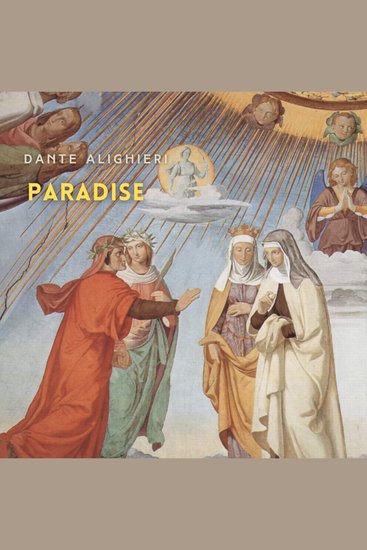
  • Paradise - cover

    Paradise

    Anonimo

    • 0
    • 0
    • 0
    Dante Alighieri’s Paradise, the final part of The Divine Comedy, is a sublime journey through the celestial spheres of Heaven, guided by the idealized Beatrice, symbolizing divine love and theology. As Dante ascends through the nine heavens—Moon to the Empyrean—he encounters blessed souls, explores virtues, and contemplates divine mysteries, free will, and the nature of God. The poem culminates in a transcendent vision of the Holy Trinity, where human reason surrenders to divine grace. Blending poetic beauty, medieval cosmology, and profound spirituality, Paradise celebrates the soul’s ultimate fulfillment in God’s eternal light, offering a powerful vision of love, order, and salvation.
    Mostra libro
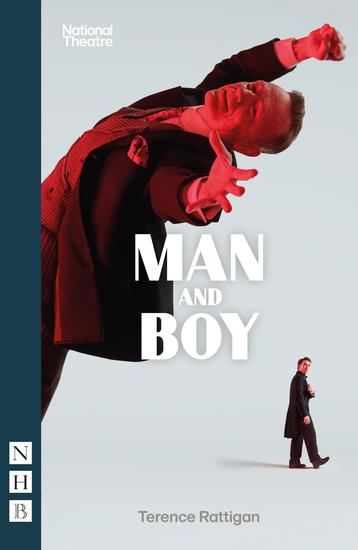
  • Man and Boy - cover

    Man and Boy

    Terence Rattigan

    • 0
    • 0
    • 0
    'In finance, man makes his own miracles.' 
    Jazz, Broadway and the Great Depression. In 1930s New York City, international financier Gregor Antonescu's luck has finally run out. As news of a catastrophic business deal ripples across the world, he flees to the apartment of his estranged son Basil.
    There, Gregor will need all of his ruthlessness and ingenuity to save his reputation and keep his empire from collapse. But will he risk using his only son as a pawn in one last power play? 
    A sharp and gripping tale of paternity and corruption, Terence Rattigan's play Man and Boy was first performed in London in 1963. This edition was published alongside a revival at the National Theatre, London, in 2026. It features Rattigan's final version of the play, with an authoritative introduction by Rattigan scholar Dan Rebellato and an afterword by Anthony Lau, director of the revival.
    Mostra libro