Unisciti a noi in un viaggio nel mondo dei libri!
Aggiungi questo libro allo scaffale
Grey
Scrivi un nuovo commento Default profile 50px
Grey
Iscriviti per leggere l'intero libro o leggi le prime pagine gratuitamente!
All characters reduced
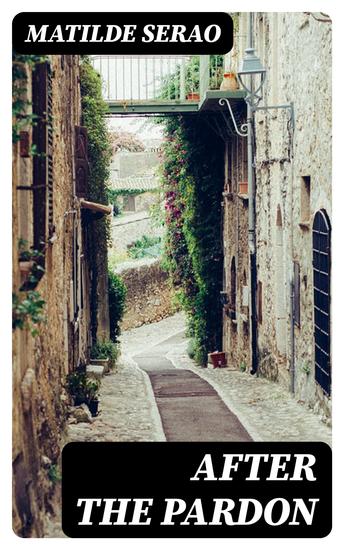
After the Pardon - cover

After the Pardon

Matilde Serao

Casa editrice: DigiCat

  • 0
  • 0
  • 0

Sinossi

In "After the Pardon," Matilde Serao delves into the complexities of human emotion and societal obligation through the lens of familial ties and the pursuit of redemption. Set against the backdrop of early 20th century Naples, Serao employs a rich, impressionistic prose style that intricately weaves the threads of love, guilt, and forgiveness. The novel explores the lives of its characters as they navigate an evolving social landscape, revealing the nuances of their moral dilemmas. Serao's ability to capture the subtleties of interpersonal relationships reinforces her position as a significant voice within the verismo movement, which sought to depict the realities of life with an unflinching gaze. Matilde Serao (1856-1927) was a pioneering Italian journalist and novelist, often considered the first female journalist in Italy. Her personal experiences, including her tumultuous upbringing and profound observations of societal injustice, significantly influenced her writing. "After the Pardon" reflects Serao's deep empathy for her characters while also critiquing the cultural norms of her time, showcasing her commitment to giving a voice to the marginalized. This novel is highly recommended for readers interested in literary explorations of morality and social dynamics, as Serao's poignant narrative invites reflection on the human condition. "After the Pardon" not only captivates with its emotional depth but also serves as a compelling social commentary, making it an indispensable addition to any literary collection.
Disponibile da: 15/09/2022.
Lunghezza di stampa: 172 pagine.
Altri libri che potrebbero interessarti

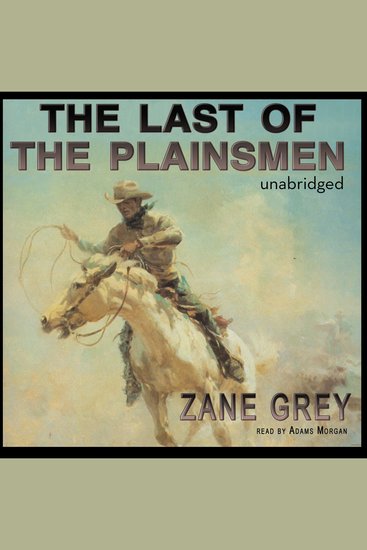
  • The Last of the Plainsmen - cover

    The Last of the Plainsmen

    Zane Grey

    • 0
    • 0
    • 0
    “Hezd rope the devil and tie him down...if the lasso didn’t burn,” it was said of “Buffalo Jones,” one of the last of the famous plainsmen who trod the trails of the Old West. Killing was repulsive to him and the passion of his life was to capture wild beasts alive. When he saw that the extinction of the buffalo was inevitable, he labored for ten years pursuing, capturing and taming the noble beasts, for which the West gave him fame and the name Preserver of the American Bison. 
    In this thrilling story of a hunting trip with Jones, Zane Grey speaks firsthand of the great man’s courage and prowess; how he roped the ferocious cougar and took it, clawing and spitting, back to camp; how he nearly captured White King, the glorious leader of a herd of wild mustangs; and how the whole party made camp under the aurora borealis and hunted polar wolves. 
    “I want to show the color and beauty of those painted cliffs and the long, brown-matted bluebell-dotted aisles in the grand forests; I want to give a suggestion of the tang of the dry, cool air; and particularly, I want to throw a little light upon the life and nature of that strange character and remarkable man, Buffalo Jones.”—Zane Grey
    Mostra libro
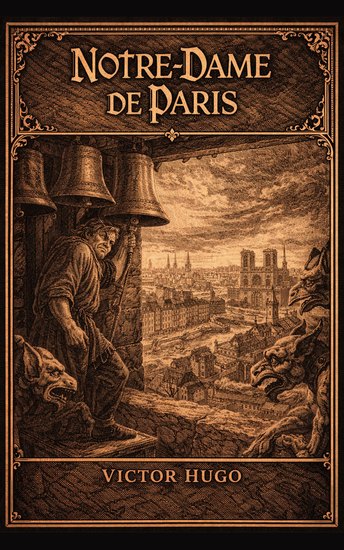
  • Notre-Dame de Paris - cover

    Notre-Dame de Paris

    Victor Hugo

    • 0
    • 0
    • 0
    Notre-Dame de Paris is Victor Hugo's sweeping masterpiece of passion, fate, and social injustice, set against the majestic backdrop of fifteenth-century Paris. Known in English as The Hunchback of Notre Dame, this monumental novel brings to life a world of towering cathedrals, shadowed alleyways, wandering performers, and the stark divide between privilege and poverty. At its heart lies a powerful meditation on love, obsession, and the cruelty of societal judgment.
    
    The story revolves around the magnificent cathedral of Notre-Dame, which stands not merely as a setting but as a living symbol of history, faith, and human achievement. Within its walls and beneath its bells lives Quasimodo, the deformed and deaf bell-ringer whose outward appearance masks a soul capable of profound loyalty and tenderness. Raised by the austere Archdeacon Claude Frollo, Quasimodo has known little of the world beyond stone towers and echoing chimes.
    
    When the beautiful and free-spirited Esmeralda, a young Romani dancer, captures the attention of Paris with her grace and kindness, she unwittingly becomes the center of a tragic web of desire and obsession. Frollo, torn between religious devotion and overwhelming passion, descends into jealousy and moral conflict. Meanwhile, the handsome Captain Phoebus represents superficial charm and careless attraction, adding further tension to an already volatile situation.
    
    Hugo masterfully intertwines the fates of these characters, revealing how love can inspire sacrifice or ignite destruction. Through Quasimodo's silent devotion, Esmeralda's innocence, and Frollo's consuming obsession, the novel explores themes of beauty and ugliness, virtue and corruption, fate and free will. Hugo challenges readers to look beyond appearances and question the rigid moral codes of society.
    
    Beyond its unforgettable characters, Notre-Dame de Paris is also a vivid portrait of medieval Paris. Hugo's rich descriptions bring the bustling streets, grand festivals, and dark underworld of the city to life. He expresses deep reverence for Gothic architecture and laments the neglect of historical monuments, making the cathedral itself a central figure in the narrative. The novel played a significant role in inspiring the preservation of Gothic architecture in France.
    
    At once romantic and tragic, dramatic and philosophical, this novel stands as one of the greatest works of nineteenth-century literature. Hugo combines sweeping storytelling with social critique, exposing injustice while celebrating compassion and humanity. The result is a timeless tale that resonates across generations.
    
    Powerful, emotional, and unforgettable, Notre-Dame de Paris remains a cornerstone of world literature—a story of longing, sacrifice, and the enduring strength of the human heart set beneath the shadow of one of history's most iconic cathedrals.
    Mostra libro
  • The Beloved Vagabond - cover

    The Beloved Vagabond

    William John Locke

    • 0
    • 0
    • 0
    The vagabond, Paragot, a truly eccentric bohemian and a wandering scholar with a mysterious past, adopts a London street urchin (whom he calls Asticot) by purchasing him from his mother for half a crown. Paragot leads Asticot on various adventures through 19th century Europe, eventually arriving in Paris. Here Paragot’s dark romantic past begins to catch up with him. (Summary by Simon Evers)
    Mostra libro
  • Life After Kafka - cover

    Life After Kafka

    Magdaléna Platzová

    • 0
    • 0
    • 0
    A novel of Felice Bauer, Franz Kafka's first fiancée, and the story behind Letters to Felice 


    Franz Kafka scholars know Felice Bauer, his onetime fiancée, through his Letters to Felice, as little more than a woman with a raucous laugh and a taste for bourgeois comforts. Life After Kafka is her story. The novel begins in 1935 as Felice flees with her children from Hitler's Berlin, following her family and members of Kafka's entourage—including Grete Bloch, Max Brod, and Salman Schocken—as they try to escape the horrors of the Holocaust. Years later, a man claiming to be Kafka's son approaches Felice's son in Manhattan and the drama surrounding Kafka's letters to Felice begins. 


    While taking the measure of literary fame's long shadow, Life After Kafka depicts the magic and poison of memories, and what we cling to when all else is lost. Most of all, it illuminates the bravery required to move forward through the shattered remains of one world to rebuild life in a new one.
    Mostra libro
  • King Henry's Champion - cover

    King Henry's Champion

    Griff Hosker

    • 0
    • 0
    • 0
    The Empress has given England a male heir but that single action creates rebels in Scotland and in Normandy who try to wrest Normandy and England from King Henry. When the Earl of Cleveland becomes his champion, it unleashes a storm of murder and treachery at the very heart of the Earl's world. In a fast moving novel with battles and combats from the borders of Scotland to France itself we see a world heading towards anarchy and civil war.
    Mostra libro
  • The Flames - cover

    The Flames

    Sophie Haydock

    • 0
    • 0
    • 0
    Set in the extravagant, Bohemian art world of early twentieth century Vienna, the electrifying untold story of the four women who posed for and inspired the groundbreaking erotic art of controversial painter Egon Schiele 
    Amid an opulent society living under the shadow of war are four muses, women whose bodies were shown in intimate detail, depicted by the charming yet controversial artist Egon Schiele. Adele, his passionate and fierce admirer; Gertrude, his sister who survived their blighted childhood but is possessive, single-minded, and jealous; his mistress Vally, a poor young woman from a bad background but with steel at her core; and the two very different Harms sisters, Edith and Adele, both of whom vie to become Schiele’s wife. 
    Over the course of little more than a decade, the four women risk everything—their reputations, their most precious relationships, and their sanity and souls—as they try to hold on to the man they adore. As World War I throws their lives off course forever, and the Spanish influenza pandemic ravages Europe, threatening everyone in its path, one question remains: Will any of them emerge unscathed from their relationship with this man? 
    Sophie Haydock’s The Flames reimagines the intertwining lives of these women: four wild, blazing hearts longing to be known. In an elegant Bohemian city like 1900s Vienna, everything seems possible. But just as a flame has the power to mesmerize, it can also destroy.
    Mostra libro