Join us on a literary world trip!
Add this book to bookshelf
Grey
Write a new comment Default profile 50px
Grey
Subscribe to read the full book or read the first pages for free!
All characters reduced
Peer Learning - cover

Peer Learning

Mason Ross

Translator A AI

Publisher: Publifye

  • 0
  • 0
  • 0

Summary

Peer Learning explores the transformative potential of collaborative education, demonstrating how students can achieve deeper understanding through group interactions. Moving beyond traditional lecture-based methods, the book highlights the cognitive and social benefits of peer interaction, emphasizing that learning is inherently a social process where students construct knowledge by challenging assumptions and articulating understandings.

 
It argues that well-structured peer learning significantly enhances cognitive development, social skills, and academic performance, supported by research in social constructivism and cognitive psychology. The book provides educators with a comprehensive toolkit, offering practical guidance on designing effective collaborative learning environments and overcoming common challenges in group work, such as dominance or free-riding.

 
Techniques like think-pair-share and jigsaw are explored in detail, with examples and case studies illustrating successful implementations across various disciplines. By combining theoretical insights with practical strategies, Peer Learning offers a nuanced understanding of fostering successful collaboration in educational settings.

 
The book progresses from theoretical frameworks, drawing upon cognitive and social psychology, to specific collaborative learning techniques and methods for assessing collaboration. It addresses ongoing debates, such as optimal group size and the role of technology, presenting a balanced perspective on the complexities of peer learning and its integration into diverse educational settings.
Available since: 03/11/2025.
Print length: 90 pages.

Other books that might interest you

  • Celestial Dynasties - A retelling of Srimad Bhagavatam Canto 9 - cover

    Celestial Dynasties - A...

    Krishna Dharma, Chintamani Dhama...

    • 0
    • 0
    • 0
    Celestial Dynasties’ refers to those of the sun and moon gods, in which both Lord Rama and Lord Krishna respectively appeared. The ninth canto traces both lines up to their appearances, giving details of their significant ancestors such as King Ambarisha, who overcame the powerful mystic Durvasa; Parasurama, who destroyed the world’s kshatriyas twenty-one times; Pururava, who married the celestial girl, Urvasi; King Yayati, who wed Sage Shukra’s daughter, Devayani, only to be cursed by him with premature old age; plus many other fascinating accounts of sages, kings and gods who preceded the two divine incarnations. The authors give a dramatic rendition of the original text, which both entertains and educates, bringing out the profound messages of the Bhagavatam.
    Show book
  • Whigs and Republicans The: The History of the 19th Century Parties that Led the Modern Conservative Movement in America - cover

    Whigs and Republicans The: The...

    Charles River Editors

    • 0
    • 0
    • 0
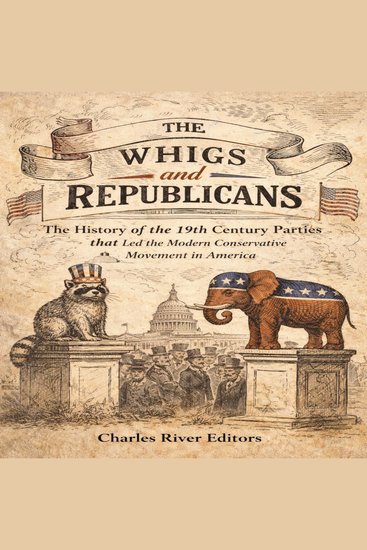
    The Whigs emerged as opponents to the Jacksonian Democrats during a period of American history known as the Second Party System (1828-1854). Initially, the conflict was rooted not only in different visions for the United States – the Whigs believed in a strong central bank and federally funded infrastructure projects (known as “internal improvements”) – but also in opposition to one man: Andrew Jackson. When it first formed, the Democratic Party coalesced around Jackson, and his beliefs and actions became Democratic Party dogma, which left the diverse group of people who opposed Jackson to become the Whigs.  
    The problem with this arrangement is that while the Whigs scored some notable successes as an opposition party, they found governing more difficult. The two Whigs elected president, William Henry Harrison and Zachary Taylor, died in office, raising to the presidency their respective vice-presidents, John Tyler and Millard Fillmore. Neither man succeeded in uniting the Whig Party behind him (a gargantuan task, to be sure), and neither was ever elected president in his own right. 
    The Republican Party essentially succeeded the Whigs, and it has led a winding nature ever since. Now dominant in the American South, the party was anathema in the South for more than a century. Likewise, if someone asked a man on the street in the early 1900s to describe the Republican Party, he might point to Teddy Roosevelt’s efforts on behalf of progressive politics and conservation, whereas a few years later, the party was known as a protector of big business, and later law and order. During the Reagan Era, the words “small government” came to characterize the party, even as its leaders took one hit after another for wanting to limit social spending. During its more than 150 years of existence, it has nominated saints and scoundrels, seen some men make it to the White House and others not.
    Show book
  • Addiction - What Everyone Needs to Know - cover

    Addiction - What Everyone Needs...

    Suzette Glasner

    • 0
    • 0
    • 0
    While historically a topic of great interest, controversies and general public discourse surrounding addiction have been growing rapidly, particularly in light of the rising death toll resulting from the opioid epidemic. In light of the common misconception that addictive behaviors are entirely volitional, misinformation and stigma have had a deleterious impact on the public's understanding concerning the nature, causes, and treatments of substance use disorders. Despite decades of research and tens of thousands of published and peer-reviewed investigations, critics continue to ask whether addiction is a genuine medical condition or a choice. 


    In Addiction, leading expert in the science and treatment of addiction Suzette Glasner aims to clear the air of some of the most polarizing and misleading information that dominates public thinking about addiction. Providing straight talk and sound guidelines for the general public as well as health professionals and policymakers, Glasner raises important questions related to addiction and answers them in an accessible yet empirically informed manner throughout the book. Offering an insightful overview of addiction from its origins, to forms of treatment and complications, this book will be the go-to resource for authoritative, up-to-date, accurate, and compelling information about this topic.
    Show book
  • 200 Years of Lifesaving at Sea - cover

    200 Years of Lifesaving at Sea

    Mirrorpix

    • 0
    • 0
    • 0
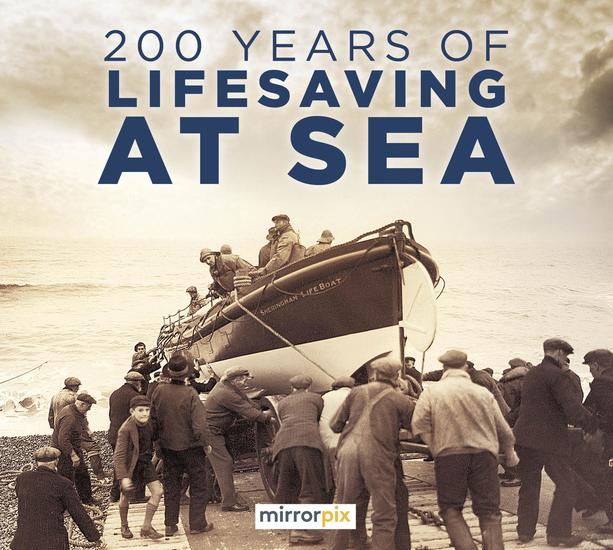
    On 4 March 1824, thirty philanthropic gentlemen – including the abolitionist William Wilberforce and Archbishop of Canterbury Charles Manners-Sutton – met in a London pub. Here, the Royal National Lifeboat Institution was born.
    In the following 200 years, the RNLI has been woven into the fabric of our island nation, saving over 144,000 lives, despite some rescuers losing their own in the process. With over 100 fascinating images from Mirrorpix, one of the world's biggest photo libraries, 200 Years of Lifesaving at Sea is a testament to the brave folk who sailed and continue to sail towards danger, rather than away from it.
    Show book
  • The Shortest History of Innovation - From the Wheel to Gene Editing AI and Beyond - How New Ideas Shape Our World - cover

    The Shortest History of...

    Andrew Leigh

    • 0
    • 0
    • 0
    From the bestselling author of How Economics Shape Our World, a brisk history of how innovation is cultivated and its influence on everything from art to AI 
     
    Scientists, economists, and historians are always looking into the past in order make informed decisions about how to improve our future. Though our modern-day innovations are often mind-boggling (gene editing and fabricated ecosystems come to mind), they would not exist without their predecessors—someone had to invent the wheel. 
     
    In The Shortest History of Innovation, bestselling author Andrew Leigh tells the story of human innovation by identifying three of its most essential driving forces: tinkering, teams, and trade. Unveiling the surprising linchpins behind the everyday innovations that we take for granted, Leigh takes a closer look at the myriad ways ideas are developed, the forces that suppress them, and how they travel and evolve across borders and disciplines. 
     
    From technologies and tools to art and feats of engineering, innovation is everywhere. Drawing on his background as an economist and his experience as a decision-maker in Australia's House of Representatives, Leigh revisits history with fresh eyes and deftly connects it to the rapid innovation taking place today. The result is a lively, compact look at the engines powering progress.
    Show book
  • Tecumseh and Tenskwatawa: The Lives and Legacies of the Shawnee’s Famous Leaders - cover

    Tecumseh and Tenskwatawa: The...

    Editors Charles River

    • 0
    • 0
    • 0
    Throughout the 19th century, American settlers pushing across the Western frontier came into contact with diverse American tribes, producing a series of conflicts ranging from the Great Plains to the Southwest, from the Trail of Tears to the Pacific Northwest. Indian leaders like Geronimo became feared and dreaded men in America, and Sitting Bull’s victory over George Custer’s 7th Cavalry at Little Bighorn was one of the nation’s most traumatic military endeavors.  
    	Given this history, Tecumseh’s reputation among Americans has been both the most unique and anomalous. As the leader of the Shawnee, Tecumseh was the most famous Native American of the early 19th century, and he attempted to peacefully establish a Native American nation east of the Mississippi River in the wake of the American Revolution. While Native Americans, especially in the “Old Northwest” (present-day land west of the Appalachian Mountains and east of the Mississippi River), understood and recognized their own, long established territories and those of other tribes, these boundaries and territories were ignored and unappreciated by the incoming settlers.  
    	What makes Tecumseh’s legacy ironic is that the Shawnee were nominally led by a different man altogether, and that man just so happened to be Tecumseh’s brother. Lalawethika’s early life mostly consisted of abject failures, and he became an alcoholic, but in one of his alcohol-soaked stupors, he began to have visions of the Master of Life that turned him into the Open Door, the prophet named Tenskwatawa. It was Tenskwatawa who brought a new vision to the Shawnee, transforming himself from an object of pity and contempt into a religious leader who had thousands of followers. When the Americans fought at Tippecanoe, the gathering of Native Americans who they were attempting to disperse had congregated at a place colloquially known as Prophetstown. 
    Show book