Unisciti a noi in un viaggio nel mondo dei libri!
Aggiungi questo libro allo scaffale
Grey
Scrivi un nuovo commento Default profile 50px
Grey
Iscriviti per leggere l'intero libro o leggi le prime pagine gratuitamente!
All characters reduced
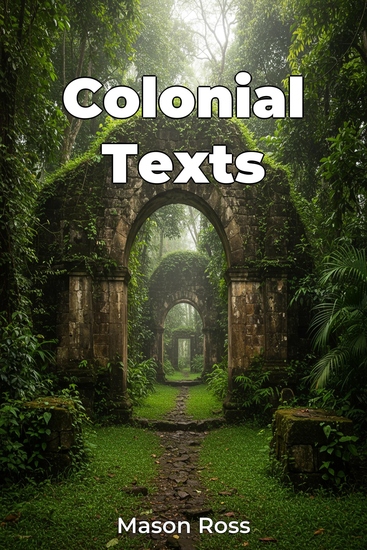
Colonial Texts - cover

Colonial Texts

Mason Ross

Traduttore A AI

Casa editrice: Publifye

  • 0
  • 0
  • 0

Sinossi

Colonial Texts examines colonialism's profound impact on literature and how post-colonial theory aids in understanding its lasting effects. It explores how colonial rule shaped literary themes, amplified certain voices, and suppressed others, altering literary landscapes in complex ways. Literature serves as a reflection of colonial power dynamics, offering insights into ideologies, social structures, and cultural exchanges. The book emphasizes the need to understand historical contexts to grasp the full impact of colonialism on literary production.

 
The book introduces core concepts, like Orientalism and hybridity, and analyzes specific literary works from diverse colonial settings. It investigates how colonial authorities used literature to reinforce dominance and shape perceptions, while also exploring counter-narratives from those under colonial rule. Colonial Texts demonstrates the continued relevance of colonial themes in modern post-colonial literature, shaping contemporary identities and cultural expressions.

 
Beginning with an introduction to colonial and post-colonial literary theory, the book progresses through analyses of canonical European texts and indigenous literatures, culminating in an examination of modern post-colonial literature. By employing methodologies from literary criticism, post-colonial studies, and historical research, Colonial Texts provides a balanced approach, offering both a historical overview and a critical exploration of theoretical frameworks.
Disponibile da: 06/05/2025.
Lunghezza di stampa: 55 pagine.


Altri libri che potrebbero interessarti

  • Pearl Harbor - The Attack That Brought America into the Global Conflict - cover

    Pearl Harbor - The Attack That...

    Sage Winters

    • 0
    • 0
    • 0
    The path to the attack on Pearl Harbor was paved by years of escalating tension between Japan, the United States, and other global powers. By the 1930s, Japan had increasingly pursued aggressive territorial expansion in Asia. The country sought to secure resources to fuel its growing industrial machine, leading to its invasion of China and the creation of the Greater East Asia Co-Prosperity Sphere. This expansionist ideology put Japan on a collision course with Western powers, particularly the United States, who had significant economic interests in the Pacific region. 
      
    As Japan moved to solidify its dominance in Asia, the United States responded with growing concern and diplomatic opposition. American policymakers viewed Japan’s actions as a direct threat to regional stability and their own economic interests, especially in China and the Philippines. By the late 1930s, the United States had placed significant economic sanctions on Japan, including an oil embargo that severely limited Japan’s access to vital resources. The embargo further strained relations between the two nations, as Japan’s need for oil and raw materials became critical to its war machine. 
      
    In response, Japan’s leadership became more determined to secure access to Southeast Asia’s oil reserves. The Japanese government began to focus on expanding its influence over the Dutch East Indies, British Malaya, and other territories rich in natural resources. Japan’s growing militarism and its desire for expansion were met with an increasingly isolationist stance from the United States. The U.S. saw Japan’s actions as imperialistic, but its leaders were hesitant to directly intervene, largely due to the isolationist sentiments that permeated American politics following World War I.
    Mostra libro
  • The Power of Potential - How a Nontraditional Workforce Can Lead You to Run Your Business Better - cover

    The Power of Potential - How a...

    Tom D'Eri

    • 0
    • 0
    • 0
    Read by the author. 
     “A powerful, game-changing book. Tom's approach is changing lives.” 
    — Seth Godin, Author of This is Marketing 
      
    Discover how supporting employment for people with autism unlocked new ways of running a business—and revealed transformative lessons for all of us. 
    Rising Tide Car Wash in Parkland, Florida, isn’t average in any way. When Tom D’Eri and his father John bought the location in 2013, they wanted to create employment opportunities for workers with autism. Like 1 in 54 Americans, Tom’s brother Andrew has autism, and he was facing lifelong unemployment. So the family set out on a mission to provide professional opportunities for people like Andrew, starting with one car wash. Now it’s one of the highest-volume washes in Florida. Its employee retention rate is five times that of its competitors. It has spun off into two additional locations that have been immediately successful, and the business is absurdly profitable. 
    The Power of Potential tells the inspiring, surprising reason why: The wash’s excellence isn’t in spite of their unusual workforce, but because of it. Thanks to their neurodivergent staff, the Rising Tide team was able to discover and correct common problems that typically fly under the radar in businesses, including:You hire based on interviewsYou think great talent is the secret to a great businessYour managers are “good enough”You fire your worst employees 
    By spotting and correcting these hidden problems, any business—with any kind of workers—can achieve unexpected wins and leave average behind. At Rising Tide, solving these problems resulted in four unexpected wins that added up to a culture of excellence:Every employee felt safeAccountability became a tool for growthEveryone’s work gave them a sense of purposeCustomers loved their experience 
      
    Figures and employee profiles are included in the audiobook companion PDF download. 
     
    Mostra libro
  • Muchos colores So Many Colors - cover

    Muchos colores So Many Colors

    Kim Mitzo Thompson, Karen Mitzo...

    • 0
    • 0
    • 0
    A los niños les encantará esta divertida historia sobre colores y objetos que representan cada color. Disfrutarán escuchando esta adorable historia que presenta efectos de sonido y voces profesionales para ayudar a los niños a desarrollar vocabulario y mejorar sus habilidades auditivas. La historia se presenta primero en español y luego en inglés, lo que lo convierte en un recurso maravilloso para que los niños aprendan un idioma diferente. Las oraciones simples, la enunciación clara y las palabras repetitivas alentarán a los niños a enamorarse de contar historias y aprender un nuevo idioma. 
     
    Kids will love this playful story about colors and objects that represent each color. They will enjoy listening to this adorable story that features sound effects and professional voices to help children develop vocabulary and improve listening skills.  The story is first presented in Spanish and then in English making this a wonderful resource for children learning a different language.  Simple sentences, clear enunciation, and repetitive words will encourage children to fall in love with storytelling and learning a new language.
    Mostra libro
  • A History of Some of China’s Most Famous Landmarks - cover

    A History of Some of China’s...

    Editors Charles River

    • 0
    • 0
    • 0
    China has always fascinated outsiders, much in the same way that distant light fascinates someone looking down a dark road. It is both familiar and mysterious, ancient and new, and fully understanding it seems to always remain just out of reach. From the Great Wall to the ancient teachings of Confucius, China’s natural and man-made wonders have been topics of interest among Westerners since the Middle Ages and the pursuit of trade routes both by land and sea, amazing Marco Polo and 19th century British expeditions in similar ways despite the passage of several centuries between them. 
    The Great Wall of China is perhaps the wonder of the world that has most captured the human imagination, and as the quotes about it indicate, the wall has acquired special significance even outside of China. The places and ways in which it has taken hold vary greatly, but one thing is certain: the Great Wall of China is as amazing as it is mysterious, and it’s as mundane as it is magical. Naturally, the Wall has become the most recognizable symbol of China, used for both aggrandizement and criticism. Nationalists see it as a symbol of China's peaceful nature, engineering capability, and historic longevity, while detractors see the Wall as the embodiment of China's backwardness, closed-mindedness, and hubris. Though the wall can symbolize all of these things about China, it is important to remember that the many long walls. upon some of which the current landmark was constructed, were put up by specific people for specific purposes. 
    People across the world were excited when it was revealed in 1974 that archaeologists had uncovered a new and amazing find: an underground army consisting of thousands of clay soldiers, still standing at their posts despite being over 2,000 years old. In addition to the remarkable feats of craftsmanship and the size and scale of the Terracotta Army, modern people could not quite wrap their minds around.
    Mostra libro
  • Most Famous Walls of Antiquity The: The History of the Ancient World’s Greatest Defensive Fortifications - cover

    Most Famous Walls of Antiquity...

    Charles River Editors

    • 0
    • 0
    • 0
    Throughout history, walls have been constructed as part of nations’ and kingdoms’ defensive structures to keep barbarian hordes, marauding rebels, and recalcitrant tribes out of defined geographic areas. Defensive walls were usually constructed by fairly advanced and sophisticated peoples, such as the Romans and Chinese, with varying degrees of success. Of course, the most famous of all defensive walls in the world is the Great Wall of China, which is actually a series of walls and forts built over the span of several centuries. The Chinese built the Great Wall of China, and several others, primarily to keep invaders from the north, such as the Mongols, out of their land, or at least to slow them down as they fled north after raids. The Romans also built spectacular walls, most notably the Antonine Wall and Hadrian’s Wall. The purpose of those walls was to set the northern limit of the Roman Empire at approximately the modern border of England and Scotland, and, like the Great Wall of China, it was intended to keep out or slow down marauding barbarian tribes from the north.  
    The Great Wall of China is perhaps the wonder of the world that has most captured the human imagination, and as the quotes about it indicate, the wall has acquired special significance even outside of China. The places and ways in which it has taken hold vary greatly, but one thing is certain: the Great Wall of China is as amazing as it is mysterious, and it’s as mundane as it is magical. 
    The Romans were master builders, and much of what they built has stood the test of time. Throughout their vast empire they have left grand structures, from the Forum and Pantheon in Rome to the theatres and hippodromes of North Africa and the triumphal gates in Anatolia and France. Wherever they went, the Romans built imposing structures to show their power and ability, and one of their most impressive constructions was built on the northernmost fringe of the empire. 
    Mostra libro
  • Map Addict: The Bestselling Tale of an Obsession - cover

    Map Addict: The Bestselling Tale...

    Mike Parker

    • 0
    • 0
    • 0
    'My name is Mike and I am a map addict. There, it's said…' 
    Maps not only show the world, they help it turn. On an average day, we will consult some form of map approximately a dozen times, often without even noticing: checking the A-Z, the road atlas or the Sat Nav, scanning the tube or bus map, a quick Google online or hours wasted flying over a virtual Earth, navigating a way around a shopping centre, watching the weather forecast, planning a walk or a trip, catching up on the news, booking a holiday or hotel. Maps pepper logos, advertisements, illustrations, books, web pages and newspaper and magazine articles: they are a cipher for every area of human existence. At a stroke, they convey precise information about topography, layout, history, politics and power. They are the unsung heroes of life: Map Addict sings their song. 
    There are some fine, dry tomes out there about the history and development of cartography: this is not one of them. Map Addict mixes wry observation with hard fact and considerable research, unearthing the offbeat, the unusual and the downright pedantic in a celebration of all things maps. In Map Addict, we learn the location of what has officially been named by the OS as the most boring square kilometre in the land; we visit the town fractured into dozens of little parcels of land split between two different countries and trek around many other weird borders of Britain and Europe; we test the theories that the new city of Milton Keynes was built to a pagan alignment and that women can't read maps. Combining history, travel, politics, memoir and oblique observation in a highly readable, and often very funny, style, Mike Parker confesses how his own impressive map collection was founded on a virulent teenage shoplifting habit, ponders how a good leftie can be so gung-ho about British cartographic imperialism and wages a one-man war against the moronic blandishments of the Sat Nav age. 
    Mike Parker's Map Addict is a non-fiction book that combines science, humour, and travelogues to provide a unique perspective on geography and culture. His essays are both historical and social, making this a popular choice among readers. 
    For fans of Tom Bullough (Sarn Helen), Gavin Ortlund (Why God Makes Sense in a World That Doesn't), Tim Hannigan (The Granite Kingdom), Chloe Dalton (Raising Hare), and Samantha Harvey (The Shapeless Unease). 
    HarperCollins 2023
    Mostra libro