


Transformation and other stories (Legend Classics)
Mary Shelley
Casa editrice: Legend Press
Sinossi
“But power, in all its shapes, is venerable to man. Awe, curiosity, a clinging fascination, drew me towards him.”
Disponibile da: 11/04/2025.

Casa editrice: Legend Press
“But power, in all its shapes, is venerable to man. Awe, curiosity, a clinging fascination, drew me towards him.”
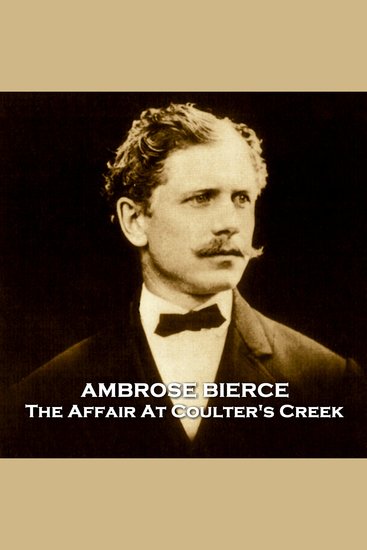
Ambrose Gwinnett Bierce was born on 24th June 1842 at Horse Cave Creek in Meigs County, Ohio. His parents were poor but they introduced him to literature at an early age, instilling in him a deep appreciation of books, the written word and the elegance of language.
Growing up in Koscuisko County, Indiana poverty and religion were defining features of his childhood, and he would later describe his parents as “unwashed savages” and fanatically religious, showing him little affection but always quick to punish. He came to resent religion, and his introduction to literature appears to be their only positive effect.
At age 15 Bierce left home to become a printer’s devil, mixing ink and fetching type at The Northern Indian, a small Ohio paper. Falsely accused of theft he returned to his farm and spent time sending out work in the hopes of being published.
His Uncle Lucius advised he be sent to the Kentucky Military Institute. A year later he was commissioned as an Officer.  As the Civil War started Bierce enlisted in the 9th Indiana Infantry Regiment.
In April 1862 Bierce fought at the Battle of Shiloh, an experience which, though terrifying, became the source of several short stories. Two years later he sustained a serious head wound and was off duty for several months. He was discharged in early 1865.
A later expedition to inspect military outposts across the Great Plains took him all the way to San Francisco. He remained there to become involved with publishing and editing and to marry, Mary Ellen on Christmas Day 1871.  They had a child, Day, the following year.
In 1872 the family moved to England for 3 years where he wrote for Fun magazine. His son, Leigh, was born, and first book, ‘The Fiend’s Delight’, was published.
They returned to San Francisco and to work for a number of papers where he gained admiration for his crime reporting. In 1887 he began a column at the William Randolph Hearst’s San Francisco Examiner.
Bierce’s marriage fell apart when he discovered compromising letters to his wife from a secret admirer. The following year, 1889 his son Day committed suicide, depressed by romantic rejection.
In 1891 Bierce wrote and published the collection of 26 short stories which included ‘An Occurrence at Owl Creek Bridge’.  Success and further works including poetry followed.
Bierce with Hearst’s resources helped uncover a financial plot by a railroad to turn 130 million dollars of loans into a handout. Confronted by the railroad and asked to name his price Bierce answered “my price is $130 million dollars. If, when you are ready to pay, I happen to be out of town, you may hand it over to my friend, the Treasurer of the United States”.
He now began his first foray as a fabulist, publishing ‘Fantastic Fables’ in 1899.  But tragedy again struck two years later when his second son Leigh died of pneumonia relating to his alcoholism.
He continued to write short stories and poetry and also published ‘The Devil’s Dictionary’.
At the age of 71, in 1913 Bierce departed from Washington, D.C., for a tour of the battlefields where he had fought during the civil war. At the city of Chihuahua he wrote his last known communication, a letter to a friend. It’s closing words were “as to me, I leave here tomorrow for an unknown destination,” Ambrose Bierce then vanished without trace.
Mostra libro

Composed toward the end of the first millennium, Beowulf is the elegiac narrative of the adventures of Beowulf, a Scandinavian hero who saves the Danes from the seemingly invincible monster Grendel and, later, from Grendel's mother. He then returns to his own country and dies in old age in a vivid fight against a dragon. The poem is about encountering the monstrous, defeating it, and then having to live on in the exhausted aftermath. In the contours of this story, at once remote and uncannily familiar at the beginning of the twenty-first century, Nobel laureate Seamus Heaney finds a resonance that summons power to the poetry from deep beneath its surface. Drawn to what he has called the "four-squareness of the utterance" in Beowulf and its immense emotional credibility, Heaney gives these epic qualities new and convincing reality for the contemporary reader.Mostra libro
This epistolary novel was probably written in 1794, but was not published until 1871.
Lady Susan Vernon, middle-aged and recently widowed, has retained her looks and appealing vivacity. She makes use of her bereavement and her loss of wealth by imposing herself on the hospitality of relatives, and by amusing herself in flirtation with the various men who fall under her spell.
Lady Susan has a daughter, Frederica, who is bashful and innocent—in stark contrast to her unfeeling and manipulative mother. Her mother is anxious to marry Frederica off to a spouse of appropriate wealth and social standing, and also, perhaps, to capture a new mate for herself.
The forty-one letters between the various parties in this tale of twisted courtship describe Lady Susan’s path to marital satisfaction for her daughter and herself.
Mostra libro
"The Balloon-Hoax" is the title used in collections and anthologies of a newspaper article by American writer Edgar Allan Poe, first published in 1844 in The Sun newspaper in New York. Originally presented as a true story, it detailed European Monck Mason's trip across the Atlantic Ocean in only three days in a gas balloon. It was later revealed as a hoax and the story was retracted two days later.
The story now known as "The Balloon-Hoax" was first printed in The Sun newspaper in New York. The article provided a detailed and highly plausible account of a lighter-than-air balloon trip by European balloonist Monck Mason across the Atlantic Ocean taking 75 hours, along with a diagram and specifications of the craft.
Mostra libro

Drift into a dreamlike state with The War of the Worlds, the visionary sci-fi classic by H.G. Wells, brought to life by the calming voice of Andrew Bond and produced by Slumber Studios.
If a restless mind or lingering stress is keeping you awake, this soothing audiobook is crafted to ease you into a deep, restful sleep, while gently transporting you to another world.
Close your eyes and let the steady rhythm of Andrew Bond’s narration carry you into the mysterious English countryside, where strange lights in the sky signal the arrival of something unknown… something beyond our world. Follow the journey of an unnamed narrator as he witnesses the astonishing arrival of Martian cylinders and the surreal unfolding of an otherworldly invasion.
Rather than shock or suspense, this version is designed for a peaceful night's rest. Wells’ poetic language, paired with gentle music and slow, thoughtful narration, becomes a meditative experience—a soft backdrop for your imagination as you prepare to drift off.
At Slumber Studios, all of our audiobooks are edited, produced and narrated to help you relax and fall asleep. Along with calming music in the background, we also lightly edit the books. We keep the plotlines, protagonists and antagonists, and moments of tension, but we remove anything that may be startling or upsetting, to ensure you always get a good night's rest.
If you're seeking a tranquil way to end your day, The War of the Worlds offers the perfect escape. Just press play, get comfortable, and let Andrew’s soothing voice guide you gently into a universe of wonder and sleep.
Mostra libro
Bruno Bicek, “Lefty,” is a prizefighter and small-time hood in Chicago. Boxing is his ticket to escape hard times and gang life, but when Bruno doesn’t prevent the brutal gang rape of his girlfriend, Steffi, it tears them apart, their worlds changed forever. Bruno is sent to jail and Steffi to a brothel governed by the brutality of a local crime boss, the Barber. Sinister and dark, the Barber controls Steffi and has no intention of letting her go. Why should he, when he holds all the cards? Bruno and Steffi, who dream of breaking free, learn this in the end and find that for them there will be no bright morning.Mostra libro





