Unisciti a noi in un viaggio nel mondo dei libri!
Aggiungi questo libro allo scaffale
Grey
Scrivi un nuovo commento Default profile 50px
Grey
Iscriviti per leggere l'intero libro o leggi le prime pagine gratuitamente!
All characters reduced
The Last Man & Frankenstein - Enriched edition - cover

The Last Man & Frankenstein - Enriched edition

Mary Shelley

Casa editrice: Musaicum Books

  • 0
  • 0
  • 0

Sinossi

Mary Shelley, the renowned author behind the iconic novel Frankenstein, also penned The Last Man, a lesser-known but equally powerful work. The Last Man is a captivating tale set in a post-apocalyptic world, delving into themes of loneliness, mortality, and the human spirit. Shelley's writing style is rich in vivid imagery and emotive language, reminiscent of the Romantic literary movement of the early 19th century. The Last Man offers a unique perspective on societal collapse and the resilience of the individual amidst chaos. In contrast, Frankenstein explores complex ethical questions surrounding creation and identity, showcasing Shelley's prowess in crafting thought-provoking narratives. Both novels showcase Shelley's ability to blend elements of science fiction, gothic horror, and philosophical inquiry into her storytelling. Mary Shelley's experiences with personal tragedy and societal upheaval undoubtedly influenced her exploration of these profound themes in her works. Readers interested in thought-provoking narratives that challenge conventional notions of humanity and society will find both The Last Man and Frankenstein to be essential reads in the realm of classic literature.

In this enriched edition, we have carefully created added value for your reading experience:
- A comprehensive Introduction outlines these selected works' unifying features, themes, or stylistic evolutions.
- The Author Biography highlights personal milestones and literary influences that shape the entire body of writing.
- A Historical Context section situates the works in their broader era—social currents, cultural trends, and key events that underpin their creation.
- A concise Synopsis (Selection) offers an accessible overview of the included texts, helping readers navigate plotlines and main ideas without revealing critical twists.
- A unified Analysis examines recurring motifs and stylistic hallmarks across the collection, tying the stories together while spotlighting the different work's strengths.
- Reflection questions inspire deeper contemplation of the author's overarching message, inviting readers to draw connections among different texts and relate them to modern contexts.
- Lastly, our hand‐picked Memorable Quotes distill pivotal lines and turning points, serving as touchstones for the collection's central themes.
Disponibile da: 21/12/2018.
Lunghezza di stampa: 656 pagine.
Altri libri che potrebbero interessarti

  • Captain Rogers - From their pens to your ears genius in every story - cover

    Captain Rogers - From their pens...

    W Jacobs

    • 0
    • 0
    • 0
    William Wymark Jacobs was born on 8th September 1863 in Wapping, East London.  
    He was educated at a private school and then Birkbeck Literary and Scientific Institution, now part of the University of London. 
    In 1879, Jacobs began work as a clerk in the civil service, in the Post Office Savings Bank.  In 1885 his first short story was published but it was not until almost the turn of the century that he would abandon his post office career to that as a full-time writer. By then he was a very popular author, his collections selling extremely well and with an excellent income. 
    His best-known work is the macabre ‘The Monkey's Paw’ and he is also highly regarded for his ghost stories although much of his remaining short story output is streaked with humour.  His characters are immediately identifiable and we all know that life will take chunks out of them in no time at all.  
    Jacobs married the noted suffragette Agnes Eleanor Williams in 1900 at West Ham, Essex. They went on to have two daughters and three sons as they settled down to life.  
    By the outbreak of the First World War his literary output had declined and he now mainly spent his time rewriting his earlier stories for the stage.  In all he wrote 18 plays. 
    W W Jacobs died on 1st September 1943 at Hornsey Lane, Islington in London. He was 79.
    Mostra libro
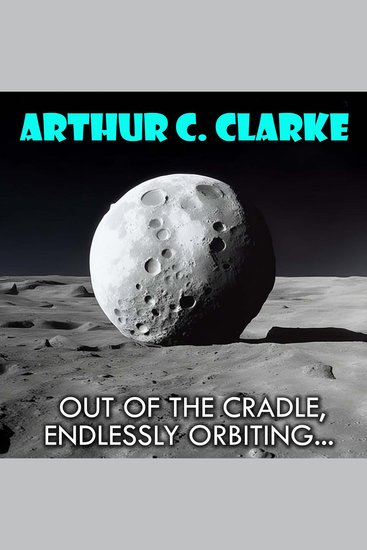
  • Out Of The Cradle Endlessly Orbiting - cover

    Out Of The Cradle Endlessly...

    Arthur C. Clarke

    • 0
    • 0
    • 0
    "Out of the Cradle, Endlessly Orbiting…" is a short story by Arthur C. Clarke, originally published in Dude magazine in 1959. It's a science fiction narrative that, like Clarke's other works, explores the intersection of science, technology, and humanity. The story's title also serves as a fitting tribute to Clarke himself, as it was his idea to put a communications satellite into geosynchronous orbit, a concept that has been instrumental in modern communications. The story follows a group of people who have settled on the moon. They are the first generation to have lived there, and they are in constant communication with the Earth through the satellite, which is endlessly orbiting above. The story explores the themes of human connection, the evolution of technology, and the challenges of living in a new environment.
    Mostra libro
  • Siddhartha - cover

    Siddhartha

    Hermann Hesse

    • 0
    • 0
    • 0
    “Hermann Hesse's 'Siddhartha' is a poetic and philosophical journey that will captivate and enlighten readers seeking to understand the human spirit and the quest for inner peace.” 
    Embark on a soul-stirring adventure with Siddhartha, as he navigates the tumultuous currents of life in search of truth. From the sacred halls of his Brahmin home to the bustling marketplaces and the tranquil riverbank, his quest for enlightenment is a riveting tale of self-discovery and spiritual awakening. Through his encounters with sages, courtesans, and a wise ferryman, Siddhartha learns that the path to peace lies in embracing the present and recognizing the unity of all existence. Hesse's lyrical prose and profound wisdom make 'Siddhartha' a beacon for those seeking to understand the mysteries of the human condition.
    Mostra libro
  • Gentle Breathing - From their pens to your ears genius in every story - cover

    Gentle Breathing - From their...

    Ivan Bunin

    • 0
    • 0
    • 0
    Ivan Alekseyevich Bunin was born on 22nd October 1870 in Voronezh province, in the South-West of the Russian Empire. 
    His early life was plagued by his Father’s gambling habits which caused his education to be erratic and the family to lose most of their wealth. 
    Bunin published his first poem in 1887 in St Petersburg and later in Oryol he worked for the local paper and became its editor, handily allowing him to publish his own poems and short stories.  There he met and married Varvara Pashchenko.  Ivan Bunin's debut book of poetry ‘Poems (1887–1891)’ was published in 1891. 
    This poetry and his translation of Longfellow garnered him his first Pushkin Prize.  Now he switched to writing prose and his novella ‘Antonov Apples’ is regarded as his first masterpiece.  Many more would follow. 
    The October Revolution of 1905 found Bunin in the Crimea.  Scenes of ‘class struggle’ he saw more as the oppressed people's craving for anarchy and destruction. 
    In November 1906 he began a passionate affair with Vera Muromtseva, within a few months they were touring through Egypt and Palestine.  ‘The Bird's Shadow’ collection was the result.   
    His second Pushkin Prize came in 1909 for Poems (1903–1906) and further translations.  He was now elected to the prestigious Russian Academy. 
    More widespread fame came in 1910 with ‘The Village’, a controversial and bleak portrayal of Russian country life.  Travel too beckoned them back to the Middle East, Ceylon (now Sri Lanka) and for winters in Capri with their friend Maxim Gorky.  
    That friendship suddenly ended in April 1917 as the revolution began to ferment in war-ravaged Russia.  After the Bolsheviks took power and the upheavals continued, he decided to leave Russia, finally achieving that in early 1920.  
    It would take some time to heal the wounds and stress he had been under and for his writing to begin again.  Settled in France, Bunin published many of his previous works and collections of novellas.  He also made regular contributions to the Russian emigre press.  
    Although reluctant to become involved in politics, Bunin was now feted as both a writer and the figurehead of non-Bolshevik Russian values and traditions.  In 1933 he became the first Russian to be awarded the Nobel Prize for Literature ‘for following through and developing with chastity and artfulness the traditions of Russian classic prose.’  
    In 1938 Bunin began working on the celebrated cycle of nostalgic, and erotically themed stories known Dark Avenues (or Dark Alleys).  
    As World War II broke out he chose to remain in Grasse spending the war at his remote Villa Jeanette, high in the mountains.  
    Ivan Bunin was a staunch anti-Nazi, and often, under difficult conditions, sheltered fugitives after Vichy was occupied by the Germans.  He wrote but did not publish during these years until on August 23rd the Nazi’s fled Grasse without a fight.  The next day the Americans came.  
    In May 1945 he returned to Paris and, apart from convalescing at times in Juan-les-Pins, he stayed for the rest of his life. 
    After 1948, with his health deteriorating, Bunin concentrated upon writing his memoirs and a book on Chekhov.  His last years were overshadowed by bitterness and despair at the situation in Russia and the treatment of its peoples.  He was suffering now from asthma, bronchitis and chronic pneumonia. 
    Ivan Alekseyevich Bunin died in a Paris attic flat on 8th November 1953.  Heart failure, cardiac asthma and pulmonary sclerosis were given as the causes of death.  He was 83.
    Mostra libro
  • The Beautiful and Damned - cover

    The Beautiful and Damned

    F. Scott Fitzgerald

    • 0
    • 0
    • 0
    First published in 1922, The Beautiful and the Damned followed Fitzgerald's impeccable debut, This Side of Paradise, thus securing his place in the tradition of great American novelists. Embellished with the author's lyrical prose, here is the story of Harvard-educated, aspiring aesthete Anthony Patch and his beautiful wife, Gloria. As they await the inheritance of his grandfather's fortune, their reckless marriage sways under the influence of alcohol and avarice. A devastating look at the nouveau riche, and the New York nightlife, as well as the ruinous effects of wild ambition, The Beautiful and the Damned achieved stature as one of Fitzgerald's most accomplished novels.
    Mostra libro
  • Under The Sunset Short Story Collection - cover

    Under The Sunset Short Story...

    Anonimo

    • 0
    • 0
    • 0
    "Under the Sunset" was Bram Stoker's first short story collection written in 1881. These short stories were intended for children and includes the following stories: "Under The Sunset", "The Rose Prince", "The Invisible Giant", and much more.
    Mostra libro