Join us on a literary world trip!
Add this book to bookshelf
Grey
Write a new comment Default profile 50px
Grey
Subscribe to read the full book or read the first pages for free!
All characters reduced
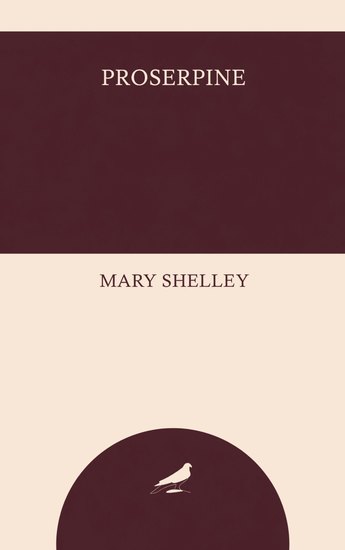
Proserpine - cover

Proserpine

Mary Shelley

Publisher: CLXBX

  • 0
  • 0
  • 0

Summary

Proserpine by Mary Shelley is a lyrical mythological drama that reimagines the ancient story of Persephone with emotional depth, poetic beauty, and Romantic sensitivity. Written in the early 19th century, the work reflects Shelley's interest in classical mythology, nature, and the emotional experiences of women within symbolic and allegorical frameworks.

The narrative centers on Proserpine, a young and innocent figure whose life is shaped by the contrast between light and darkness, innocence and transformation. Set within a mythic landscape, her story unfolds as she is drawn away from a world of flowers, sunlight, and freedom into a mysterious realm ruled by an opposing power. This transition marks a profound shift in her identity and emotional experience.

Alongside Proserpine is Ceres, a maternal and protective figure whose deep love and sorrow reflect the pain of separation and loss. Their bond forms the emotional heart of the drama, highlighting themes of maternal devotion, longing, and the cycles of nature. The relationship between mother and daughter becomes a symbolic representation of seasonal change and the enduring connection between life, death, and renewal.

Mary Shelley uses poetic dialogue and symbolic imagery to explore themes such as transformation, captivity, emotional awakening, and the duality of existence. The natural world plays a central role in the narrative, reflecting the emotional states of the characters and reinforcing the connection between human experience and the rhythms of nature.

Rather than focusing on external action, the drama emphasizes atmosphere, emotion, and symbolic meaning. Shelley's language is elegant and expressive, capturing both the beauty and melancholy inherent in the myth. The work reflects the Romantic fascination with nature, myth, and the inner life of the individual.

Proserpine also engages with broader themes of female experience, separation, and the tension between freedom and constraint. It presents its central figure not only as a mythological character but also as a symbol of emotional and psychological transformation.

Ideal for readers of classic literature, mythology, and Romantic drama, Proserpine remains a delicate and powerful exploration of change, memory, and the emotional cycles that shape human existence.
Available since: 05/09/2026.
Print length: 18 pages.
Other books that might interest you

  • Mrs Warren's Profession - cover

    Mrs Warren's Profession

    Bernard Shaw

    • 0
    • 0
    • 0
    'I am my mother's daughter. I am like you. But my work is not your work, and my way is not your way.'
    Vivie Warren is a woman ahead of her time. Estranged from her wealthy mother, she delights in a glass of whisky and a good detective story, and is determined to carve herself a sparkling legal career in an age ruled by men.
    Her mother, however, is a part of that old patriarchal order. Exploiting it has earned Mrs. Warren a fortune and paid for her daughter's expensive education – but at what cost?
    Bernard Shaw's incendiary moral classic was written in 1893, but, after being banned by the Lord Chamberlain, didn't receive a full public production in London until 1925. This version of the play, edited and introduced by director Dominic Cooke, was produced at the Garrick Theatre in London's West End in 2025, starring real-life mother and daughter Imelda Staunton and Bessie Carter.
    Show book
  • The Power of Two - cover

    The Power of Two

    Susan Foster, Carl Brewer

    • 0
    • 0
    • 0
    One of the most compelling figures ever to lace on a pair of skates, Carl Brewer was a gifted skater and stickhandler, renowned for his ability to control the pace of a game and goad opponents into costly errors. His talents made him an NHL All-Star and one of the cornerstones of a Toronto Maple Leafs dynasty. But he was also a loner playing a team game, a free spirit in an era when players were expected not to make waves. Teammates and management alike wrote him off as an eccentric, an enigma. At what should have been the peak of his career, he abandoned the game, embarking on a lifelong search for meaning in his life. Along the way, he met Susan Foster, and together they would discover that purpose. The Power of Two tells the story of how Carl and Susan successfully battled the hockey establishment over the issue of player pensions. Together they uncovered fraud, corruption, and betrayal of trust, ultimately helping bring down the powerful Alan Eagleson. The Power of Two also provides intimate insights into Brewer, who was aptly remembered as a "magnificent, misunderstood fanatic", and his enduring bond with the life partner and ally whose tireless support he depended on.
    Show book
  • Night Sky with Exit Wounds - cover

    Night Sky with Exit Wounds

    Ocean Vuong

    • 0
    • 0
    • 0
    WINNER of the 2017 T. S. Eliot Prize 


    A New York Times Top 10 Book of 2016 


    "There is a powerful emotional undertow to these poems that springs from Mr. Vuong's sincerity and candor, and from his ability to capture specific moments in time with both photographic clarity and a sense of the evanescence of all earthly things." —Michiko Kakutani, The New York Times 


    Library Journal 2016 Best Books of the Year WINNER, 2016 Whiting Award WINNER, 2017 Publishing Triangle's Thom Gunn Award FINALIST, 2017 Kate Tufts Discovery Award FINALIST, 2017 Lambda Literary Award FINALIST 


    In his haunting and fearless debut, Ocean Vuong walks a tightrope of historic and personal violences, creating an interrogation of the American body as a borderless space of both failure and triumph. At once vulnerable and redemptive, dreamlike and visceral, compassionate and unforgiving, these poems seek a myriad existence without forgetting the prerequisite of self-preservation in a world bent on extinguishing its othered voices. Vuong's poems show, through breath, cadence, and unrepentant enthrallment, that a gentle palm on a chest can calm the most necessary of hungers.
    Show book
  • Thought Prints - cover

    Thought Prints

    Michael Jai McKenzie

    • 0
    • 0
    • 0
     "Birthed in a month, on a day, somewhere in time. Somewhere in history. 
     Somewhere in my past, I didn't exist… But I was to be." 
    
    
     "When I look back in time, exploring my mind, I realize I didn't glance… 
     But I was to see…" 
    
    
     – from "A Letter to Myself." 
    
    
     With intensity and emotion,  Thought Prints  reels the reader in instantly! Anyone who has the pleasure of reading this compilation of poems will surely find magic.   A collection of poetry with a story to tell! 
    Show book
  • Essay on Man An - Pope is one of our greatest poets here he once again demonstrates his brilliant talents - cover

    Essay on Man An - Pope is one of...

    Alexander Pope

    • 0
    • 0
    • 0
    Alexander Pope was born on May 21st, 1688 in London into a Catholic family.   
    His education was affected by the recent Test Acts, upholding the status of the Church of England and banning Catholics from teaching.  In effect this meant his formal education was over by the age of 12 and Pope was to now immerse himself in classical literature and languages and to, in effect, educate himself.    
    From this age too he also suffered from numerous health problems including a type of tuberculosis (Pott’s disease) which resulted in a stunted, deformed body.  Only to grow to a height of 4’ 6”, with a severe hunchback and complicated further by respiratory difficulties, high fevers, inflamed eyes and abdominal pain all of which served to further isolate him, initially, from society.  
    However his talent was evident to all. Best known for his satirical verse, his translations of Homer and the use of the heroic couplet, he is the second-most frequently quoted writer in The Oxford Dictionary of Quotations, after Shakespeare.  
    With the publication of Pastorals in 1709 followed by An Essay on Criticism (1711) and his most famous work The Rape of the Lock (1712; revised and enlarged in 1714) Pope became not only famous but wealthy.  
    His translations of the Iliad and the Odyssey further enhanced both reputation and purse.  His engagement to produce an opulent new edition of Shakespeare met with a mixed reception.  Pope attempted to "regularise" Shakespeare's metre and rewrote some of his verse and cut 1500 lines, that Pope considered to be beneath the Bard’s standard, to mere footnotes.  
    Alexander Pope died on May 30th, 1744 at his villa at Twickenham (where he created his famous grotto and gardens) and was buried in the nave of the nearby Church of England Church of St Mary the Virgin.   
    Over the years and centuries since his death Pope’s work has been in and out of favour but with this distance he is now truly recognised as one of England’s greatest poets.
    Show book
  • The Poetry of Robert Herrick - 17th Century lyrical poet that was also a cleric - cover

    The Poetry of Robert Herrick -...

    Robert Herrick

    • 0
    • 0
    • 0
    The Clergyman and poet, Robert Herrick was born in Cheapside, in London in 1591. An exact date is not known though he was baptized on August 24th, the seventh child of Nicholas Herrick, a wealthy goldsmith.  
    Some controversy surrounds several chapters in his early years.  The first are allusions that his father, in November 1592, two days after making a will, killed himself by jumping from the fourth-floor window of his house. However, the Queen's Almoner did not confiscate the Herrick estate for the crown as was the usual procedure with suicides, so an alternate narrative emerged that he fell accidentally which seems to have more credence. 
    There is no record of Herrick attending school. Some claim a poem alludes to Westminster School, others merely that he meant Westminster, the area. Another school of thought claims he was educated at Merchant Taylor’s School.  What is known is that in 1607 he was apprenticed to his uncle Sir William Herrick as a goldsmith.   
    Herrick certainly seems to have been a keen and avid poet. The earliest work known to be written by him dates from 1610; 'A Country Life', and deals with the move from London to farm life in Leicestershire.  
    After six years as an apprentice, when Herrick was 22 he matriculated at St John’s College, Cambridge before moving to Trinity College and graduating with his Bachelor of Arts in 1617, Master of Arts in 1620, and in 1623 he was ordained priest.  
    By 1625 he was well known as a poet, mixing in literary circles in London such as that around Ben Jonson. An avowed admirer of Jonson he was also one of a group whom became known as ‘The Sons of Ben’ writing both in his style and about him. 
    In 1629 he was presented by Charles I to the parishioners of Dean Prior, a remote parish of Devonshire. The best of his work was written in the peace and seclusion of country life; 'To Blossoms' and 'To Daffodils' are classical depictions of a devoted appreciation of nature.  
    However, after he refused to subscribe to The Solemn League and Covenant, he was ejected from Devonshire in 1647 and moved to London where he published his religious poems Noble Numbers (1647), and Hesperides (1648). 
    Herrick was distinguished as a lyric poet, and some of his love songs, for example, 'To Anthea' and 'Gather Ye Rose-buds' are considered exceptional.  
    By 1660 he was reinstated at Dean Prior where he lived for the remainder of his life. He wrote no more poems after 1648 but over his life it is thought he wrote in the region of 2,500 poems in total, only a small portion of which were ever published. 
    He died in October 1674, at the age of 83 in circumstances unknown.  He was buried on October 15th, 1674 in an unmarked grave in the churchyard at Dean Prior. 
     This volume comes to you from Portable Poetry, a specialized imprint from Deadtree Publishing.  Our range is large and growing and covers single poets, themes, and many compilations.
    Show book