Rejoignez-nous pour un voyage dans le monde des livres!
Ajouter ce livre à l'électronique
Grey
Ecrivez un nouveau commentaire Default profile 50px
Grey
Abonnez-vous pour lire le livre complet ou lisez les premières pages gratuitement!
All characters reduced
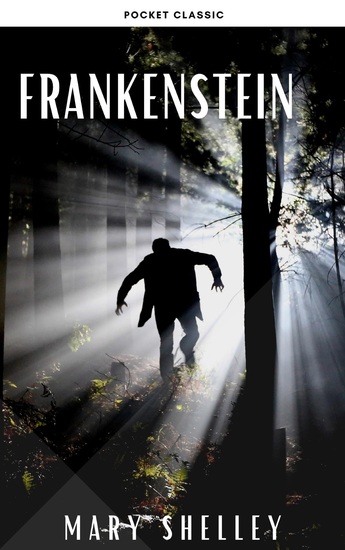
Frankenstein - cover

Frankenstein

Mary Shelley, Pocket Classic

Maison d'édition: Pocket Classic

  • 0
  • 0
  • 0

Synopsis

Mary Shelley began writing Frankenstein when she was only eighteen. At once a Gothic thriller, a passionate romance, and a cautionary tale about the dangers of science, Frankenstein tells the story of committed science student Victor Frankenstein. Obsessed with discovering the cause of generation and life and bestowing animation upon lifeless matter, Frankenstein assembles a human being from stolen body parts but; upon bringing it to life, he recoils in horror at the creature's hideousness. Tormented by isolation and loneliness, the once-innocent creature turns to evil and unleashes a campaign of murderous revenge against his creator, Frankenstein.
Frankenstein, an instant bestseller and an important ancestor of both the horror and science fiction genres, not only tells a terrifying story, but also raises profound, disturbing questions about the very nature of life and the place of humankind within the cosmos: What does it mean to be human? What responsibilities do we have to each other? How far can we go in tampering with Nature? In our age, filled with news of organ donation genetic engineering, and bio-terrorism, these questions are more relevant than ever.

A masterpiece. —Phillip Pullman
One of the most original and complete productions of the day. —Percy Bysshe Shelley
The greatest paradox and most astonishing achievement of Mary Shelley's novel is that the monster is more human than his creator. This nameless being, as much a modern Adam as his creator is a modern Prometheus, is more lovable than his creator and more hateful, more to be pitied and more to be feared, and above all able to give the attentive reader that shock of added consciousness in which aesthetic recognition compels a heightened realization of self. —Harold Bloom
Disponible depuis: 27/08/2022.
Longueur d'impression: 119 pages.

D'autres livres qui pourraient vous intéresser

  • It Can’t Rain All the Time - The Crow - cover

    It Can’t Rain All the Time - The...

    Alisha Mughal

    • 0
    • 0
    • 0
    A passionate analysis of the ill-fated 1994 film starring the late Brandon Lee and its long-lasting influence on action movies, cinematic grief, and emotional masculinity
    		 
    Released in 1994, The Crow first drew in audiences thanks to the well-publicized tragedy that loomed over the film: lead actor Brandon Lee had died on set due to a mishandled prop gun. But it soon became clear that The Crow was more than just an accumulation of its tragic parts. The celebrated critic Roger Ebert wrote that Lee’s performance was “more of a screen achievement than any of the films of his father, Bruce Lee.”
    		 
    In It Can’t Rain All the Time, Alisha Mughal argues that The Crow has transcended Brandon Lee’s death by exposing the most challenging human emotions in all their dark, dramatic, and visceral glory, so much so that it has spawned three sequels, a remake, and an intense fandom. Eric, our back-from-the-dead, grieving protagonist, shows us that there is no solution to depression or loss, there is only our own internal, messy work. By the end of the movie, we realize that Eric has presented us with a vast range of emotions and that masculinity doesn’t need to be hard and impenetrable.
    		 
    Through her memories of seeking solace in the film during her own grieving period, Alisha brilliantly shows that, for all its gothic sadness, The Crow is, surprisingly and touchingly, a movie about redemption and hope.
    		 
    About the Pop Classics Series
    		 
    Short books that pack a big punch, Pop Classics offer intelligent, fun, and accessible arguments about why a particular pop phenomenon matters.
    Voir livre
  • TAZ The Temporary Autonomous Zone - ONTOLOGICAL ANARCHY POETIC TERRORISM - cover

    TAZ The Temporary Autonomous...

    Hakim Bey

    • 0
    • 0
    • 0
    The underground cult bestseller! Essays that redefine the psychogeographical nooks of autonomy. Recipes for poetic terror, anarcho -black magic, post-situ psychotropic surgery, denunciations of spiritual addictions to vapid infotainment cults - this is the bastard classic, the watermark impressed upon our minds. Where conscience informs praxis, and action infects consciousness, T.A.Z. is beginning to worm its way into above-ground culture. This book offers inspired blasts of writing, from slogans to historical essays, on the need to insert revolutionary happiness into everyday life through poetic action, and celebrating the radical optimism present in outlaw cultures. It should appeal to alternative thinkers and punks everywhere, as it celebrates liberation, love and poetic living. The new edition contains the full text of Chaos: The Broadsheets of Ontological Anarchism, the complete communiques and flyers of the Association fo Ontological Anarchy, the long essay 'The Temporary Autonomous Zone, ' and a new preface by the author
    Voir livre
  • Putin's Wars and NATO's Flaws - Why Russia Invaded Ukraine - cover

    Putin's Wars and NATO's Flaws -...

    Paul Moorcraft

    • 0
    • 0
    • 0
    This book explores why there is a major war again in Europe. Putin's actions need to be understood if not forgiven. With the Ukraine conflict seen as a proxy war of NATO versus Russia, how likely is the fighting to spread? 


    The author, a highly respected journalist and political commentator, explains why Russia invaded a sovereign neighbor. To what extent did NATO's expansion to Russia's borders in the aftermath of the Cold War provoke Putin? Did the West's recent humiliating defeats in the Middle East and South Asia encourage Putin to exploit what he saw as its decadent strategic weakness and lack of resolve? What were the reasons for Russia's savage behavior in Ukraine? How might the Ukraine war end and what will the post-bellum world look like? 


    The war in Ukraine has had worldwide impact with cost of living, food and energy crises, and raised the risk of nuclear Armageddon by accident or intent. It examines the complex military and political issues in layman's language while the story is told as a compelling historical narrative. 


    Professor Moorcraft, who has worked in Ukraine and has witnessed Russian troops in action in Afghanistan, is superbly qualified to write this work.
    Voir livre
  • Disciples of White Jesus - The Radicalization of American Boyhood - cover

    Disciples of White Jesus - The...

    Angela Denker

    • 0
    • 0
    • 0
    White boys and men are dangerous. 
    White boys and men are struggling. 
    Both of these statements are staggeringly true in America today. By far, most large-scale mass shooters are white men. White men also die by suicide more often than any other demographic. In this sensitive, searing, and unsparing look at American boyhood, journalist, mother, and pastor Angela Denker investigates the sometimes-tragic stories of boyhood across the United States. 
    Disciples of White Jesus is a comprehensive look at the rise in radicalization among young white men in America, especially focused on the role of right-wing Christianity in the increase of religious-based hatred and violence. Denker goes deep into the online rabbit holes of right-wing Christian influencers and conservative Christian ideology to understand how the preaching of "traditional gender roles" and "submission of women" has led to anger, outrage, loneliness, depression, and limiting identities for young white Christian men across America. 
    Casting her journalist's eye across the US, Denker retraces the steps of a racist South Carolina mass shooter and a Phoenix skinhead turned Evangelical pastor, interviews middle school teachers and coaches in the Midwest, and introduces us to young men across the country who will both confirm and confound our ideas about American boyhood--stories about boys and men who are forging new identities grounded in kindness, grace, respect, and even joy. A must-read for parents, grandparents, educators, coaches, faith leaders, researchers, and all who care about the state of American families, boys themselves, and the safety of American society at large.
    Voir livre
  • Social Justice for the Sensitive Soul - How to Change the World in Quiet Ways - cover

    Social Justice for the Sensitive...

    Dorcas Cheng-Tozun

    • 0
    • 0
    • 0
    Social justice work, we often assume, is raised voices and raised fists. But what does it look like for those of us who don't feel comfortable battling in the trenches? Sustaining justice work can be particularly challenging for the sensitive, and it requires a deep level of self-awareness. 


    In Social Justice for the Sensitive Soul, writer Dorcas Cheng-Tozun offers six possible pathways for sensitive types: Connectors: relational activists whose interactions and conversations build the social capital necessary for change; Creatives: artists and creators whose work inspires, sheds light, makes connections, and brings issues into the public consciousness; Record Keepers: archivists who preserve essential information and hold our collective memory and history; Builders: inventors, programmers, and engineers who center empathy as they develop society-changing products and technologies; Equippers: educators, mentors, and elders who build skills and knowledge within movements and shepherd the next generation of changemakers; and Researchers: data-driven individuals who utilize information as a persuasive tool to effect change and propose options for improvement. 


    Cheng-Tozun expands the possibilities of how to have a positive social impact, affirming the particular gifts and talents that sensitive souls offer to a hurting world.
    Voir livre
  • Reimagining Shame - cover

    Reimagining Shame

    David Whyte

    • 0
    • 0
    • 0
    Shame need not be an enemy to conquer. In Reimagining Shame, David Whyte shows listeners how to harness this complex emotion as a tool for self-understanding. This program is read by the author. Shame. The word itself is searing. It can evoke an almost visceral response in us, surfacing feelings of inadequacy, either consciously or unconsciously. It ranges from simply wishing we had done or said something differently, to that awful sense that something is wrong with us. But, what if shame is not an enemy to our happiness and contentment, but rather a doorway into the next stage of our existence and, ultimately, our emancipation?Join much loved poet David Whyte as he guides us through a special audio journey drawn from his Three Sundays series. Here, Whyte invites us to recast shame and transform this orphaned layer of ourselves into an ally and gravitational force returning us to presence and wholeness, rather than a barrier to personal growth. As he reimagines his own experiences with shame, Whyte weaves his poems and prose throughout each lesson, painting an atmospheric portrait of his ancestral Irish homeland along the way.The First Sunday explores our natural human instinct to run away from shame and the divide this creates between body and mind, until we learn to embrace it with compassion.The Second Sunday follows shame inward and shows us how to reframe our vulnerabilities as a vehicle for discovering the wonder life has to show us. The Third Sunday poses shame as an invitation to hide—to retreat into dormancy—which ultimately reveals the fertile ground from which we can grow and reach the light.“Let your vulnerabilities walking on the cracked, sliding limestone be this time not a weakness,” says Whyte, “but a faculty for what’s about to happen.” When we allow feelings of inferiority to rest inside us, they can then be felt, named, and understood, and begin to change into something else, something transformative.A Macmillan Audio production from St. Martin's Press Essentials.
    Voir livre