Unisciti a noi in un viaggio nel mondo dei libri!
Aggiungi questo libro allo scaffale
Grey
Scrivi un nuovo commento Default profile 50px
Grey
Iscriviti per leggere l'intero libro o leggi le prime pagine gratuitamente!
All characters reduced
Changing Landscapes in Urban British Churchyards - cover

Changing Landscapes in Urban British Churchyards

Mary J. Thornbush, Sylvia E. Thornbush

Casa editrice: Bentham Science Publishers

  • 0
  • 0
  • 0

Sinossi

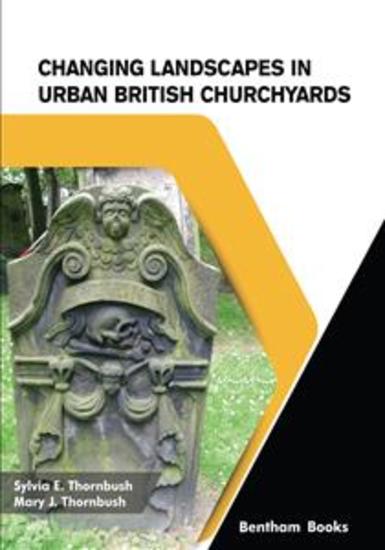
This interdisciplinary reference work presents a linked consideration, to the reader, of physical-cultural (physicocultural) representations of headstones located in urban churchyards in England and Scotland. The geomorphology of landscapes relevant to these locations is explained with the help of detailed case studies from Oxford and Edinburgh. The integrated physicocultural approach addresses the conservation of the archaeological record and presents a cross-temporal perspective of landscape change – of the headstones as landforms in their landscape (as part of deathscapes). The physical record (of headstones) is examined in the context of both cultural representation and change. In this way, an integrated approach is employed that connects the physical (natural) and cultural (social) records kept by historians and archeologists over the years.
 
Changing Landscapes in Urban British Churchyards is of interest to geomorphologists, historians and scholars interested in understanding landscaping studies and cultural nuance of specific historical urban sites in England and Scotland.
Disponibile da: 11/01/2024.
Altri libri che potrebbero interessarti

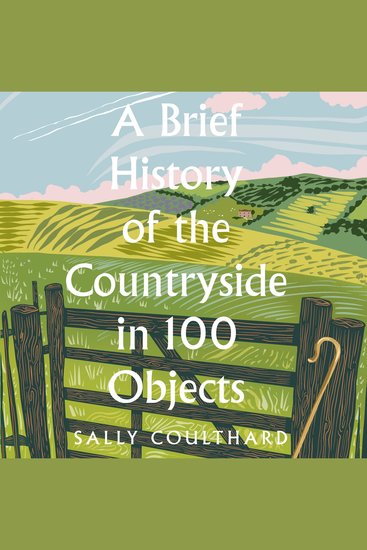
  • A Brief History of the Countryside in 100 Objects - cover

    A Brief History of the...

    Sally Coulthard

    • 0
    • 0
    • 0
    A Waterstones Best Book of 2024: Nature Writing 
    The untold story of rural Britain revealed through its artefacts 
    'A really lovely, fascinating book. I dived straight into this clever, joyous, celebration of nature, history, and – of course – the countryside.' Charles Spencer, author of The White Ship 
    For most of human history, we were rural folk.  
    Our daily lives were bound up with working the land, living within the rhythm of the seasons. We poured our energies into growing food, tending to animals and watching the weather. Family, friends and neighbours were often one and the same. Life revolved around the village and its key spaces and places – the church, the green, the school and the marketplace. 
    And yet rural life is oddly invisible our historical records. The daily routine of the peasant, the farmer or the craftsperson could never compete with the glamour of city life, war and royal drama. Lives went unrecorded, stories untold. 
    There is, though, one way in which we can learn about our rural past. The things we have left behind provide a connection that no document can match; physical artefacts are touchstones that breathe life into its history. From farming tools to children’s toys, domestic objects and strange curios, the everyday items of the past reveal fascinating insights into an often-forgotten way of life. Birth, death, celebration, work, crime, play, medicine, beliefs, diet and our relationship with nature can all be read from these remnants of our past. 
    From ancient artefacts to modern-day memorabilia, this startling book weaves a rich tapestry from the fragments of our rural past. 
    In her non-fiction book A Brief History of the Countryside in 100 Objects, Sally Coulthard explores the social and cultural dynamics of rural life in Europe. The book, steeped in anthropology and environmental conservation, emphasises the importance of regional studies and the protection of our environment. 
    For fans of Jane Cooper (The Lost Flock), Charles King (Every Valley), Lee Alan Dugatkin (Mr. Jefferson and the Giant Moose), James Rebanks (The Shepherd's View), and Clara Parkes (Vanishing Fleece). 
    HarperCollins 2024
    Mostra libro
  • No Excuses - Turning around one of Britain's toughest schools - cover

    No Excuses - Turning around one...

    Alison Colwell

    • 0
    • 0
    • 0
    "Eye-popping" – Sunday Times
    "Brilliant" – Iain Dale
    ***
    An unputdownable true account of how a tenacious head teacher led one of the most challenging schools in the country to excellence.
    No Excuses charts an extraordinary principal's journey from the moment she took over at a failing secondary school in a deprived area, where less than a quarter of children attained five or more A*–C GCSEs, and how she set about the gruelling task of transforming its reputation using her zero-tolerance, tough-love approach.
    Armed only with a wicked sense of humour, fearless energy and a powerful vision, Alison Colwell put in place a stringent set of rules, including a strict uniform policy and a complete ban on mobile phones, provoking resistance and hostility from some parents, the wider community and on social media.
    This is the darkly funny, moving story of how, together, teachers and their – often troubled – pupils rebuilt a school and community, with an inspirational head at the helm.
    Charming, touching and full of brilliant leadership advice, this is the diary of the woman the Daily Mail labelled Britain's strictest head teacher.
    Mostra libro
  • Faith 301 - cover

    Faith 301

    Good Head Group Audiobooks,...

    • 0
    • 0
    • 0
    Faith 301: Results of Self Love is the third of a four-book series about faith, Results of Self Love helps readers to build on the mindset of increasing your faith, understanding yourself, what you believe and how to manifest results. Starting with getting to know yourself by Setting Your Third Set of Intentions, Looking into Self, Self-Love & Acceptance, Pursuing Your Purpose, Creating a Vision in Meditative Prayer, and many other topics. When purchased with the Faith: 301 Workbook, you have a self-paced course on that helps you recognize the Results of Self- Love in faith based on your personal understanding and experiences. No matter what your religious preference is, Faith 301 is sure to help you develop your faith and reap the results of the soul growth you desire.
    Mostra libro
  • Great Powers Club The: The History of the Kingdoms that Dominated the Near East in the Late Bronze Age - cover

    Great Powers Club The: The...

    Charles River Editors

    • 0
    • 0
    • 0
    By the time of Egypt’s Nineteenth Dynasty, the Egyptians had created a vast empire that stretched from what would be the modern region of northern Sudan in the south to southern Syria in the north (Kuhrt 2010, 1:185). With control of such a vast empire, the Egyptians were able to export valuable minerals such as gold and silver, which were much rarer in the other Near Eastern kingdoms, and imported horses, timber, and chariots that they used to build their impressive military. A chronological examination of ancient Egypt during the New Kingdom reveals the process in which Egypt transitioned from a regional kingdom to an international empire. The examination will demonstrate that the New Kingdom was a fairly complex system that brought about several changes in pharaonic culture before ultimately collapsing.  
    Compared to some of their contemporaries – including the Egyptians, Assyrians, and Babylonians – the Hittites were somewhat distant both culturally and geographically. The Hittites were an Indo-European speaking in an ocean of Afro-Asiatic and Semitic groups, their homeland was to the north of Mesopotamia, and it contained no major river like the Nile, Tigris, or Euphrates Rivers. The Hittite empire was also far less enduring than its neighbors, as it only existed from about 1800-1200 BCE (van de Mieroop 2007, 156), which was considerably shorter than most of the other major kingdoms of the Near East.  
    Like a number of ancient individuals and empires in that region, the negative perception of ancient Assyrian culture was passed down through Biblical accounts, and regardless of the accuracy of the Bible’s depiction of certain events, the Assyrians clearly played the role of adversary for the Israelites. Indeed, Assyria (Biblical Shinar) and the Assyrian people played an important role in many books of the Old Testament and are first mentioned in the book of Genesis.
    Mostra libro
  • Psychology of Crowds - cover

    Psychology of Crowds

    Gustave Le Bon

    • 0
    • 1
    • 0
    Psychology of Crowds by Gustave Le Bon
    A foundational work in social psychology exploring crowd behavior. Le Bon examines how individuals lose personal identity in groups, becoming susceptible to irrationality and emotional influence, shedding light on mass movements, propaganda, and the dynamics of collective behavior.
    Mostra libro
  • Executions of British and French Royalty The: The Lives of the Royals Who Were Put to Death in England and France - cover

    Executions of British and French...

    Editors Charles River

    • 0
    • 0
    • 0
    Over 450 years after his reign, Henry VIII is still the most famous and recognizable King of England, but it’s for all the wrong reasons. Though well regarded by contemporaries as a learned King and "one of the most charismatic rulers to sit on the English throne", he is best remembered today for his gluttony and multiple marriages, particularly the gruesome way in which he was widowed on more than one occasion. Naturally, that was the focus of the popular ShowTime drama series centered around his life, The Tudors.  
    	While Henry’s reign is not considered as favorably as his daughter’s, Queen Elizabeth I would ultimately sentence a queen to death herself. Mary, Queen of Scots’ fame as a monarch lies less in her personality or achievements than in her position within the dynastic maneuvers and political-religious upheavals taking place in northwest Europe in the 16th century. Most monarchs spend their early years learning in preparation to rule and then spend the latter part of their lives wielding power and status, but Mary was thrust upon the throne when she was only a week old, and she ceased to be queen nearly 20 years before her death. 
    	With French society in open revolt by the late 1780s, the King appeared indecisive at a number of crucial moments, including during a famous attempted escape that was thwarted at Vergennes, and he had to literally run for his life when a mob stormed the royal palace at Tuileries. Soon after, he was stripped of his dignity and his royal name, convicted of high treason in a sham trial as Citizen Louis Capet. Ironically, in death, some historians have asserted that his execution and the sympathy it engendered helped bring about the Restoration a generation later.  
    	Nearly 220 years after she was put to the guillotine, Marie Antoinette is more famous than ever, fairly or unfairly coming to epitomize royalty and everything that was wrong with it. 
    Mostra libro