Unisciti a noi in un viaggio nel mondo dei libri!
Aggiungi questo libro allo scaffale
Grey
Scrivi un nuovo commento Default profile 50px
Grey
Iscriviti per leggere l'intero libro o leggi le prime pagine gratuitamente!
All characters reduced
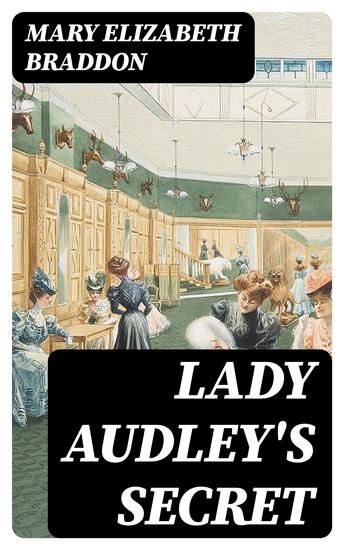
Lady Audley's Secret - Enriched edition - cover

Lady Audley's Secret - Enriched edition

Mary Elizabeth Braddon

Casa editrice: DigiCat

  • 0
  • 0
  • 0

Sinossi

In "Lady Audley's Secret," Mary Elizabeth Braddon masterfully weaves a tale of suspense and intrigue set against the backdrop of Victorian England. This sensational novel delves into themes of identity, gender roles, and societal expectations, presenting a complex protagonist in Lady Audley, whose charming façade hides a tumultuous secret. Braddon's use of vivid imagery and psychological depth invites readers into a world where social morality is constantly questioned, exemplifying the literary style that flourished during the Victorian era, often characterized by its exploration of darker themes masked by domesticity. Mary Elizabeth Braddon was a prolific writer and a prominent figure in the sensation fiction genre, which emerged in the 1860s. Her own experiences as a woman navigating the literary world during a period rife with gender restrictions informed her characterizations and plot developments. Braddon's keen observations of contemporary society and her own personal struggles with societal norms imbue "Lady Audley's Secret" with authenticity and urgency, making it a poignant commentary on the limitations placed on women in her era. This novel is highly recommended for readers interested in the intricate interplay of mystery and social critique. Braddon's adept storytelling not only entertains but also challenges the reader to question the conventions of morality and the roles of women in the 19th century, ensuring that "Lady Audley's Secret" remains a compelling and thought-provoking read.

In this enriched edition, we have carefully created added value for your reading experience:
- A succinct Introduction situates the work's timeless appeal and themes.
- The Synopsis outlines the central plot, highlighting key developments without spoiling critical twists.
- A detailed Historical Context immerses you in the era's events and influences that shaped the writing.
- A thorough Analysis dissects symbols, motifs, and character arcs to unearth underlying meanings.
- Reflection questions prompt you to engage personally with the work's messages, connecting them to modern life.
- Hand‐picked Memorable Quotes shine a spotlight on moments of literary brilliance.
- Interactive footnotes clarify unusual references, historical allusions, and archaic phrases for an effortless, more informed read.
Disponibile da: 11/10/2022.
Lunghezza di stampa: 390 pagine.

Altri libri che potrebbero interessarti

  • Fantomina: Love in a Maze - cover

    Fantomina: Love in a Maze

    Eliza Haywood

    • 0
    • 0
    • 0
    'Her design was once more to engage him, to hear him sigh, to see him languish, to feel the strenuous pressures of his eager arms, to be compelled, to be sweetly forc'd to what she wished with equal ardour.'
    
    Originally published in 1725, and daringly exploring themes such as identity, class and female desire, Fantomina: Love in a Maze is comprehended as one of the finest – yet underappreciated – novellas of the eighteenth-century.
    
    A beautiful young woman becomes intrigued with a charming, but severely shallow, young man at the theatre: Beauplaisir. Witnessing his treatment of some of the ladies there, she disguises herself as 'Fantomina', to determine whether his behaviour would change towards her. After a short fling, Beauplaisir tires of her and leaves, much to her outrage. Fantomina then takes on a series of alternative personas in a bid to re-capture his attention. A scathing commentary on men's treatment of women in society, Fantomina: Love in a Maze is a remarkable work which would have scandalised its readers at the time of publication. This audiobook is brought to life by the brilliant Helen Keeley.
    Eliza Haywood (1693 – 1756) was an English writer, actress and publisher. In her lifetime, she penned over seventy works, including novels, poetry, plays and periodicals. A proto-feminist, she was famed for her romance writing, which mirrored contemporary scandals in eighteenth century society.
    Mostra libro
  • A Wireless Message - From their pens to your ears genius in every story - cover

    A Wireless Message - From their...

    Ambrose Bierce

    • 0
    • 0
    • 0
    Ambrose Gwinnett Bierce was born on 24th June 1842 at Horse Cave Creek in Meigs County, Ohio. His parents were poor but they introduced him to literature at an early age, instilling in him a deep appreciation of books, the written word and the elegance of language.  
    Growing up in Koscuisko County, Indiana poverty and religion were defining features of his childhood, and he would later describe his parents as “unwashed savages” and fanatically religious, showing him little affection but always quick to punish. He came to resent religion, and his introduction to literature appears to be their only positive effect. 
    At age 15 Bierce left home to become a printer’s devil, mixing ink and fetching type at The Northern Indian, a small Ohio paper. Falsely accused of theft he returned to his farm and spent time sending out work in the hopes of being published. 
    His Uncle Lucius advised he be sent to the Kentucky Military Institute. A year later he was commissioned as an Officer.  As the Civil War started Bierce enlisted in the 9th Indiana Infantry Regiment.  
    In April 1862 Bierce fought at the Battle of Shiloh, an experience which, though terrifying, became the source of several short stories. Two years later he sustained a serious head wound and was off duty for several months. He was discharged in early 1865.  
    A later expedition to inspect military outposts across the Great Plains took him all the way to San Francisco. He remained there to become involved with publishing and editing and to marry, Mary Ellen on Christmas Day 1871.  They had a child, Day, the following year.  
    In 1872 the family moved to England for 3 years where he wrote for Fun magazine. His son, Leigh, was born, and first book, ‘The Fiend’s Delight’, was published.  
    They returned to San Francisco and to work for a number of papers where he gained admiration for his crime reporting. In 1887 he began a column at the William Randolph Hearst’s San Francisco Examiner.  
    Bierce’s marriage fell apart when he discovered compromising letters to his wife from a secret admirer. The following year, 1889 his son Day committed suicide, depressed by romantic rejection. 
    In 1891 Bierce wrote and published the collection of 26 short stories which included ‘An Occurrence at Owl Creek Bridge’.  Success and further works including poetry followed.  
    Bierce with Hearst’s resources helped uncover a financial plot by a railroad to turn 130 million dollars of loans into a handout. Confronted by the railroad and asked to name his price Bierce answered “my price is $130 million dollars. If, when you are ready to pay, I happen to be out of town, you may hand it over to my friend, the Treasurer of the United States”.  
    He now began his first foray as a fabulist, publishing ‘Fantastic Fables’ in 1899.  But tragedy again struck two years later when his second son Leigh died of pneumonia relating to his alcoholism.  
    He continued to write short stories and poetry and also published ‘The Devil’s Dictionary’.  
    At the age of 71, in 1913 Bierce departed from Washington, D.C., for a tour of the battlefields where he had fought during the civil war. At the city of Chihuahua he wrote his last known communication, a letter to a friend. It’s closing words were “as to me, I leave here tomorrow for an unknown destination,” Ambrose Bierce then vanished without trace.
    Mostra libro
  • Frau Fischer - cover

    Frau Fischer

    Katherine Mansfield

    • 0
    • 0
    • 0
    In Frau Fischer by Katherine Mansfield we have the theme of independence, letting go, acceptance change, trust, control, gender roles and conflict. Taken from her In a German Pension collection the story is narrated in the first person by an unnamed British woman and after reading the story the reader realises that Mansfield may be exploring the theme of independence.
    Mostra libro
  • To Would - Be Teachers (Unabridged) - cover

    To Would - Be Teachers (Unabridged)

    Booker T. Washington

    • 0
    • 0
    • 0
    Booker Taliaferro Washington (April 5, 1856 - November 14, 1915) was an American educator, author, orator, and adviser to several presidents of the United States. Between 1890 and 1915, Washington was the dominant leader in the African American community and of the contemporary black elite. Washington was from the last generation of black American leaders born into slavery and became the leading voice of the former slaves and their descendants. They were newly oppressed in the South by disenfranchisement and the Jim Crow discriminatory laws enacted in the post-Reconstruction Southern states in the late 19th and early 20th centuries.
    TO WOULD-BE TEACHERS: Since very many of you whom I see before me to-night will spend some part of your lives after you leave here as teachers, even if you do not make teaching your life work, I am going to talk over with you again a subject on which I have spoken elsewhere-How to build up a good school in the South.
    Mostra libro
  • Selfish Giant The (Unabridged) - cover

    Selfish Giant The (Unabridged)

    Oscar Wilde

    • 0
    • 0
    • 0
    "The Selfish Giant" Owns a beautiful garden which has 12 peach trees and lovely fragrant flowers, in which children love to play after returning from the school. On the giant's return from seven years visiting his friend the Cornish Ogre, he takes offence at the children and builds a wall to keep them out. He put up a notice board "TRESPASSERS WILL BE PROSECUTED". The garden falls into perpetual winter.
    Mostra libro
  • Miser in the Bush The - Story Time Episode 40 (Unabridged) - cover

    Miser in the Bush The - Story...

    Brothers Grimm

    • 0
    • 0
    • 0
    A farmer had a faithful and diligent servant, who had worked hard for him three years, without having been paid any wages. At last it came into the man's head that he would not go on thus without pay any longer; so he went to his master, and said, 'I have worked hard for you a long time, I will trust to you to give me what I deserve to have for my trouble.' The farmer was a sad miser, and knew that his man was very simple-hearted; so he took out threepence, and gave him for every year's service a penny. The poor fellow thought it was a great deal of money to have, and said to himself, 'Why should I work hard, and live here on bad fare any longer? I can now travel into the wide world, and make myself merry.' With that he put his money into his purse, and set out, roaming over hill and valley.
    Mostra libro