Unisciti a noi in un viaggio nel mondo dei libri!
Aggiungi questo libro allo scaffale
Grey
Scrivi un nuovo commento Default profile 50px
Grey
Iscriviti per leggere l'intero libro o leggi le prime pagine gratuitamente!
All characters reduced
A Diary from Dixie - A Journal of the Confederacy 1860-1865 - cover

A Diary from Dixie - A Journal of the Confederacy 1860-1865

Mary Chesnut

Casa editrice: The Old Pioneer Press

  • 0
  • 0
  • 0

Sinossi

A Diary from Dixie is considered by many to be the most important work produced by a Confederate author. As a prominent hostess and popular guest in the highest circles of Confederate society, Mary Chesnut possessed an insider's perspective on many of the Civil War's major events, which she recorded in vivid journal entries. Her diary recounts the social life that struggled to continue in the midst of war, the grim economic conditions that resulted from blockaded ports as well as how people's spirits rose and fell with each victory and defeat. The diary spans the entirety of the war, allowing readers to witness battles both small and large; political, military, and domestic life; and the dynamic conflicts that ensued between race, class, and democracy.
Disponibile da: 08/08/2024.
Altri libri che potrebbero interessarti

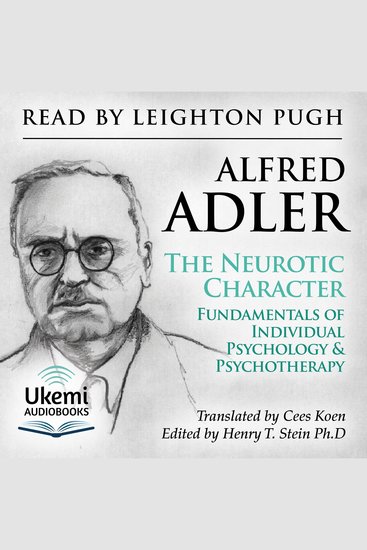
  • The Neurotic Character - Fundamentals of a Comparative Individual Psychology and Psychotherapy - cover

    The Neurotic Character -...

    Alfred Adler

    • 0
    • 0
    • 0
    As the 20th century drew to a close, the Austrian psychologist Alfred Adler (1870-1937) was perhaps the least known of the prominent figures of his time - in particular Sigmund Freud and Carl Gustav Jung - and yet he continues to be a figure of influence in the 21st century. His school of ‘individual psychology’ involved a holistic approach to the study of the individual, with a key focus on the way each person viewed the world, especially regarding their concerns of inferiority. This applied to both men and women in their different ways. The Neurotic Character is, as the editor of this modern translation states, 'Adler’s magnum opus - complex, profound and brilliant in its crystallised capture of the human soul gone astray.' 
     
    Written in 1911, Adler continued to expand and develop his ideas over the following decades as he assimilated experience gained from his practice. It opens with the Theoretical Part, in which he introduces ‘The Origin and Development of the Inferiority Feeling and Its Effects', as well as ‘Psychic Compensation and Its Preparation’ and ‘The Accentuated Fiction as Guiding Idea in the Neurosis’. 
     
    The second, major part of his work follows - the Practical Part. In this, Adler examines a wide range of issues, from ‘Greed and Distrust’, to the sexual causes and effects of inferiority. In the succeeding sections, he considers how suppressing everyday feelings and habits experienced by men and women in the course of their lives - issues such as impatience and dissatisfaction, cruelty, self-reproach - can all have profound effects on the individual. 
     
    The writing is clear and supported by case studies providing a strong perspective of reality. It is not surprising that, as a result, it can be seen how strongly Adlerian ideas and views have influenced the practice of psychotherapy today. And that for all the apparent dominance of Freudian and Jungian doctrine in psychological and academic circles, the work of Alfred Adler should not be underestimated. This recording presents the new translation of The Neurotic Character, commissioned and edited by the Adlerian psychotherapist, Henry Stein, who provides a useful appendix - an introduction to classical Adlerian theory and practice.
    Mostra libro
  • In The Cold Heat of Battle - cover

    In The Cold Heat of Battle

    Mike Blake

    • 0
    • 0
    • 0
    In The Cold Heat of Battle :: This poem describes the universal feelings of a soldier in contemplation of his own mortality and impending death.The battle of forces, not just of the enemy in front of him but the battleraging from within. His self doubt and questioning why he is even on the battlefield in the first place, fighting for this war.The Universal Soldier is reflecting on his decision to be there at the pointy end of war, the vanguard of the front line. This is an anti-war Poem.Part of the War Theme Series:   https://www.amazon.com/dp/B09F73X52HFind the Author & Follow here: https://www.amazon.com.mx/stores/Mike-Blake/author/B00SG40RM8Instagram:   https://www.instagram.com/wild_poetrys
    Mostra libro
  • Code Work - Hacking across the US México Techno-Borderlands - cover

    Code Work - Hacking across the...

    Héctor Beltrán

    • 0
    • 0
    • 0
    How Mexican and Latinx hackers apply concepts from coding to their lived experiences 


    In Code Work, Héctor Beltrán examines Mexican and Latinx coders' personal strategies of self-making as they navigate a transnational economy of tech work. Beltrán shows how these hackers apply concepts from the code worlds to their lived experiences, deploying batches, loose coupling, iterative processing (looping), hacking, prototyping, and full-stack development in their daily social interactions—at home, in the workplace, on the dating scene, and in their understanding of the economy, culture, and geopolitics. Merging ethnographic analysis with systems thinking, he draws on his eight years of research in México and the United States—during which he participated in and observed hackathons, hacker schools, and tech entrepreneurship conferences—to unpack the conundrums faced by workers in a tech economy that stretches from villages in rural México to Silicon Valley. 


    Beltrán's highly original, wide-ranging analysis uniquely connects technology studies, the anthropology of capitalism, and Latinx and Latin American studies.
    Mostra libro
  • Russian History: From Russian Tsars To Soviet Communist Empire 3 Books In 1 - Ivan The Terrible Peter The Great Lenin And The Bolsheviks Stalin & Putin's Ukraine War - cover

    Russian History: From Russian...

    HISTORY FOREVER

    • 0
    • 0
    • 0
    3 BOOKS IN 1!Book 1 - The History Of Russia: The Rise And Fall Of Soviet Communism: Russian History Of The Tsars, Lenin And The Bolsheviks, Stalin & The Russian RevolutionBook 2 - Soviet Union: Russian History Of The Tsars And The Collapse Of The Ussr After World War 2Book 3 - Russia Ukraine War 2022: Putin's Invasion Of Ukraine: History Of Russia-Ukraine Relations And The Russia's War On Ukraine
    Mostra libro
  • Can Thought Bring Order? - Saanen 1974 - Public Talk 2 - cover

    Can Thought Bring Order? -...

    Jiddu Krishnamurti

    • 0
    • 0
    • 0
    Can thought bring order? - 18 July 1974 
    • Are thoughts, feelings, reactions and relationships merely mechanical? Is there 
    any other movement? 
    • Where there is a cause there is time and so living becomes relative. 
    • Is my relationship with another based on opinions, memories, demands and 
    sexual appetites? 
    • Is there a way of living which has no cause? 
    • Do I actually see disorder or only its description? 
    • Is it only when the ‘me’ is non-existent that I am related? 
    • What takes place when the mind has order and a sense of total relationship? • Can the mind be free of the word to look and discover its disorder? 
    Questions from the audience followed the talk."
    Mostra libro
  • Beyond Good and Evil - cover

    Beyond Good and Evil

    Friedrich Nietzsche

    • 0
    • 0
    • 0
    "He who fights with monsters should look to it that he himself does not become a monster. And if you gaze long into an abyss, the abyss also gazes into you."
    
    
    In 1886, Friedrich Nietzsche released a "prelude to a philosophy of the future" that would shatter the foundations of Western ethics. Beyond Good and Evil is a fierce, poetic, and uncompromising attack on the "dogmatism" of traditional philosophers and the herd mentality of modern society. Nietzsche invites the reader to step out of the shadows of inherited values and into the sunlight of intellectual independence.
    
    
    The Will to Power: Moving beyond the simple binaries of "good" and "evil," Nietzsche introduces the Will to Power—the fundamental driving force of all living things to grow, dominate, and create. He argues that morality is not a universal truth but a tool used by different classes to assert their will. Through a series of 296 searing aphorisms, he challenges us to become "Free Spirits" capable of creating our own values in a world without absolute certainties.
    
    
    A Blueprint for the Individual: Nietzsche's prose is a "hammer" meant to test the resonance of existing idols. He critiques everything from the "prejudices of philosophers" to the rise of nationalism and democracy, which he views as a leveling of human potential. Beyond Good and Evil remains one of the most provocative works in history, essential for anyone brave enough to question the very fabric of their reality and the origin of their convictions.
    
    
    Challenge everything you believe. Purchase "Beyond Good and Evil" today and begin your journey toward the Overman.
    Mostra libro