Unisciti a noi in un viaggio nel mondo dei libri!
Aggiungi questo libro allo scaffale
Grey
Scrivi un nuovo commento Default profile 50px
Grey
Iscriviti per leggere l'intero libro o leggi le prime pagine gratuitamente!
All characters reduced
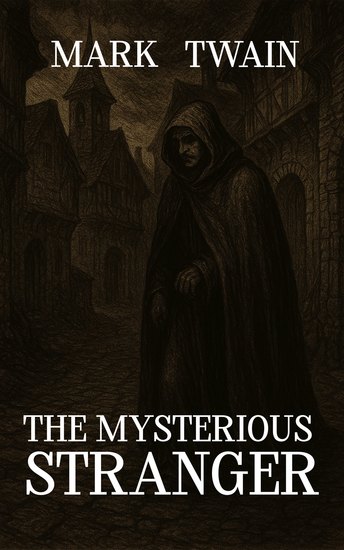
The Mysterious Stranger - cover

The Mysterious Stranger

Mark Twain

Casa editrice: CLXBX

  • 0
  • 0
  • 0

Sinossi

"The Mysterious Stranger" by Mark Twain is a haunting, philosophical work that reveals the darker, more skeptical side of the author's imagination. Written during the later years of Twain's life and published posthumously, the novel departs from his familiar humor to explore profound questions about morality, free will, religion, and the nature of humanity.

Set in a small, isolated European village, the story follows a group of boys who encounter a supernatural figure calling himself Satan, a mysterious and otherworldly being who claims kinship with the biblical fallen angel. Possessing immense power and a cold, rational view of humanity, the stranger observes human behavior with detached amusement and often cruel honesty. Through his interactions with the boys, he exposes the hypocrisy, cruelty, and self-deception that shape human societies.

As the narrative unfolds, Twain challenges traditional notions of good and evil, divine justice, and moral responsibility. The stranger's unsettling logic forces readers to confront uncomfortable truths about human suffering, innocence, and the illusion of meaning. What begins as a tale of youthful curiosity gradually transforms into a bleak meditation on existence itself.

Despite its dark themes, The Mysterious Stranger is rich in symbolism and intellectual depth. Twain's sharp wit remains present, but it is stripped of sentimentality, replaced by a relentless philosophical inquiry that reflects his disillusionment with organized religion and human pretensions.

Provocative, unsettling, and deeply thought-provoking, The Mysterious Stranger stands as one of Mark Twain's most challenging and controversial works. It is an essential read for those interested in philosophical fiction, classic literature, and the complex evolution of Twain's worldview.
Disponibile da: 06/02/2026.
Lunghezza di stampa: 123 pagine.
Altri libri che potrebbero interessarti

  • A Christmas Carol in Prose; Being a Ghost Story of Christmas - Experience the ultimate tale of redemption in this haunting Classic Fiction masterpiece Follow Ebenezer Scrooge on a chilling transformative journey through time as spirits race to save his soul - cover

    A Christmas Carol in Prose;...

    Charles Dickens

    • 0
    • 0
    • 0
    Can a single night of supernatural terror melt a heart frozen by a lifetime of greed? 
    Ebenezer Scrooge is a miserly, bitter old man who despises Christmas and the generosity it represents. But on one bleak, biting Christmas Eve, his solitary world is shattered by the clanking chains of his deceased business partner, Jacob Marley. Marley bears a dire warning: Scrooge is doomed to wander the earth in endless torment unless he heeds the lessons of three impending spectral visitors. From the shadows of his forgotten childhood to the bleak, terrifying vision of his own unmourned death, Scrooge is forced to confront the harsh reality of his choices before the clock strikes its final hour. 
    Why you will love this: If you are a fan of immersive Classic Fiction, supernatural redemption arcs, and gothic ghost stories, this audiobook is essential listening. Dickens masterfully blends eerie Victorian horror with a profound, heartwarming message about compassion, humanity, and second chances. This unforgettable piece of timeless literature resonates across generations, offering both spine-tingling suspense and soul-stirring triumph. 
    About the Author: Charles Dickens is widely regarded as the greatest novelist of the Victorian era. Renowned for his rich storytelling, sharp social critique, and unforgettable characters, his works have left an indelible mark on literature and continue to captivate millions worldwide.
    Mostra libro
  • Uncle’s Dream - A Satirical Tale of Vanity Marriage and Social Hypocrisy - A Modern Translation - Adapted for the Contemporary Reader - cover

    Uncle’s Dream - A Satirical Tale...

    Fyodor Dostoevsky

    • 0
    • 0
    • 0
    How far would you go to secure the perfect marriage? 
    In Uncle’s Dream, Fyodor Dostoevsky explores the desperate pursuit of social status through a comical yet deeply insightful tale. Maria Alexandrovna, an ambitious and calculating woman, sees an unexpected opportunity when an aging, forgetful prince arrives in town. Hoping to marry her daughter off to nobility, she weaves an elaborate web of lies and persuasion to turn her scheme into reality. 
    As gossip spreads and tensions rise, the novel unfolds with sharp wit, exposing the absurdities of social pretensions and the lengths to which people will go for wealth and prestige. Dostoevsky masterfully balances humor with social critique, making Uncle’s Dream an entertaining yet thought-provoking read. 
    What You’ll Discover in This Modern Translation:A Sharp Satire of Social Climbing – Experience Dostoevsky’s biting humor as he dissects the vanity and ambition of provincial society.A Cleverly Crafted Comedy of Errors – Enjoy the hilarious misunderstandings and dramatic twists that drive the story forward.A Fresh, Readable Translation – This adaptation makes Dostoevsky’s storytelling engaging and accessible for contemporary readers.A Fascinating Glimpse into 19th-Century Russian Society – Witness the social pressures, matchmaking schemes, and power struggles of a bygone era. 
    More than just a comedy, Uncle’s Dream is a timeless exploration of human ambition, the power of illusion, and the unpredictable consequences of scheming. 
    Will Maria Alexandrovna’s grand plan lead to triumph—or disaster? 
    Get your copy today and enjoy one of Dostoevsky’s most charming and humorous works.
    Mostra libro
  • Emma - cover

    Emma

    Jane Austen

    • 0
    • 0
    • 0
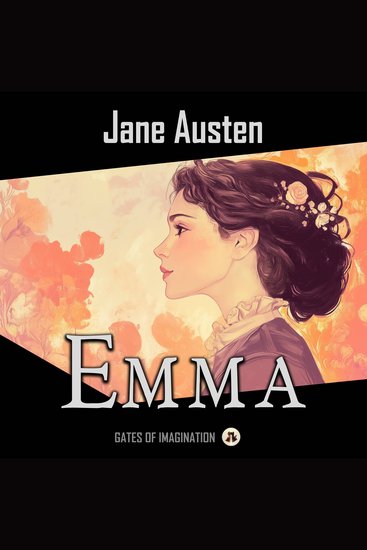
    Emma Woodhouse is a twenty-year-old, wealthy lady living with her father near the provincial town of Highbury. Despite believing that she herself will never marry, she perceives a talent for matchmaking. After the wedding of her governess and a local widower, Mr. Weston, which she treats as her personal success, she decides to find a worthy husband for her new friend, Harriet Smith. Although Harriet's parents are unknown, Emma is convinced that the girl deserves a relationship with a gentleman and makes her not follow her own heart, but submit to her patronage. Unfortunately, the young lady's imaginings do not entirely align with the desires of those around her. Matters become complicated, and Emma must look into her own heart. 
    The novel is a social comedy that explores the social and romantic relationships of the era and is considered one of the most important works of English literature. Literary critics praise Emma for its elegant style, detailed character portrayal, and subtle humor. The novel has been adapted multiple times for cinema, television, and theater.
    Mostra libro
  • New Treasure Seekers - cover

    New Treasure Seekers

    Edith Nesbit

    • 0
    • 0
    • 0
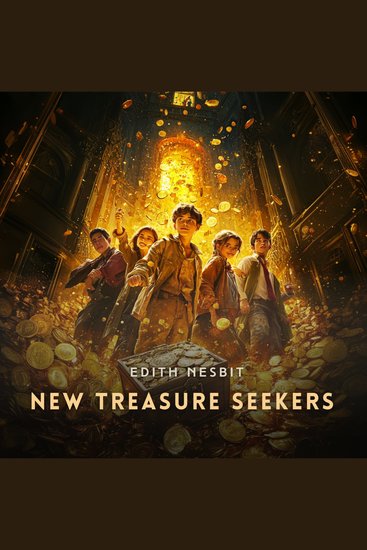
    In "New Treasure Seekers" by Edith Nesbit, the Bastable siblings embark on fresh adventures fueled by their imaginative quests for treasure. Their endearing escapades blend humor and heart as they navigate challenges, demonstrating the enduring spirit of childhood resilience and creativity. Nesbit's storytelling captures the essence of youthful optimism, friendship, and the timeless pursuit of magical moments in this engaging continuation of the Treasure Seekers series.
    Mostra libro
  • The Ball and the Cross - A Novel - cover

    The Ball and the Cross - A Novel

    G.K. Chesterton

    • 0
    • 0
    • 0
    'The modern world is not evil; in some ways the modern world is far too good. It is full of wild and wasted virtues.'
    
    Serialised in 1905, The Ball and the Cross is a fascinating and nuanced exploration of the spiritual and rationalist world views.
    
    Evan Maclan, a devout Catholic, and James Turnball, a fiery atheist, agree to duel after a heated argument over religion. But every time the two men attempt to put an end to things, the authorities interfere – duelling, after all, is forbidden. In order to evade the law, the two men travel across England only to be confronted with a series of absurd events that challenge each of their beliefs and values. The result is an entertaining and sympathetically written account of an unlikely friendship that stands the test of time. Inspired by Chesterton's many debates with his good friend, George Bernard Shaw, The Ball and the Cross is a thoughtful and engaging narrative that champions conviction in a sceptical world. This audiobook edition is engagingly read by Roger May.
    Gilbert Keith Chesterton (1874 – 1936) was an English novelist, philosopher, journalist and critic. A Christian apologist, he is famed for creating the fictional priest-detective Father Brown. His writing was also renowned for his sense of humour: known as 'the prince of paradox', Chesterton often turned common sayings upside down. Admired by several of his literary contemporaries, Chesterton's work is still widely read today.
    Mostra libro
  • Six of the Best - John Galsworthy - Their legacy in 6 classic stories - cover

    Six of the Best - John...

    John Galsworthy

    • 0
    • 0
    • 0
    John Galsworthy was born on the 14th August 1867 on the family estate, Parkfield, in Kingston-upon-Thames.  His family’s wealth came from the shipping industry 
    At age nine he began his education at Saugeen, a Bournemouth preparatory school, before moving to Harrow school in 1881, distinguishing himself as an athlete.  
    Galsworthy attended New College, Oxford to read law and left with a second-class degree with honours in 1889. The bar called him in 1890 but Galsworthy decided he would rather run the family’s shipping business. This also meant travelling to destinations such as Vancouver, South Africa and Australia. 
    In 1895 Galsworthy began a decade long affair with Ada Nemesis Pearson Cooper, the wife of his first cousin. It was only when, in 1905, she divorced and married Galsworthy that their affair became known. 
    His literary career began in 1897 with a short story volume, ‘From the Four Winds’, with the pseudonym John Sinjohn as were three further works. Under his own name, in 1904, came ‘The Island Pharisees’, a novel of social observation, seasoned with flashes of satire and propaganda. He also switched from small, independent publishers to the larger Heinemann and to whom he remained for the duration of his career. 
    1906 saw first major play, ‘The Silver Box’, and the novel ‘The Man of Property’. Each to considerable acclaim. The latter was the first in ‘The Forsyte Saga’ trilogy written between 1906 and 1921. It dealt with the questions of status, class and materialism through Soames Forsyte, who is acutely aware of his ‘new money’ status. Jealous of his wife, his machinations drive her into the arms of another. Soames engages in a terrible revenge with terrible consequences.  
    His social agenda was enlightened particularly in his condemnation over the use of solitary confinement in prisons, his attacks on theatrical censorship and campaigning for animal rights. 
    Galsworthy, having been passed over for active service, spent much of the First World War working as an orderly in a field hospital in France. 
    Despite his it was only in 1920 that he had his first blockbuster play ‘The Skin Game’, a melodrama dealing with ethics, property and class.  
    In 1920 ‘In Chancery’ also arrived with further discourse on the marital disharmony between Soames Forsyte and his wife.  
    The appreciation of his work gradually shifted from plays to novels, particularly through his detailing English social difference, tension and pretension with the Forsytes.  A second trilogy, ‘A Modern Comedy’, followed, examining his love for his daughter Fleur and the English commercial upper-middle class, its ideologies and Soames’ poisonous materialism.  
    Having rejected a knighthood in 1918 he was appointed, in 1929, to the Order of Merit. Galsworthy spent his last years writing a third Forsythe trilogy, ‘End of the Chapter’.   
    In 1932 he was awarded the Nobel Prize, but by now failing health meant he was too ill to attend the ceremony. 
    John Galsworthy died at his Hampstead home of a brain tumour on 31st January, 1933. He was cremated and his ashes scattered from an aeroplane over the South Downs.
    Mostra libro