Unisciti a noi in un viaggio nel mondo dei libri!
Aggiungi questo libro allo scaffale
Grey
Scrivi un nuovo commento Default profile 50px
Grey
Iscriviti per leggere l'intero libro o leggi le prime pagine gratuitamente!
All characters reduced
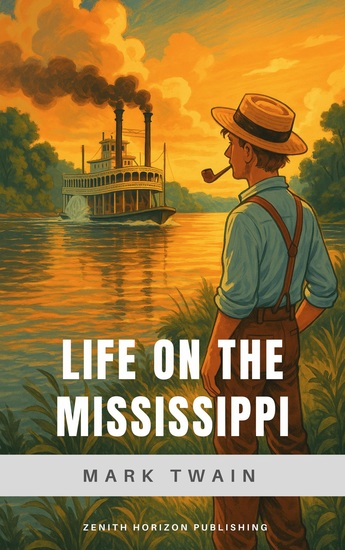
Life on the Mississippi - Mark Twain's Illustrated Memoir of Riverboats Adventure and American History - cover

Life on the Mississippi - Mark Twain's Illustrated Memoir of Riverboats Adventure and American History

Mark Twain, Zenith Horizon Publishing

Casa editrice: Zenith Horizon Publishing

  • 0
  • 0
  • 0

Sinossi

Before he became a literary icon, Mark Twain was a steamboat pilot—and this is the journey that shaped him.

Life on the Mississippi is Twain's vivid memoir of life along America's greatest river. Blending travelogue, history, personal reflection, and storytelling, Twain brings to life the gritty, romantic, and dangerous world of 19th-century riverboats and frontier towns.

From his boyhood dreams to the bustling trade routes of the post–Civil War South, Twain's wit and observation make this not just a historical account—but a living portrait of an evolving America.

🛶 This edition includes:

The full, unabridged text

Vintage-style illustrations and a period map

Kindle-optimized formatting for smooth navigation

📚 Perfect for fans of American history, memoirs, and classic literature.

Step aboard and relive a journey that helped shape the voice of American storytelling.
Get your illustrated edition now.
Disponibile da: 16/06/2025.
Lunghezza di stampa: 502 pagine.
Altri libri che potrebbero interessarti

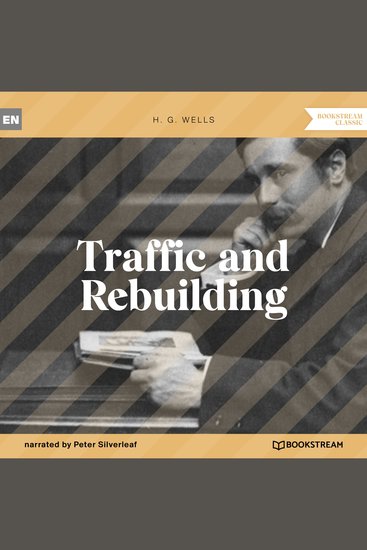
  • Traffic and Rebuilding (Unabridged) - cover

    Traffic and Rebuilding (Unabridged)

    H. G. Wells

    • 0
    • 0
    • 0
    Herbert George Wells (21 September 1866 - 13 August 1946) was an English writer. Prolific in many genres, he wrote dozens of novels, short stories, and works of social commentary, history, satire, biography and autobiography. His work also included two books on recreational war games. Wells is now best remembered for his science fiction novels and is often called the "father of science fiction", along with Jules Verne and the publisher Hugo Gernsback.
    TRAFFIC AND REBUILDING: The London traffic problem is just one of those questions that appeal very strongly to the more prevalent and less charitable types of English mind.
    Mostra libro
  • The Unknown Masterpiece - cover

    The Unknown Masterpiece

    Honoré de Balzac

    • 0
    • 0
    • 0
    In the heart of Paris, where art and ambition intertwine, the boundaries between genius and madness blur. A tale of creation, obsession, and the quest for perfection, this story dances on the edge of brilliance. The artist, driven by an insatiable desire to capture the unattainable, confronts the fragility of his own vision. As the canvas comes to life, so too does a world where nothing is as it seems, and the cost of true artistry might just be too high.
    Balzac's story whispers of the fine line between genius and obsession, where the artist's soul is as fragile as the masterpiece he seeks. It's a tale of mystery that unveils the delicate balance between creation and destruction. With every stroke, the artist is both consumed and liberated, creating not just a work of art, but a haunting reflection of his own inner turmoil.
    Elegantly weaving themes of passion, ambition, and the price of greatness, Balzac captures the essence of artistic endeavor and its dark allure. It is a story that speaks not only to the artist but to anyone who dares to chase perfection, knowing that the pursuit may well cost more than expected.
    Mostra libro
  • On a Tricycle (Unabridged) - cover

    On a Tricycle (Unabridged)

    H. G. Wells

    • 0
    • 0
    • 0
    Herbert George "H. G." Wells (1866 - 1946) was an English writer.
    He was prolific in many genres, including the novel, history, politics, social commentary, and textbooks and rules for war games. Wells is now best remembered for his science fiction novels and is called a "father of science fiction"
    ON A TRICYCLE: I sat on the parapet of the bridge, and swung my feet over the water that frothed and fretted at the central pier below. Above the bridge the stream broadened into a cress-bespangled pool, over which the sapphire dragon-flies hovered, and its earlier course was hidden by the big oak trees that bent towards each other from either bank.
    Mostra libro
  • Struggle with a Devil Fish A (Unabridged) - cover

    Struggle with a Devil Fish A...

    Victor Hugo

    • 0
    • 0
    • 0
    Victor-Marie Hugo 26 February 1802 - 22 May 1885) was a French poet, novelist, essayist, playwright, and dramatist of the Romantic movement. During a literary career that spanned more than sixty years, he wrote abundantly in an exceptional variety of genres: lyrics, satires, epics, philosophical poems, epigrams, novels, history, critical essays, political speeches, funeral orations, diaries, and letters public and private, as well as dramas in verse and prose.
    A STRUGGLE WITH A DEVIL FISH: The sea was growing calmer. But there was still a heavy swell, which made his departure, for the present at least, impossible. The day, too, was far advanced.
    Mostra libro
  • The History Of Mr Polly - cover

    The History Of Mr Polly

    H. G. Wells

    • 0
    • 0
    • 0
    Mr. Polly, also known as Alfred Polly, is a fictional character created by the renowned English writer H.G. Wells in his 1910 novel "The History of Mr. Polly." The novel follows the life of Mr. Polly, an ordinary and discontented middle-aged man living in the late 19th and early 20th centuries. Mr. Polly is a relatable figure who embodies the struggles and frustrations of the average person in the face of societal expectations and personal dissatisfaction. 
     
    Set against the backdrop of the Edwardian era, "The History of Mr. Polly" offers a profound exploration of the human condition. Mr. Polly's life is characterized by a series of disappointments, failed ventures, and a general sense of aimlessness. Frustrated with his monotonous existence and a loveless marriage, he reaches a breaking point, deciding to escape the confines of his mundane life and pursue a different path. 
    Wells paints a vivid portrait of Mr. Polly's journey of self-discovery and reinvention. The narrative takes readers through a range of emotions, from the bleakness of Mr. Polly's initial struggles to the optimism and hope that emerges as he embarks on a new adventure. Ultimately, "The History of Mr. Polly" serves as a thought-provoking exploration of the universal human desire for freedom, happiness, and the pursuit of a meaningful existence in an ever-changing world.
    Mostra libro
  • A Cullenden of Virginia - From their pens to your ears genius in every story - cover

    A Cullenden of Virginia - From...

    Thomas Wolf

    • 0
    • 0
    • 0
    Thomas Clayton Wolfe was born at the family home, 92 Woodfin Street, in Asheville, North Carolina on October 3rd, 1900.  
    Aged 15, Wolfe began his studies at the University of North Carolina at Chapel Hill (UNC) where he enrolled in a playwriting course. Wolfe graduated in 1920 and enrolled at the Graduate School for Arts and Sciences at Harvard. Here he studied playwriting under the tutelage of George Pierce Baker. In 1922 he received his master's degree from Harvard.  
    Wolfe now began the transition from studying to commercial playwright. He went to New York in November, 1923 trying to sell his plays to Broadway.  The Theatre Guild came close to producing Welcome to Our City but in the end declined.  Wolfe now believed his style of writing was more suited to fiction.  Grasping the opportunity this afforded him he sailed to England in October 1924 to write and from there on to France, Italy and Switzerland. 
    In 1926 Wolfe began writing a novel, O Lost. This would eventually become Look Homeward, Angel. It was based on his years in Asheville. The original manuscript of O Lost was over 1100 pages. Maxwell Perkins, one of the great book editors of the age, worked at his publishers, Scribner’s and he began to focus the book, cutting and re-shaping it to center it on the character of Eugene.   
    The novel was published in 1929. It was a success.   
    Wolfe now committed the next 4 years to writing a multi-volume epic entitled The October Fair.  At Scribner’s Perkins once more decided to edit it down to a single volume; Of Time and the River.  It was even more successful than his first. It was hailed as the literary event of 1935 and cemented his reputation as one of America’s foremost novelists.  
    In 1938, after submitting his new opus, which ran to an incredible one million words, to his new editor, Edward Aswell, Wolfe left to tour the West, a part of the country he had never before visited. Whilst travelling Wolfe became ill with pneumonia and spent three weeks in a Seattle hospital. Complications arose. The prognosis was serious.  He was diagnosed with miliary tuberculosis of the brain. 
    On September 6th, he was sent to Baltimore's Johns Hopkins Hospital for treatment. The ensuing operation revealed that the disease had overrun the entire right side of his brain.  
    Thomas Clayton Wolfe never regained consciousness and died shortly before his 38th birthday on September 15th, 1938.
    Mostra libro