Unisciti a noi in un viaggio nel mondo dei libri!
Aggiungi questo libro allo scaffale
Grey
Scrivi un nuovo commento Default profile 50px
Grey
Iscriviti per leggere l'intero libro o leggi le prime pagine gratuitamente!
All characters reduced
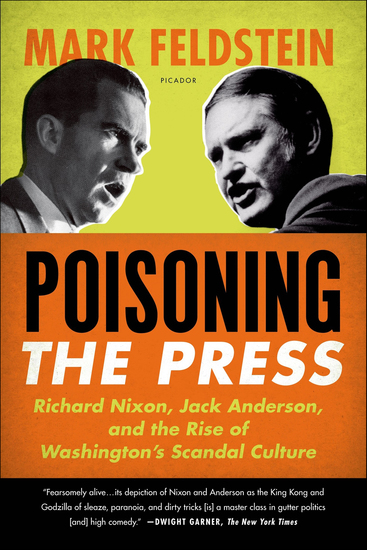
Poisoning the Press - Richard Nixon Jack Anderson and the Rise of Washington's Scandal Culture - cover

Poisoning the Press - Richard Nixon Jack Anderson and the Rise of Washington's Scandal Culture

Mark Feldstein

Casa editrice: Farrar, Straus and Giroux

  • 0
  • 0
  • 0

Sinossi

It is March 1972, and the Nixon White House wants Jack Anderson dead. The syndicated columnist Jack Anderson, the most famous and feared investigative reporter in the nation, has exposed yet another of the President's dirty secrets. Nixon's operatives are ordered to "stop Anderson at all costs"—permanently. Across the street from the White House, they huddle in a hotel basement to conspire. Should they try "Aspirin Roulette" and break into Anderson's home to plant a poisoned pill in one of his medicine bottles? Could they smear LSD on the journalist's steering wheel, so that he would absorb it through his skin, lose control of his car, and crash? Or stage a routine-looking mugging, making Anderson appear to be one more fatal victim of Washington's notorious street crime?Poisoning the Press: Richard Nixon, Jack Anderson, and the Rise of Washington's Scandal Culture recounts not only the disturbing story of an unprecedented White House conspiracy to assassinate a journalist, but also the larger tale of the bitter quarter-century battle between the postwar era's most embattled politician and its most reviled newsman. The struggle between Nixon and Anderson included bribery, blackmail, forgery, spying, and burglary as well as the White House murder plot. Their vendetta symbolized and accelerated the growing conflict between the government and the press, a clash that would long outlive both men.Mark Feldstein traces the arc of this confrontation between a vindictive president and a flamboyant, crusading muckraker who rifled through garbage and swiped classified papers in pursuit of his prey—stoking the paranoia in Nixon that would ultimately lead to his ruin. The White House plot to poison Anderson, Feldstein argues, is a metaphor for the poisoned political atmosphere that would follow, and the toxic sensationalism that contaminates contemporary media discourse. Melding history and biography, Poisoning the Press unearths significant new information from more than two hundred interviews and thousands of declassified documents and tapes. This is a chronicle of political intrigue and the true price of power for politicians and journalists alike. The result—Washington's modern scandal culture—was Richard Nixon's ultimate revenge.
Disponibile da: 06/08/2024.
Lunghezza di stampa: 474 pagine.
Altri libri che potrebbero interessarti

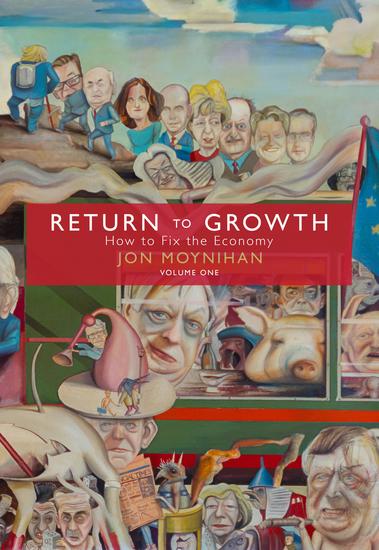
  • Return to Growth Volume One - How to Fix the Economy - cover

    Return to Growth Volume One -...

    Jon Moynihan

    • 0
    • 0
    • 0
    The UK has, in recent years, been suffering from what is nothing short of an economic crisis. Growth has now completely stalled in those western democracies, the UK included, where high government spending and high taxes have steadily burgeoned, decade after decade. Free-market economies now threaten to leave us behind in terms of wealth, opportunity and standards of living. At the end of Rishi Sunak's 2024 government, expenditure was at 45 per cent of GDP and taxes were 36 per cent and rising – yet still nowhere near sufficient to cover public expenditure. The government's net annual borrowing is now a completely unsustainable 4.4 per cent of GDP, with our overall national debt growing rapidly and alarmingly.
    In this arresting and powerful manifesto for economic change, Jon Moynihan analyses the UK's decades-long stagnant economy and looks at what can be done to resuscitate it. Combining rigorous research with unparalleled business experience, he explores the key dynamics affecting economic growth, ranging from government borrowing, expenditure, tax and regulation to the way national resources are deployed on non-productive and futile, growth-stifling endeavours.
    Ultimately, Moynihan shows that unless we act now to reverse the decline, by radically restructuring our economy to stimulate economic growth, the UK risks stagnation, financial collapse and a long-term disintegration in our standard of living. Ignore his warning at your peril.
    Mostra libro
  • Data Independence - Reclaiming Privacy in an Era of Evolving Tech - cover

    Data Independence - Reclaiming...

    Wes Chaar

    • 0
    • 0
    • 0
    In a world where every interaction and transaction leave a digital footprint, our personal data has become the new currency. But who really benefits from this wealth of information? Join the data independence movement and reclaim your data power. Your data, your rules, your “data vote.”
    Mostra libro
  • The Pursuit of Dominance - 2000 Years of Superpower Grand Strategy - cover

    The Pursuit of Dominance - 2000...

    Christopher J. Fettweis

    • 0
    • 0
    • 0
    The United States is the most powerful actor in the international system, but it is facing a set of challenges that might lead to its decline as this century unfolds. 


    In The Pursuit of Dominance, Christopher J. Fettweis examines the grand strategy of previous superpowers to see how they maintained, or failed to maintain, their status. Over the course of six cases, from Ancient Rome to the British Empire, he seeks guidance from the past for present US policymakers. Like the United States, the examples Fettweis uses were the world's strongest powers at particularly moments in time, and they were hoping to stay that way. Rather than focusing on those powers' rise or how they ruled, however, Fettweis looks at how they sought to maintain their power. From these cases, one paramount lesson becomes clear: Dominant powers usually survive even the most incompetent leaders. Fettweis is most interested in how these superpowers defined their interests, the grand strategies these regimes followed to maintain superiority over their rivals, and how the practice of that strategy worked. 


    A sweeping history of grand strategy, The Pursuit of Dominance looks at the past 2,000 years to highlight what—if anything—current US strategists can learn from the experience of earlier superpowers.
    Mostra libro
  • The New Goliaths - How Corporations Use Software to Dominate Industries Kill Innovation - cover

    The New Goliaths - How...

    James Bessen

    • 0
    • 0
    • 0
    An approach to reinvigorating economic competition that doesn’t break up corporate giants, but compels them to share their technology, data, and knowledge 
      
    “Bessen is a master of unpacking the nuances of a complex array of interrelated trends to build a coherent story of how the promise of the democratized Internet ended up under the control of just a few. Read The New Goliaths to see how the forest came to have only room for a few tall trees with the rest of us in the undergrowth.”—Joshua Gans, coauthor of Prediction Machines: The Simple Economics of Artificial Intelligence 
      
    Historically, competition has powered progress under capitalism. Companies with productive new products rise to the top, but sooner or later, competitors come along with better innovations and disrupt the threat of monopoly. Dominant firms like Walmart, Amazon, and Google argue that this process of “creative destruction” prevents them from becoming too powerful or entrenched. 
      
    But the threat of competition has sharply decreased over the past twenty years, and today’s corporate giants have come to power by using proprietary information technologies to create a tilted playing field. This development has increased economic inequality and social division, slowed innovation, and allowed dominant firms to evade government regulation. In the face of increasing calls to break up the largest companies, James Bessen argues that a better way to restore competitive balance and dynamism is to encourage or compel these companies to share technology, data, and knowledge.
    Mostra libro
  • A Fish Has No Word For Water - A punk homeless San Francisco memoir - cover

    A Fish Has No Word For Water - A...

    Violet Blue

    • 0
    • 0
    • 0
    WINNER: 2023 Independent Publisher Book Awards GOLD 
    "A gripping account of survival and a condemnation of the conditions that marginalize and endanger the unsheltered." —KIRKUS 
    "Superb... Sharp dialogue, incisive observations, and polished prose." —BookLife EDITOR'S PICK 
    Her mother was a hacker-for-hire and drug dealer to Silicon Valley's elite; after everything went wrong she was homeless and alone on San Francisco streets at the age of thirteen. Fleeing her mother's life on the run from a double-crossed cartel and fresh out of witness protection, she joined Silicon Valley's children foraging food from San Francisco's trash cans and sleeping in abandoned cars -- while tech's earliest generations of workers partied, broke laws, and spat on homeless kids begging for spare change under the glow of tech's latest creations. 
    A Fish Has No Word For Water is a memoir about what it's really like for homeless kids, the strength of chosen family, and a hard love letter to San Francisco. 
    This memoir of survival unflinchingly shows Silicon Valley's children begging in the shadows of tech's shining towers, the surprising care circles formed by adults in San Francisco's LGBTQ community, and a city that is a mosaic of technologies and peoples that should not be together, but are. It upends stereotypes about children who survive abuse, young sex workers, LGBTQ youth, resilience in the face of immense grief and trauma, and how communities form to overcome some of the deadliest forms of discrimination. It reveals to readers that there was never a case for tech's shine in the first place. 
    Most of all, it is a story of tremendous resilience and how we can remake trauma into an invitation to be part of a larger world.
    Mostra libro
  • Wise Men not so Wise - Investigation into the Constitutional Council - cover

    Wise Men not so Wise -...

    Yvan Stefanovitch

    • 0
    • 0
    • 0
    The Constitutional Council is the embodiment of wisdom and is responsible for defending the rule of law and the individual freedoms of the French people, by censuring a law if it considers it unconstitutional. Discretionarily appointed by the three highest authorities of the State for a non-renewable nine-year term, its members are nevertheless the subject of much controversy: - This Institution is in fact the watchdog of the Head of State, and not of the rule of law; - Since its creation by General De Gaulle, its 92 members, most of them in their seventies, have been appointed based solely on political criteria or reasons of simple cronyism, old friendship, in gratitude for services rendered or simply on a whim. The General, Georges Pompidou, François Mitterrand, Jacques Chirac and Emmanuel Macron have appointed their close friends, often even their confidants (such as Richard Ferrand in 2025), to head the Constitutional Council. A pinnacle of insiders that does not bode well for the impartiality and independence of the nine judges. - To facilitate “the constitutional passage by force” or to validate campaign accounts that have been greatly exceeded, the head of state relies on the “Sages”. A reading of the archives of the minutes of the plenary sessions of the Constitutional Council now makes it possible to state that the nine “Sages” have regularly flouted the law for 67 years. France is the only country in the world where former heads of state sit on a Constitutional Court as ex officio and life members. Three parliamentary attempts have mysteriously failed to put an end to this incredible tradition. Nicolas Sarkozy, still “Wise” for life, is now wearing an electronic bracelet because of his multiple convictions. It has also come to light that the remuneration of the Wise Men, whether or not they sit on the court, has remained illegal for 24 years. The “Sages” perform a moderate job with a comfortable income (22,000 to 32,000 euros), which they can combine with several pensions, completely illegally. This serious journalistic investigation, written by one of the most renowned journalists in this field, reveals an impressive number of worrying and aberrant dysfunctions of this supreme and very “political” regulator of our democracy. Protected by a court spirit violently hostile to any transparency, the “Wise Men” dangerously fuel the ambient populism and the growing lack of confidence of the French in their elites.
    Mostra libro